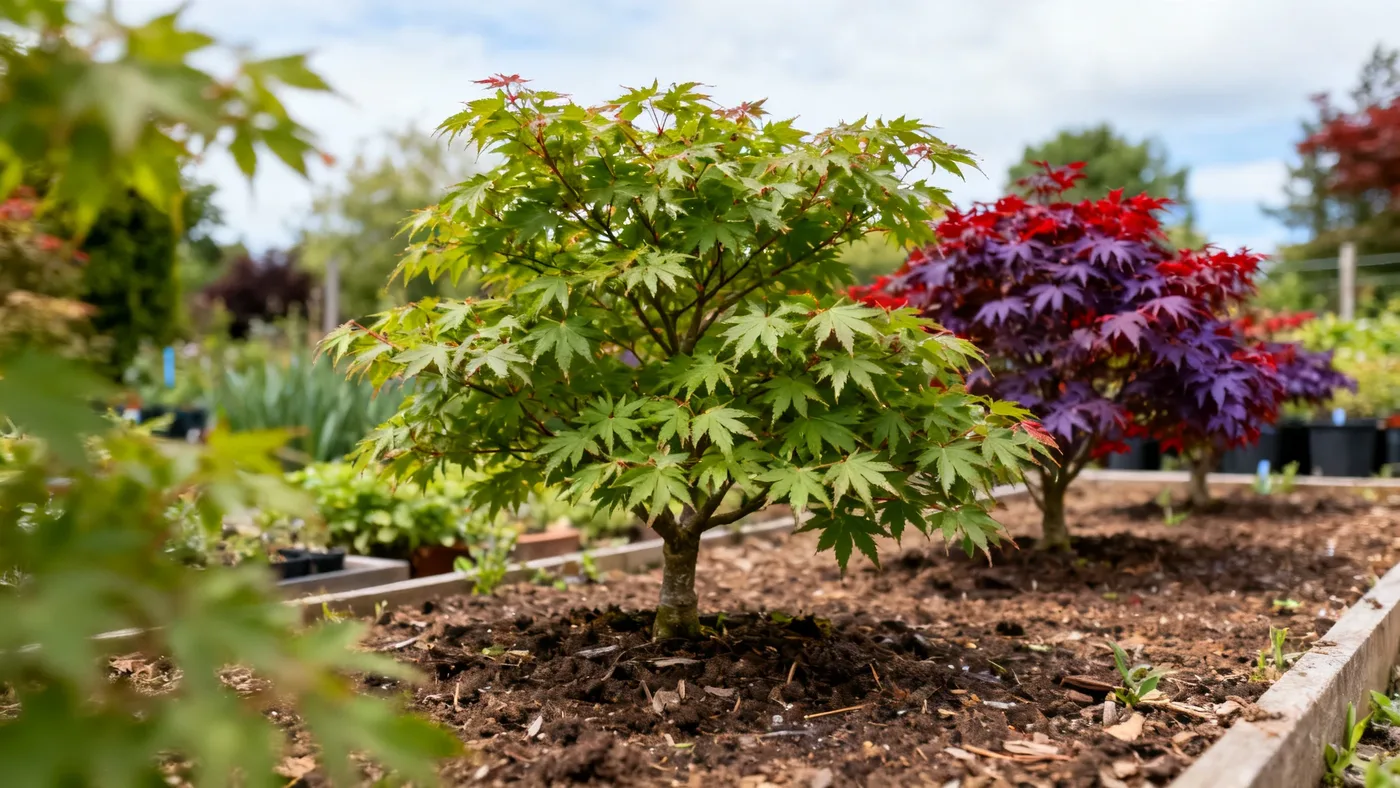
Do Dwarf Japanese Maples Need Fertilizer? A Simple Guide
Dwarf Japanese Maples are not heavy feeders. Unlike fast-growing landscape plants that demand regular nitrogen boosts, your Dwarf Japanese Maple grows slowly (roughly 6 to 12 inches per year) and thrives on modest nutrition. The good news: you do not need to fertilize often. The better news: when you do, the process is straightforward and takes just a few minutes.
This guide walks you through exactly when to fertilize, what to use, and how to apply it so your plant stays healthy and produces those stunning fall colors year after year.
Do Dwarf Japanese Maples Really Need Fertilizer?
The short answer is yes, but lightly. Dwarf Japanese Maples planted in good soil benefit from a light feeding once per year. If you planted your maple in rich, well-draining loam (the ideal soil type), it already has a solid nutritional foundation. Container-grown plants, however, need more regular feeding because water leaches nutrients from the soil with each watering cycle.
The reason your maple needs any fertilizer at all comes down to soil depletion over time. Even rich soil gradually loses available nutrients, especially nitrogen, phosphorus, and potassium. One annual application in early spring restores what the plant has used and supports healthy new growth and vibrant foliage color. Over-fertilizing, though, can do more harm than good. Too much nitrogen pushes soft, tender growth that burns easily in sun and becomes attractive to pests and disease.
Understanding What Your Dwarf Japanese Maple Needs
Dwarf Japanese Maples have modest nutritional demands. They prefer slightly acidic to neutral soil with a pH between 5.5 and 6.5. This narrow range matters because soil pH affects how well the plant can absorb nutrients, even if they are present in the soil.
The plant needs the standard macronutrients: nitrogen (for leaf growth), phosphorus (for root and flower development), and potassium (for overall plant hardiness). It also benefits from micronutrients like iron, manganese, and magnesium, which support chlorophyll production and prevent leaf yellowing or chlorosis.
Because Dwarf Japanese Maples are slow growers with relatively shallow, fibrous root systems, they respond best to light, consistent feeding rather than a single heavy application. Think of it as a gentle tonic rather than a growth stimulant.
Best Fertilizers for Dwarf Japanese Maples
The ideal fertilizer for fertilizing Dwarf Japanese Maple is balanced, slow-release, and formulated for acid-loving or woody ornamental plants. Here is what to look for:
- Balanced NPK ratio: Look for numbers like 10-10-10 or 5-5-5. A balanced ratio delivers nitrogen, phosphorus, and potassium in equal proportions, which is what a slowly growing ornamental needs.
- Slow-release formulation: Granular products that release nutrients over 3 to 6 months are far better than liquid or quick-release types. They feed the plant steadily and reduce the risk of leaf burn or tender, susceptible growth.
- Acid-loving plant formula: Many specialty fertilizers are designed for acid-loving plants like rhododendrons, azaleas, and camellias. These formulations include micronutrients (especially iron) and often have a slightly lower pH that suits Dwarf Japanese Maple.
- Organic options: If you prefer organic methods, look for products based on fish emulsion, seaweed, or composted bark. These work more slowly but improve soil biology over time.
Avoid high-nitrogen lawn fertilizers or all-purpose garden fertilizers labeled for vegetables. These tend to be too strong and encourage excessive, soft growth that your maple does not need.
When to Fertilize Dwarf Japanese Maple
Timing is critical because you are feeding a plant just as it is waking up and beginning its annual growth cycle. Early spring is the only time you should fertilize.
Early Spring Feeding: Apply fertilizer in early spring, when you see the first signs of new leaf growth emerging but before they are fully unfolded. In most growing zones (5 to 8), this means late March through April, depending on your climate. Do not fertilize in mid or late spring, summer, fall, or winter.
Why spring only? Fertilizing at any other time can stimulate tender new growth late in the season, which will be damaged by the first frost. A dwarf Japanese maple fed in summer or fall enters winter with weak, vulnerable tissues, making it susceptible to cold injury and disease.
Container plants: If your maple is growing in a pot, you may apply a lighter feeding every 4 to 6 weeks during the growing season (April through August) using a diluted liquid fertilizer. This compensates for the nutrients lost to drainage. Stop feeding by late summer so the plant can harden off before cold weather.
How to Fertilize: Step-by-Step Instructions
Fertilizing a Dwarf Japanese Maple takes only a few minutes. Follow these steps for the best results:
- Water your plant thoroughly the day before. A moist root zone helps the fertilizer dissolve and prevents root burn. If your maple is in a container, water until water drains from the bottom. If it is in the ground, water deeply so the soil is moist 6 inches down.
- Choose your fertilizer product. Select a balanced, slow-release fertilizer formulated for acid-loving or woody ornamentals (see the section above for specific criteria).
- Read the label and measure the correct amount. Most slow-release fertilizers are applied at a rate of 1 to 2 tablespoons per foot of plant height, or according to the package directions. A 5-foot tall Dwarf Japanese Maple would receive approximately 5 to 10 tablespoons of granular product.
- Spread the granules evenly around the base. Begin about 3 to 4 inches away from the trunk and distribute the fertilizer in a circle roughly under the canopy drip line (the outer edge of the branches). Do not pile fertilizer against the trunk, as this can cause damage to the bark and collar.
- Gently work the granules into the top inch of soil. Use a hand cultivator, small rake, or even your fingers to incorporate the fertilizer lightly into the soil. You do not need to bury it deeply. Slow-release formulations will dissolve with watering over the next few weeks.
- Water thoroughly after application. This activates the fertilizer and washes it into the root zone. Water until the soil is moist to a depth of 6 inches or more.
- Do not apply again until the following spring. One application per year is all your Dwarf Japanese Maple needs. More frequent feeding invites the problems you are trying to avoid.
Fertilizing Container-Grown Dwarf Japanese Maples
Container plants have different needs because water drains through the soil rapidly and carries nutrients with it. If your Dwarf Japanese Maple is in a pot, follow these guidelines instead:
For slow-release granules: Apply the granules as described above, but use the lower end of the recommended rate (1 tablespoon per foot of height). Repeat this application once in mid-May and once in mid-June. Stop fertilizing by early July so the plant can prepare for dormancy.
For liquid fertilizers: Mix a diluted liquid fertilizer (at half the recommended strength) and apply it every 4 to 6 weeks from April through August. This gentler approach mimics the slow, steady feeding the plant receives in the ground.
Special consideration for winter: In cooler zones (5 to 6), bring container plants to a sheltered location for winter, or insulate the pot with burlap or mulch to protect the roots. Even with fertilizing, roots in a pot are more exposed to cold than roots in the ground. A light mulch layer over the soil surface (but not against the trunk) provides extra insulation.
Common Fertilizing Mistakes to Avoid
Over-fertilizing: This is the most common error. Too much fertilizer, especially nitrogen-heavy products, pushes weak, floppy growth and can scorch leaf margins or stunt the plant. Stick to one application per year in spring, or a light program for containers. Your slow-growing maple does not need heavy feeding.
Fertilizing at the wrong time: Do not fertilize in summer, fall, or winter. Late-season applications damage dormancy and invite cold injury. Early spring is the only safe window.
Using lawn or vegetable fertilizer: Products labeled for grass or vegetables are formulated differently and often contain too much nitrogen for an ornamental. Spend a few extra dollars on a product designed for woody plants or acid-loving ornamentals.
Piling fertilizer against the trunk: Always apply granules in a ring starting 3 to 4 inches away from the trunk. Direct contact can damage bark and create entry points for disease.
Skipping the pre-watering step: Fertilizing a dry plant increases the risk of root burn. Always water a day before, or at minimum water thoroughly after spreading the granules.
Ignoring soil pH: If your soil is alkaline or very neutral, the plant may struggle to absorb nutrients even if they are present. Have your soil tested if your maple shows signs of yellowing or poor growth. Lowering pH slightly with sulfur or an acidifying fertilizer can help.
What Results to Expect
After you fertilize your Dwarf Japanese Maple in early spring, you may notice new leaves emerging more vigorously over the next 4 to 6 weeks. The foliage color often appears richer and more uniform, and the plant generally looks more robust. However, do not expect dramatic size changes. Your maple will continue its slow, steady growth pattern (6 to 12 inches per year), which is exactly what you want in a dwarf cultivar.
The real payoff appears in fall when your maple puts on its brilliant display of red, orange, or gold foliage. A well-fed maple with consistent moisture and good light produces far more intense color than a starved or stressed plant. This is especially true for cultivars like 'Bloodgood' and 'Crimson Queen', which are prized for their exceptional autumn hues.
You may also notice improved vigor if your maple has recovered from stress, such as transplant shock, drought, or pest damage. Fertilizing cannot fix a poorly sited plant or one in the wrong soil, but it does give a healthy plant the resources to thrive.
Quick Reference: Fertilizing Checklist
| Aspect | Guidelines |
|---|---|
| Timing | Early spring only (late March to April, depending on zone) |
| Frequency | Once per year for in-ground plants; every 4-6 weeks for containers (April-August only) |
| Fertilizer Type | Balanced (10-10-10 or 5-5-5), slow-release, acid-loving or woody ornamental formula |
| Application Rate | 1-2 tablespoons per foot of plant height; follow label directions |
| Application Method | Spread granules in a circle, 3-4 inches from trunk to drip line; work into top inch of soil |
| Pre-Watering | Water plant deeply the day before; moist soil prevents root burn |
| Post-Application | Water thoroughly after spreading; repeat every 4-6 weeks for container plants |
| Soil pH Target | Slightly acidic to neutral (5.5-6.5) |
| What to Avoid | Over-fertilizing, summer/fall feeding, lawn fertilizer, contact with trunk |
| Expected Results | Vigorous spring growth, richer foliage color, improved fall display, steady growth of 6-12 inches per year |
For more comprehensive care information, including watering, pruning, and pest management, see our Dwarf Japanese Maple care guide.