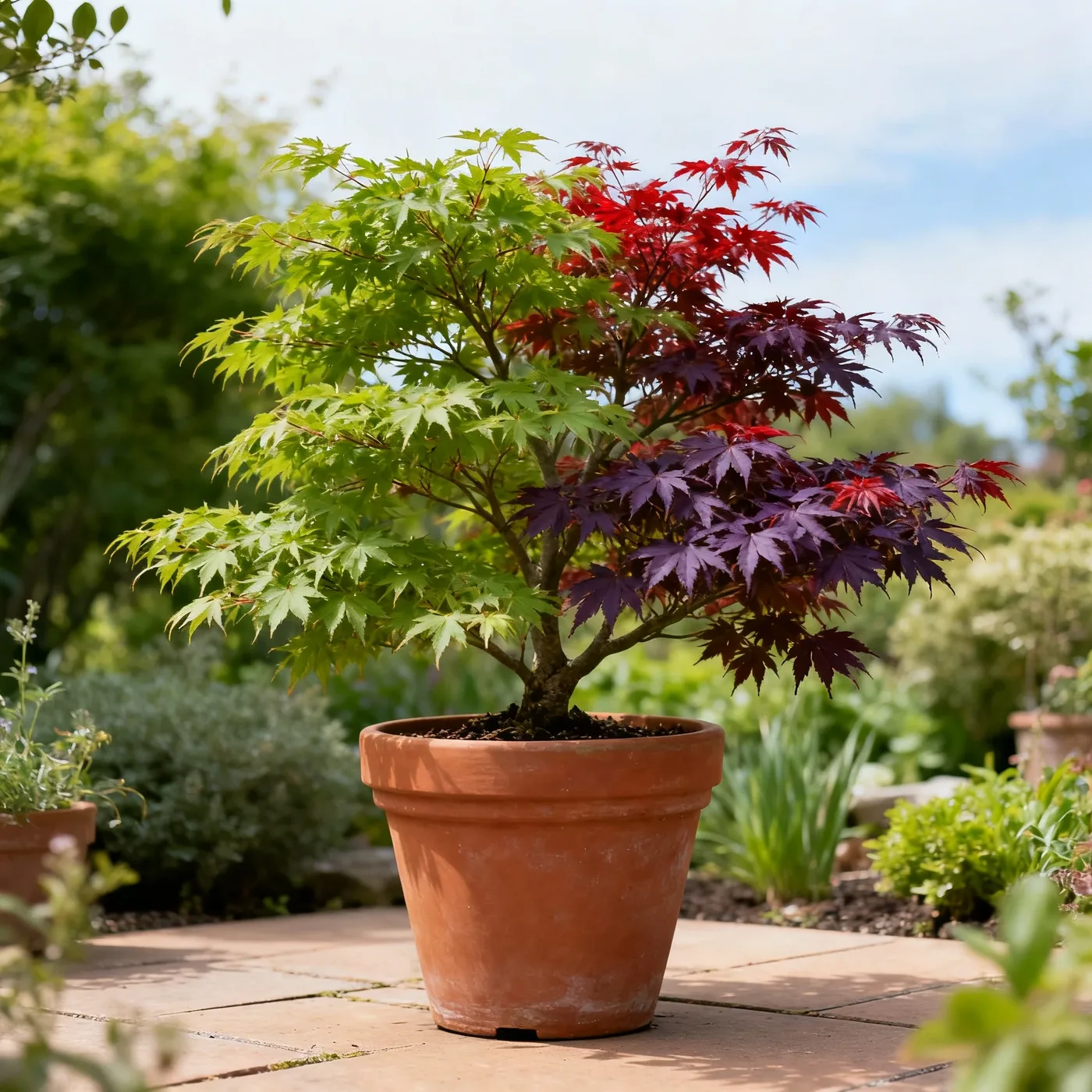
Dwarf Japanese Maple
Acer palmatum (dwarf cultivars, e.g. 'Bloodgood', 'Crimson Queen', 'Tamukeyama', 'Shaina')
Dwarf Japanese Maple Specimen Tree, Ready to Plant
This size is not in the online store yet. Ask about availability and we will reply with current stock.
- Brilliant fall color in red, orange, or gold depending on cultivar
- Thrives in containers and small gardens; matures 4-8 feet
- Part sun to part shade tolerant; ideal for courtyards and Japanese gardens
About this plant
Japanese maples are prized for their delicate foliage and stunning fall color. Dwarf cultivars like Bloodgood, Crimson Queen, and Tamukeyama reach 4-8 feet, making them ideal specimens for small gardens, containers, and foundation plantings. Their slow growth and ornamental branching structure shine in Japanese gardens, courtyards, and as patio accents.
Your 2-gallon maple arrives in a nursery container, ready to plant in spring or fall. Choose a location with part sun to part shade (morning sun with afternoon shade in hot climates works best). Water thoroughly at planting and keep soil consistently moist the first year. Well-draining, rich loam is essential; amend heavy clay before planting.
Dwarf Japanese Maple at a glance
| Botanical name | Acer palmatum (dwarf cultivars, e.g. 'Bloodgood', 'Crimson Queen', 'Tamukeyama', 'Shaina') |
|---|---|
| Plant type | deciduous shrub / small ornamental tree |
| USDA zones | 5-8, some cultivars to 9 with afternoon shade |
| Mature height | 4-8 ft, varies widely by cultivar (weeping forms often 4-6 ft, upright dwarfs to 8-10 ft) |
| Mature width | 4-8 ft, often wider than tall for weeping/mounding cultivars |
| Sun | part sun to part shade; morning sun with afternoon shade in hot climates, more sun tolerated in cooler/coastal zones |
| Water | moderate, consistent moisture; do not let dry out, especially in containers |
| Bloom time | spring (April-May), flowers inconspicuous |
| Bloom color | small red-purple flowers, not showy |
| Growth rate | slow, roughly 6-12 inches per year |
| Deer resistance | moderate, occasionally browsed |
| Best planting time | early spring or early fall, avoiding summer heat and winter freeze |
Container sizes explained
| #1 / 1 Gallon | A trade one gallon pot (about 6.5 inches). One to two seasons older than a quart, with an established root system. |
|---|---|
| #2 / 2 Gallon | A trade two gallon pot. Common for peonies and perennials that need root room; usually blooms the first or second year. |
| #3 / 3 Gallon | A trade three gallon pot (about 10 inches). A well-developed shrub or small tree, often 2 to 4 feet tall on arrival. |
Questions before you buy
Do you offer different sizes?
We currently offer the 2-gallon size, which is a well-established nursery-grown specimen ready for immediate planting. This size provides excellent value and adapts well to both in-ground gardens and container culture.
When should I plant my Japanese maple after it arrives?
Plant in spring or fall for best results. Spring planting (March-May) allows the tree to establish roots through the growing season. Fall planting (September-November) works well in most zones but requires consistent moisture through winter dormancy.
How large will my dwarf Japanese maple grow?
Dwarf cultivars typically reach 4-8 feet in height and width, though some upright forms may reach 8-10 feet. Growth is slow, around 6-12 inches per year, so your tree will take 5-10 years to reach full mature size and well-shaped form.
How much sun does a dwarf Japanese maple need?
Japanese maples prefer part sun to part shade. In cooler climates and coastal zones, they tolerate more direct sun. In hot climates, provide morning sun with afternoon shade to prevent leaf scorch. Dappled light under tall trees is ideal.
What hardiness zones are suitable for dwarf Japanese maple?
Most dwarf cultivars thrive in USDA zones 5-8. Some cultivars can extend to zone 9 with afternoon shade in hot climates. Provide winter protection in the coldest zones, especially for container-grown specimens.
What should I do in the first year after planting?
Keep soil consistently moist through your first growing season, as Japanese maples do not tolerate drying out. In containers, check moisture frequently. Amend planting holes with well-draining, rich loam, and water deeply at planting. Avoid fertilizing the first year; let the tree focus on root establishment.