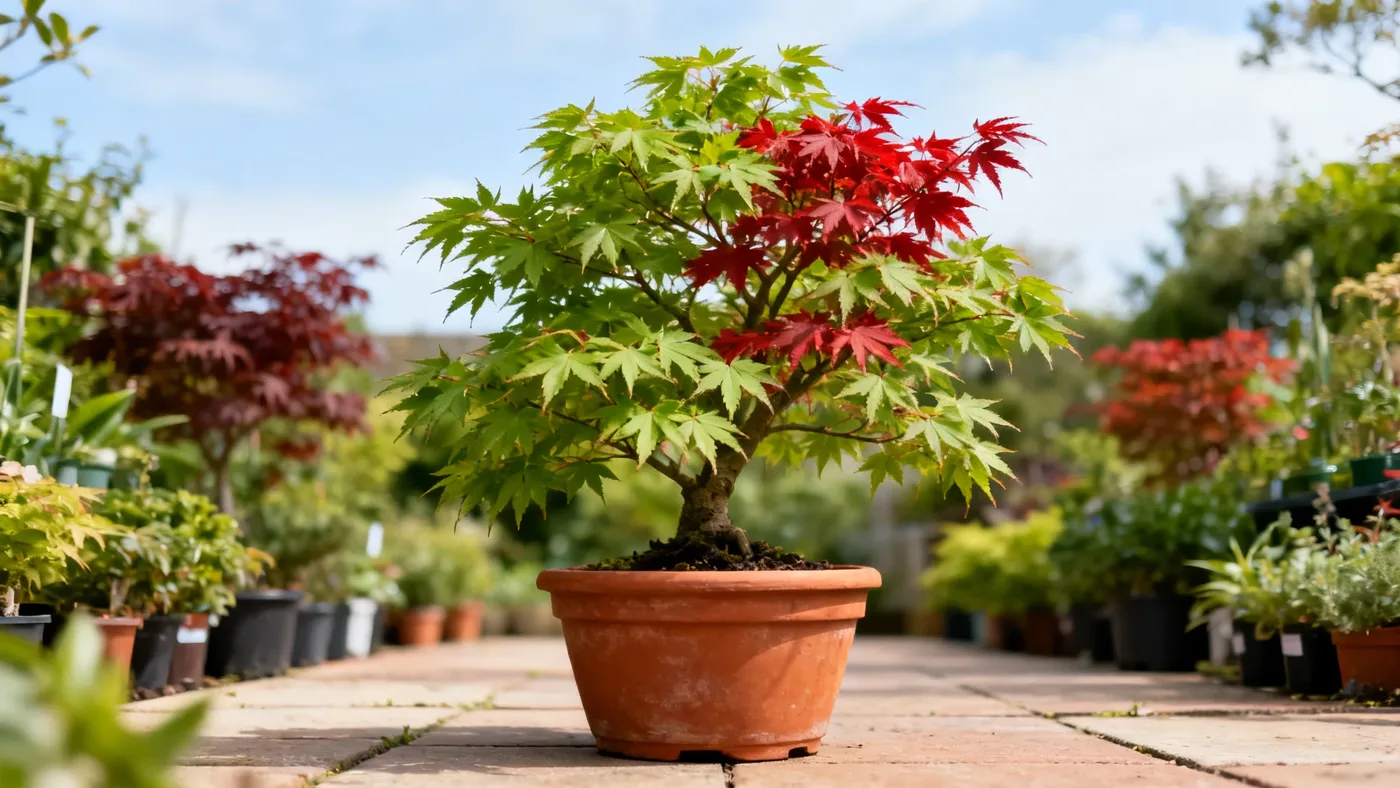
Buying a Dwarf Japanese Maple: Container Sizes and Tips
Dwarf Japanese Maple (Acer palmatum dwarf cultivars) is one of the most sought-after ornamental plants for home gardens and landscaping. Whether you want 'Bloodgood' for its deep red foliage, 'Crimson Queen' for a graceful weeping form, or 'Tamukeyama' for a mounding habit, you'll find that buying the right plant matters as much as planting it well. This guide walks you through what to look for, what container sizes mean, and where to source healthy specimens.
What to Look for When Buying a Dwarf Japanese Maple
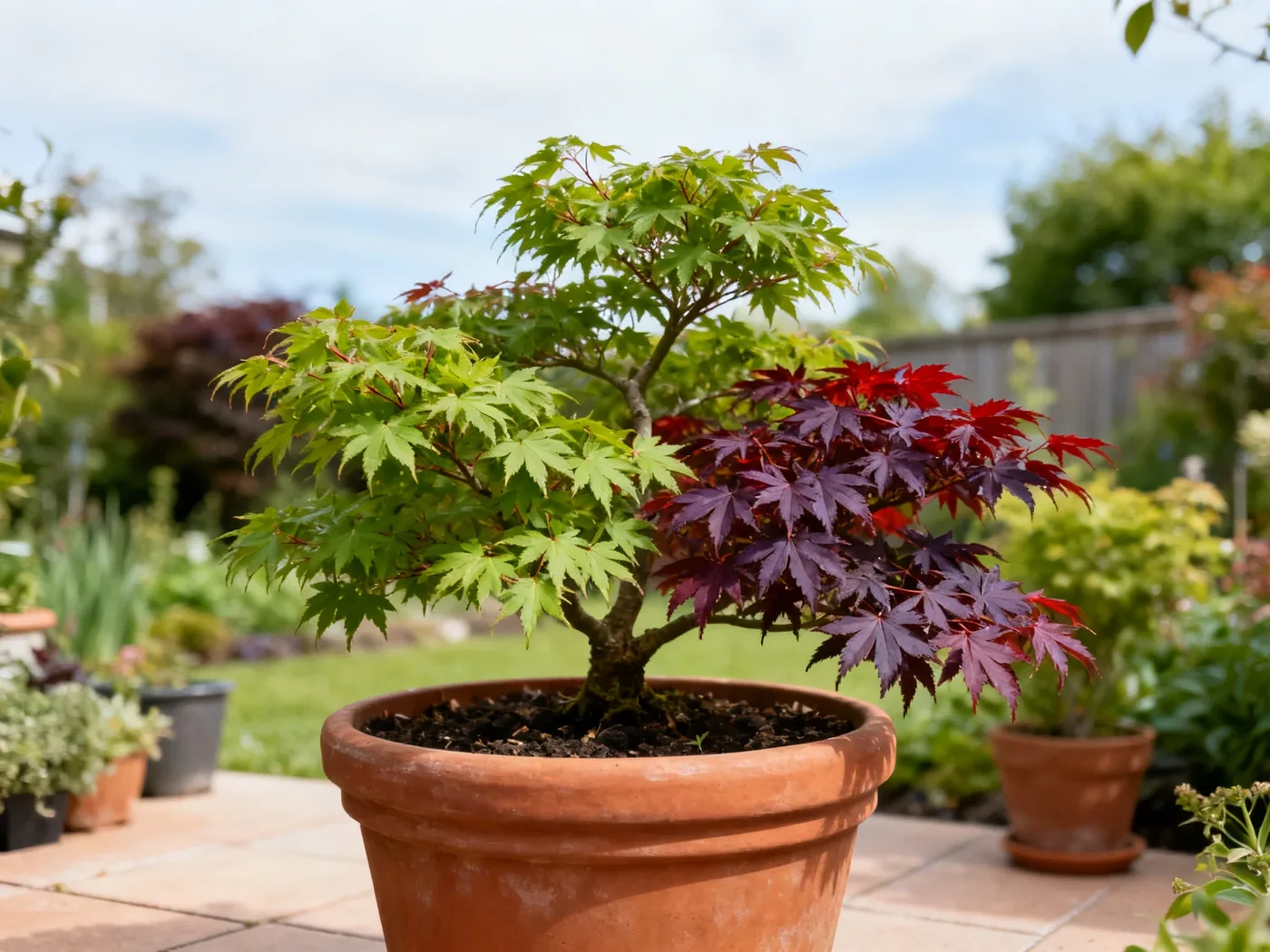
A well-grown Dwarf Japanese Maple should show signs of vigor and good health from the moment you see it. Start by inspecting the foliage. Leaves should be full, evenly colored for the cultivar (whether deep burgundy, green, or variegated), and free of brown spots or scorching. Slight leaf wilt on a hot day is normal, but the stems should feel turgid, not soft or mushy.
Next, examine the branching structure. Look for a plant with multiple well-spaced branches radiating from the main stem, not a single weak leader. The branch angles should be wide and natural, not creating acute angles that could split under weight or snow load. Avoid plants with bark damage, splits, or signs of rubbing.
Check the soil. It should be moist but not waterlogged. Lift the container and feel its weight. A bone-dry plant will recover more slowly after planting, and a soggy one may have root damage already underway. The soil should smell like damp earth, not sour or musty.
Container Sizes and What They Mean
Nursery-grown Dwarf Japanese Maples are typically sold in three main container sizes: quart, #1 (one gallon), and #3 (three gallon). Understanding what you get in each helps match your budget and planting timeline.
A quart-sized plant is often a young rooted cutting or small grafted sapling, usually 8 to 16 inches tall. These are the most affordable option and work well if you have patience. You'll wait longer to reach a landscape-sized specimen, but you'll also invest less upfront. Quart plants need careful attention to watering and may benefit from afternoon shade their first year in your garden.
A #1 (one-gallon) container holds a more established plant, typically 12 to 24 inches tall with visible branching. This is the most popular size among home gardeners because it offers a good balance of price, maturity, and ease of handling. A #1 plant can fill a garden role immediately and is resilient enough for most planting scenarios.
A #3 (three-gallon) container delivers a substantial plant, often 24 to 36 inches tall with a fully formed branch structure. These are specimen-grade plants that can anchor a garden bed or serve as an instant focal point. They cost more but require less time to mature. A #3 plant is also your best choice if you want to confirm a cultivar's mature form, since you can already see its branching habit and color.
Some specialty growers also offer larger field-grown plants on a custom or semi-custom basis, ranging from #5 to #15 containers. These are rare and expensive but necessary if you want an established visual impact immediately.
Quality Indicators by Cultivar
Different Dwarf Japanese Maple cultivars have different appearance standards. Knowing what to expect prevents disappointment.
'Bloodgood' should display rich, dark red foliage in spring and summer, intensifying to crimson in fall. In shade, the red may lean toward burgundy; this is normal. If the foliage is dull or mottled with brown, the plant may be drought-stressed or exposed to too much sun.
'Crimson Queen' is a weeping form, so expect drooping branch tips and a fountain-like silhouette even in a young plant. The foliage should be a soft red or burgundy, not stiff or upright. Upright growth signals a mislabeled plant or poor cultivation.
'Tamukeyama' is also weeping, with deeply lobed leaves and a more delicate texture than other cultivars. Look for fine branching and soft cascading growth. This cultivar can look sparse in a small container, which is typical, not a defect.
'Shaina' is a compact upright form with small leaves and fine texture. A well-grown Shaina will be densely branched and should feel substantial for its size. Young plants may look almost bonsai-like, which is correct for the cultivar.
Top Picks at Different Price Points
Dwarf Japanese Maples range from budget-friendly to premium, depending on size, cultivar rarity, and age. Here's how to think about value at each tier.
Entry-level / Budget (Quart to Small #1) gives you a young plant of a common cultivar like 'Bloodgood' or 'Crimson Queen'. You're buying potential and investing sweat equity in care. These plants grow roughly 6 to 12 inches per year, so you'll have a full landscape-sized specimen (4 to 8 feet tall and wide, depending on cultivar) in 5 to 10 years. This tier is ideal if you enjoy watching a plant develop and have space to accommodate slower growth.
Mid-range / Established (#1 to #3) offers a well-formed plant from a reputable grower, often with visible branch structure and some maturity. You're paying for professional cultivation and a faster result. This is where most home gardeners find their best value. You can place a mid-range #3 Crimson Queen in a garden and enjoy its mature form the same season.
Premium / Specimen (#3 to #5+) includes rare cultivars, older plants with exceptional branching, or specialty forms like coral bark types (such as 'Sango-kaku'). You're buying a landscape anchor or a showstopper for a featured spot. Premium plants are often field-grown and have decades of life ahead. These are worth the investment if you want mature impact now or if you're sourcing a rare cultivar like 'Beni Maiko'.
Red Flags to Avoid
Not all Dwarf Japanese Maples on sale are healthy or honestly labeled. Watch for these warning signs.
Sparse foliage with visible bare branches. A healthy Dwarf Japanese Maple, even a young one, should have leaves along its branches. Bare wood signals neglect, pest damage, or dieback. Pass on plants like this unless you're confident in revival.
Brown or scorched leaf edges. This usually means the plant has been exposed to too much sun, high heat, strong wind, or inconsistent watering. Leaf scorch is common in nurseries but doesn't always recover well once planted. If the scorching covers more than 25 percent of the foliage, consider a healthier specimen.
Soft, mushy stems or roots growing through drainage holes into a sitting puddle. Root rot is a serious problem and difficult to reverse. Don't assume you can rescue a waterlogged plant. Dwarf Japanese Maples need consistent moisture but not soggy soil.
Loose or unstable plants in their container. Gently tug the stem at the soil line. The plant should be firmly rooted, not wobbling. A loose plant often means roots have not yet established, or worse, that soil has washed away and roots are exposed.
Scale insects, aphids, or spider mites visible on stems or leaf undersides. Infestations can be treated, but they slow a young plant's growth. If the infestation is heavy, ask the nursery for a discount or choose a healthier specimen.
Mismatched labels or cultivar names you can't verify. Some sellers mislabel plants unintentionally or use vague terms like "Japanese Maple Mix." If you want a specific cultivar, ask to see the propagation label or paperwork from the grower. Named cultivars of Dwarf Japanese Maple are always grafted (not seed-grown), and that should be documented.
Where to Buy Dwarf Japanese Maple
The best source depends on what you want and how much time you have.
Local and regional nurseries are ideal if you can inspect plants in person and ask the grower about their practices. Local nurseries often carry cultivars suited to your climate zone and can advise on immediate care after purchase. Staff can also help you choose the right size for your garden.
Specialty deciduous shrub growers focus on plants like Dwarf Japanese Maple and often offer a wider range of cultivars than general nurseries. Many ship mail-order within the growing season. Specialty growers invest in quality and can provide detailed care instructions specific to their propagation method.
Online retailers and mail-order nurseries offer convenience and sometimes a larger selection of rare cultivars. Be sure to check their USDA zone recommendations and shipping policies. Spring and fall are ideal shipping windows; most reputable growers avoid sending plants in summer heat or deep winter freeze. Ask about a health guarantee or replacement policy in case a plant arrives damaged.
Landscape contractors and designers sometimes source plants for clients and may be willing to order for you. They often have access to wholesale growers and can negotiate bulk pricing if you're buying more than one plant.
Avoid purchasing from big-box retailers if possible. While convenient, these stores often carry plants from distant growers, and they're not always accustomed to the fussy watering needs of container-grown Dwarf Japanese Maples. By the time a plant reaches a big-box shelf, its care history is often unclear.
Buying for Your Zone
Dwarf Japanese Maple is hardy in USDA zones 5 through 8. Some cultivars can reach zone 9 with afternoon shade. Verify the hardiness of your chosen cultivar before buying, especially if you're in zone 4 or zone 9. A plant labeled as zone 6 may struggle in zone 5 winters or zone 9 summers.
If you're in a hot climate (zone 8 or 9), prioritize afternoon shade in your garden plan. Many cultivars tolerate more sun in cooler coastal zones than they do inland. Ask the grower about sun tolerance for your specific region.
Inspecting Plants on Arrival
If you've ordered by mail, inspect your plant as soon as it arrives. The soil should be damp. Foliage should look fresh, not desiccated or wilted. Minor leaf drop during transit is normal and recoverable. Broken branches are not.
If a plant arrives damaged or clearly unhealthy, contact the grower right away with photos. Reputable growers will offer a replacement or refund. Keep original packaging and labels for this conversation.
Water the plant gently and place it in a sheltered location with morning sun and afternoon shade for a few days before planting it in your garden. This hardening off period helps it transition from a controlled nursery environment to your yard.
Getting More from Your Purchase
Once you've bought your Dwarf Japanese Maple, proper care is key to long-term health and beauty. For detailed planting, watering, pruning, and seasonal care, see our Dwarf Japanese Maple care guide. A well-planted Dwarf Japanese Maple can live 50 years or longer, so your initial investment pays dividends for decades.
Quick Reference: Buying Checklist
| What to Check | Healthy Plant | Red Flag |
|---|---|---|
| Foliage | Full, even color, no brown spots | Sparse, scorched, or dull |
| Branches | Multiple, wide-angled, no bark damage | Single leader, acute angles, splits |
| Soil moisture | Damp, earthy smell, proper weight | Waterlogged, sour, or bone-dry |
| Root stability | Firm in container, slight resistance when tugged | Loose, wobbling, or roots in standing water |
| Pests | None visible, clean leaf undersides | Scale, aphids, mites, or webs |
| Cultivar label | Specific name (Bloodgood, Crimson Queen, etc.) | Vague (Japanese Maple Mix) or unverifiable |
| Container size for #1 | 12 to 24 inches tall, established branching | Undersized for age or overgrown for the pot |
| Zone compatibility | Matches or exceeds your USDA zone | Zone-marginal without confirmed local success |