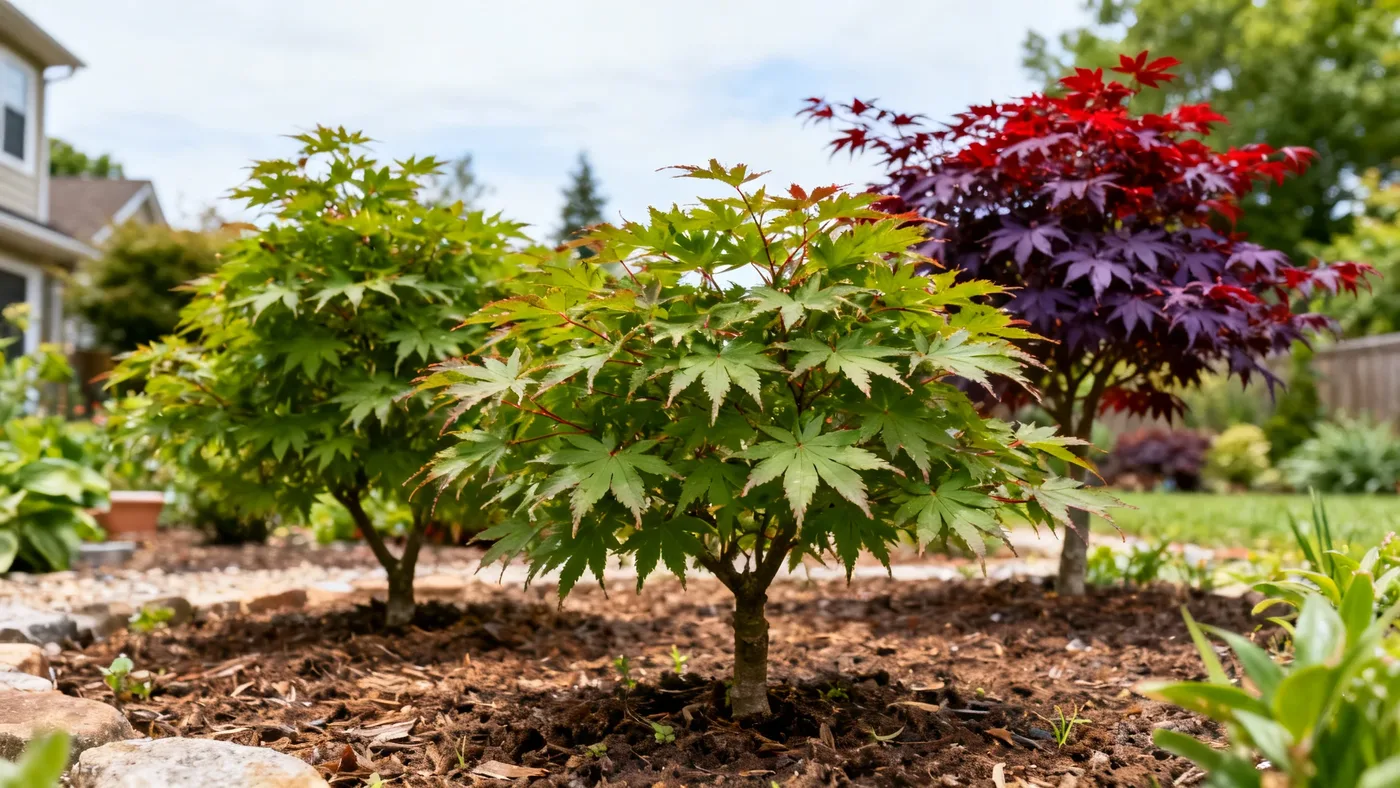
Dwarf Japanese Maple FAQ: Your Top Questions Answered
Whether you're a first-time planter or tending an established specimen, these answers address the questions we hear most from home gardeners and landscapers about growing dwarf Japanese maple successfully.
Planting and Site Selection
What is the best time to plant a dwarf Japanese maple?
Plant in early spring or early fall to give roots time to settle before summer heat or winter freeze. Avoid planting during hot months or when the ground is frozen. Early spring planting is ideal in most zones because the tree has the whole growing season ahead.
How much sun does a dwarf Japanese maple need?
Dwarf Japanese maple thrives in part sun to part shade. In cooler zones and coastal regions, it tolerates more direct sun. In hot climates (zones 8-9), give it morning sun with afternoon shade to prevent leaf scorch. If your area gets very hot summers, shade during peak afternoon hours is essential.
What kind of soil does dwarf Japanese maple prefer?
It needs rich, well-draining loam with a soil pH between 5.5 and 6.5, slightly acidic to neutral. The tree is sensitive to poor drainage, so amend heavy clay with compost or peat moss before planting. Waterlogged soil leads to root rot and dieback, so drainage is non-negotiable.
How far apart should I space multiple dwarf Japanese maples?
Space plants 3 to 6 feet apart for group plantings, depending on the mature spread of the cultivar you're growing. Check the specific cultivar's spread, as some weeping forms spread wider than their height.
Can I plant dwarf Japanese maple in a shady corner?
Yes, but not full shade. Part shade is ideal, but if a corner gets less than 3-4 hours of direct sun daily, growth will slow and foliage may look thin. The tree still needs some light to develop good color and structure.
Watering and Basic Care
How often should I water my dwarf Japanese maple?
Water regularly to keep soil consistently moist but not waterlogged. In the first year after planting, water weekly if rainfall is sparse. Once established, the tree has low to moderate drought tolerance, but it should never completely dry out, especially in containers.
Can dwarf Japanese maple handle drought?
Once established, it has low to moderate drought tolerance. However, prolonged dry spells will stress the tree and cause leaf scorch. Container-grown trees are especially vulnerable to drying out quickly and need more frequent watering than in-ground plants.
Do I need to fertilize my dwarf Japanese maple?
Light feeding in early spring with a balanced, slow-release fertilizer formulated for acid-loving or woody ornamentals is sufficient. Avoid heavy feeding, which promotes excessive growth and weakens the tree's structure. Most established trees need little to no fertilizer if planted in rich soil.
What kind of mulch should I use around my dwarf Japanese maple?
Apply 2 to 3 inches of organic mulch, such as shredded bark or compost, keeping it 2 inches away from the trunk. Mulch helps retain soil moisture and regulates soil temperature, which is important for this tree's shallow root system.
Appearance and Seasonal Changes
What color are the leaves of dwarf Japanese maple?
Leaf color depends on the cultivar you grow. Some are vibrant green year-round, while others emerge burgundy or red. Well-known red cultivars include 'Bloodgood', 'Crimson Queen', and 'Tamukeyama'. Some cultivars have variegated leaves with multiple tones.
Is fall color really that striking?
Yes. This is often the standout feature of dwarf Japanese maple. Depending on cultivar and growing conditions, fall color ranges from brilliant red and orange to gold. Cool nights in fall intensify the color display.
Do dwarf Japanese maples have visible flowers?
Flowers appear in spring (April-May) but are inconspicuous, small, and red-purple in color. They are not showy, so don't plant this tree for blooms. The real ornamental value is the delicate foliage and branching structure.
Do some cultivars have colorful winter stems?
'Sango-kaku', known as coral bark maple, has striking coral-red stems that glow in winter when leaves drop. This makes it an exceptional choice for winter interest and adds color to the garden when other plants are dormant.
Growth, Pruning, and Maintenance
How fast does dwarf Japanese maple grow?
Growth is slow, roughly 6 to 12 inches per year. Expect 5 to 10 years for the tree to reach a mature, well-shaped form. This slow pace means patience is rewarded, not a drawback.
How tall and wide will my dwarf Japanese maple get?
Mature height ranges from 4 to 8 feet depending on cultivar; weeping forms typically reach 4 to 6 feet, while upright dwarfs can reach 8 to 10 feet. Mature width is similarly 4 to 8 feet and is often comparable to or wider than height, especially for weeping or mounding cultivars. Check the specific cultivar's label for precise expectations.
How much pruning does dwarf Japanese maple need?
Minimal pruning is needed. Light shaping and deadwood removal in late fall to mid-winter while dormant is sufficient to reduce sap bleed and disease entry. Avoid heavy pruning, which disrupts the tree's natural elegant form and encourages dense, awkward regrowth.
Can I prune dwarf Japanese maple in summer?
No. Prune only in late fall to mid-winter when the tree is fully dormant. Summer pruning stresses the tree and invites disease through open cuts. Dormant pruning allows cuts to seal cleanly before growth resumes.
How long do dwarf Japanese maples live?
Commonly 50 years or more with good siting and care. Some specimens live over 100 years, making this a genuine heirloom tree for your garden.
Container Growing
Can I grow dwarf Japanese maple in a container?
Yes, it is well-suited to container culture. Use a container with good drainage holes and rich, well-draining potting mix. Container growing allows you to move the tree to adjust light and protect it from harsh winds or extreme cold in colder zones.
What size container should I use?
Start with a container at least 15 to 20 inches deep and wide for a young tree. As the tree matures, graduate to larger pots to prevent girdling roots, which restrict growth and eventually kill the tree. A mature dwarf Japanese maple may need a 20-plus gallon container.
How do I protect a container-grown dwarf Japanese maple in winter?
In zones 5 to 7, move the pot against the south side of a building or wrap it with burlap for insulation. Roots in containers freeze more easily than in-ground roots because they have no soil depth for protection. In zone 8 or warmer with afternoon shade, container trees usually need no winter protection.
How often should I water a container-grown dwarf Japanese maple?
Check soil daily during the growing season; water when the top inch is dry. Container soil dries much faster than in-ground soil, especially in hot weather or windy locations. Never let the pot dry out completely.
Problems, Pests, and Diseases
What causes leaf scorch on dwarf Japanese maple?
Leaf scorch results from too much sun, wind exposure, or drought stress. The edges of leaves turn brown and papery. Prevent it by planting in part shade, ensuring consistent moisture, and protecting young trees from harsh afternoon sun and strong winds until established.
What pests affect dwarf Japanese maple?
Aphids, scale, Japanese beetles, and borers (on stressed plants) are the main culprits. Stressed trees are more vulnerable to borers, so keep your tree healthy with proper watering and drainage. Most pest problems are minor on vigorous trees.
Is root rot a problem?
Yes, root rot occurs in poorly drained soil or when the tree stays waterlogged. This is the most serious threat to dwarf Japanese maple. Prevention through proper soil preparation and site selection is far easier than treating rot once it begins. If drainage is poor, amend heavily or choose a different location.
Can dwarf Japanese maple get anthracnose or verticillium wilt?
These fungal diseases can affect dwarf Japanese maple but are uncommon on healthy, well-sited trees. Anthracnose causes leaf spots; verticillium wilt causes wilting and branch dieback. Proper drainage, air circulation, and avoiding stress minimize risk. Prune out affected branches promptly if disease appears.
Are dwarf Japanese maples toxic to pets?
No. Dwarf Japanese maple is not known to be toxic to pets or people, making it a safe choice for families and homes with dogs or cats.
Cultivars and Selection
What are the most popular dwarf Japanese maple cultivars?
'Bloodgood' is the most widely grown, prized for deep burgundy foliage that holds color all season. 'Crimson Queen' is a weeping form with finely cut red leaves. 'Tamukeyama' is another elegant weeper with red foliage and exceptional form. 'Shaina' is a compact upright with small, deep-red leaves. 'Sango-kaku' stands out for coral-red winter bark.
Should I choose an upright or weeping cultivar?
Upright forms work best as specimen trees in landscape beds or as accents in foundation plantings. Weeping forms excel as focal points, especially planted where their cascading branches can be admired. Consider the space you have and how the tree's final form will complement your landscape.
What is the difference between dwarf and full-size Japanese maple?
Dwarf cultivars are specifically selected or grafted to stay smaller, typically 4 to 10 feet tall at maturity, making them ideal for residential gardens and containers. Full-size Japanese maples grow larger and need more space. Dwarf forms also often develop more compact, well-defined branching structures.
Hardiness and Climate Considerations
What USDA zones can dwarf Japanese maple tolerate?
Dwarf Japanese maple is hardy in zones 5 to 8. Some cultivars, particularly those with finely cut foliage, extend to zone 9 with afternoon shade. Check the specific cultivar's hardiness before planting in zone 9 or if you live in the coldest part of zone 5.
Can I grow dwarf Japanese maple in the hot South?
Yes, but you must provide afternoon shade and consistent moisture. In zones 8 and 9, morning sun with afternoon shade is essential to prevent leaf scorch. The more protection from intense afternoon heat, the better the tree thrives. Mulch heavily to keep roots cool.
Will late frost damage my dwarf Japanese maple?
Yes. Late spring frost can kill emerging new growth, causing dieback and setback. In frost-prone areas, avoid planting in low spots where cold air pools. Plant on gentle slopes or higher ground where air drains away. Tender new growth in spring is vulnerable, so site the tree to catch morning sun that thaws frost gently.
Quick Reference
| Feature | Details |
|---|---|
| Hardiness Zones | 5-8 (some cultivars to 9 with afternoon shade) |
| Mature Height | 4-8 ft (varies by cultivar; weeping 4-6 ft, upright to 8-10 ft) |
| Mature Width | 4-8 ft, often wider than tall for weeping forms |
| Growth Rate | Slow: 6-12 inches per year |
| Sun Requirement | Part sun to part shade; morning sun + afternoon shade in hot climates |
| Water Needs | Moderate, consistent moisture; never allow to dry out |
| Soil Type | Rich, well-draining loam; pH 5.5-6.5 |
| Planting Season | Early spring or early fall |
| Spacing | 3-6 ft apart (depending on mature spread) |
| Pruning | Minimal; light shaping in late fall to mid-winter while dormant |
| Fertilizing | Light feeding in early spring with balanced, slow-release formula |
| Container Suitable | Yes, with good drainage and winter protection in colder zones |
| Years to Mature Form | 5-10 years |
| Lifespan | 50+ years; some specimens over 100 years |
| Toxicity | Not toxic to pets or people |
Learn More
For a comprehensive guide to planting and caring for your dwarf Japanese maple, read our step-by-step planting guide or dive deeper into ongoing care with our complete care guide. Both resources cover soil preparation, watering schedules, seasonal tasks, and troubleshooting in greater detail than this FAQ allows.