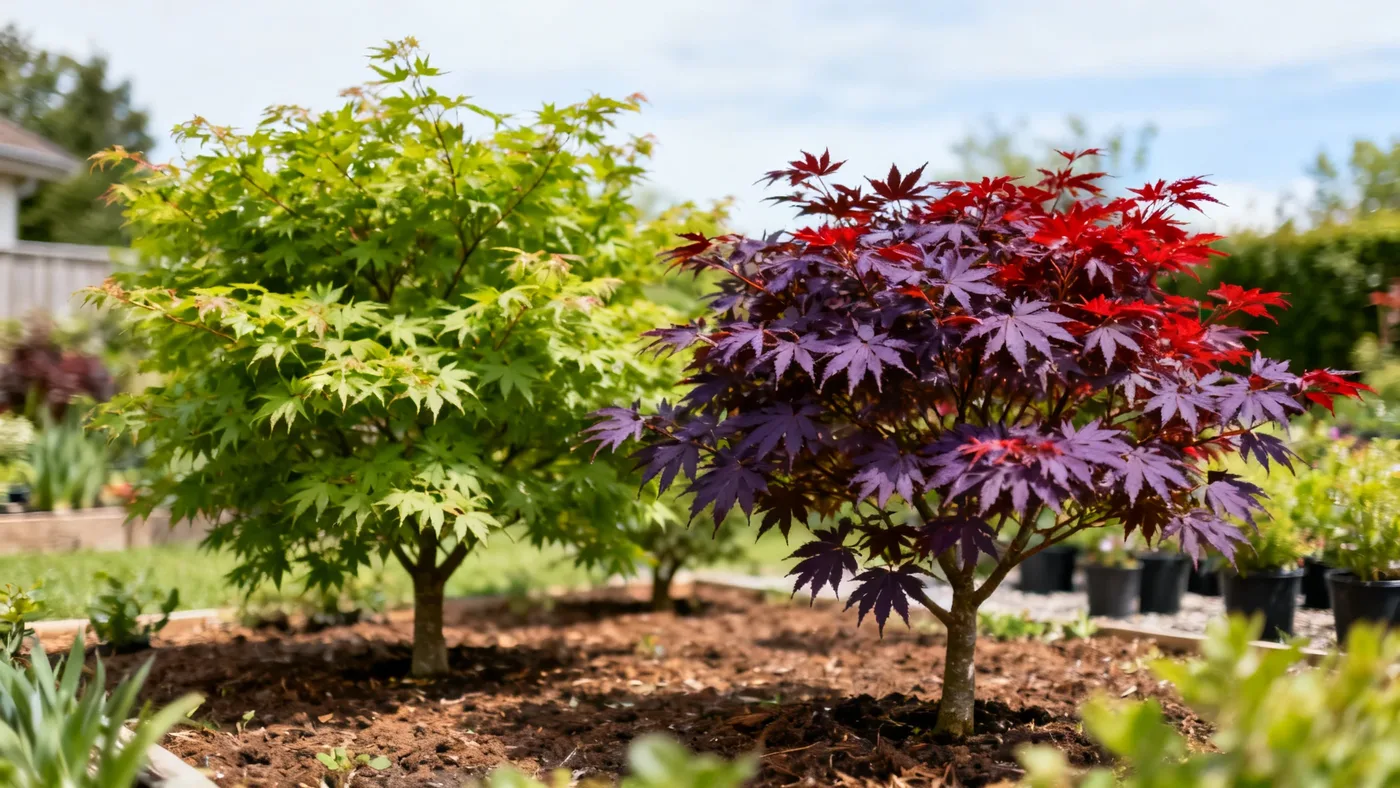
Winter Care for Dwarf Japanese Maples in Cold Climates
Dwarf Japanese maples are hardy ornamentals, but winter in zones 5 and colder brings real challenges. A few weeks of preparation now will keep your tree alive and vigorous through the freeze-thaw cycle, frost heave, and dehydrating winter winds. This guide covers everything from container protection to dormancy pruning so your maple emerges spring-ready.
Why Winter Preparation Matters
Dwarf Japanese maples are rated hardy to USDA zone 5. However, hardiness zones describe average minimum temperatures, not the full winter picture. Your maple faces wind desiccation, freeze-thaw cycles that heave plants out of soil, sudden late frosts, and root damage in poorly drained soil that holds ice. Most winter losses are not from cold itself, but from dehydration, root breakage, or waterlogged soil turning to ice.
Protecting your dwarf Japanese maple in winter means addressing these risks before December arrives. The earlier you start, the better your odds.
Hardiness and Zone Selection
Dwarf Japanese maple cultivars vary in cold tolerance. Most standard dwarfs like 'Bloodgood', 'Crimson Queen', 'Tamukeyama', and 'Shaina' thrive in zones 5 through 8, with some cultivars extending to zone 9 if given afternoon shade. Weeping and dissected-leaf forms are typically as cold-hardy as their upright cousins, but slower-growing varieties may take longer to establish in cold zones.
If you garden in zone 5, choose cultivars known for vigor in your area, and plant in spring so the tree has a full growing season to establish before its first winter. Zones 4 and colder are outside the reliable range, though some gardeners in sheltered microclimates have success with extra protection.
Container Plants: The Winter Challenge
Dwarf Japanese maples are well-suited to container culture, but containers present a winter problem. Soil in a pot freezes solid, which kills roots far faster than soil in the ground where earth below the frost line stays unfrozen. A 3-gallon or 5-gallon container left outside in zone 5 will lose its maple in a hard winter.
Move containers into an unheated garage or shed before the first hard freeze. The goal is to keep roots from freezing, not to keep the tree warm. An unheated garage stays above the worst of the cold and protects the pot from drying winds. If moving is not possible, sink the entire pot into the ground in fall, burying it up to the rim so soil and roots benefit from earth's insulation. This is temporary overwintering; dig the pot back up in spring.
Water container maples once in fall before they go dormant, then check soil moisture only once every 4 to 6 weeks during dormancy. A sleeping maple needs far less water than an active one, but do not let soil dry out completely. Frozen, bone-dry soil is worse than moist soil kept consistently cool.
In-Ground Winter Care
Trees planted in the ground have better odds than containers, but site preparation matters. Dwarf Japanese maples are sensitive to poor drainage. If your soil holds water after rain, winter becomes a root-rot risk. In fall, amend planting areas with compost or peat to improve drainage and lower soil pH toward the slightly acidic range (5.5 to 6.5) that the tree prefers.
Do not apply mulch directly against the trunk. A 2- to 3-inch layer of wood chips or compost spread 6 inches from the base out to the drip line insulates the soil and moderates frost heave. Mulch piled against the trunk invites rot and pest damage.
Young trees benefit from a burlap windscreen on the north and west sides if your site is exposed to harsh winter sun and wind. Winter sun reflecting off snow can scorch the delicate bark, and wind desiccates branches. A simple frame wrapped in burlap will reduce this stress without overheating the tree.
Watering and Moisture Before Dormancy
One of the most common winter mistakes is neglect. Gardeners assume dormant trees need nothing, but autumn and early winter are dry seasons in many regions. A tree heading into winter with dry soil will suffer more from cold than one with adequate moisture.
Water your dwarf Japanese maple thoroughly in late October or early November, depending on your region. The goal is to saturate the root zone before the ground freezes. Do not water during active freezing, but if you get a warm spell in December or January, a deep watering is still beneficial if soil is not waterlogged.
Drought stress combined with cold is a recipe for winter dieback. Maples in well-draining loam with consistent moisture survive cold far better than those in poor drainage or drought conditions. This is why proper site selection and soil prep matter so much.
Pruning and Damage Prevention
Prune your dwarf Japanese maple in late fall to mid-winter while it is dormant. Remove any dead, damaged, or crossing branches. Light shaping is fine. Heavy pruning in late summer or fall can stimulate new growth that will be killed by frost. Dormant-season pruning reduces sap bleed and closes wounds before disease can enter.
Do not prune in spring until the tree is fully leafed out. Spring pruning of dormant buds wastes energy on tissues that may not survive a late frost.
Inspect branches in late fall for cankers, vertical cracks, or signs of anthracnose or verticillium wilt. Remove infected branches. These diseases weaken the tree and make it more vulnerable to winter damage. A weakened tree cannot mount a strong dormancy response.
Winter Drying and Sun Scorch
Winter sun and wind are silent killers. On a clear, cold day, the sun warms the bark on the south and west sides of the trunk. That warmth breaks dormancy in those cells. At night, temperatures plummet, and those cells freeze and die. This "sun scald" or frost crack appears as vertical splits in the bark or sunken areas that girdle the branch. A burlap wrap on the trunk and lower branches prevents most of this.
Desiccation is equally serious. Cold air holds little moisture, and soil that is frozen cannot release water to roots. Meanwhile, wind and winter sun pull water from branches. If the tree cannot replace that lost moisture (because soil is frozen), branches dry out and die back. A windscreen and late-fall watering both reduce desiccation risk.
Spring Recovery and Cleanup
In spring, remove winter protection as temperatures warm consistently. Take off burlap wraps by late March or early April, depending on your zone. Leaving wraps on too long delays bud break and can create excess humidity that invites disease.
Once the tree leafs out, assess winter damage. Dead branches will not leaf out. Remove them with a clean cut. Live branches may show tip dieback, where the outermost 2 to 4 inches are brown but the rest of the branch is fine. Prune back to live wood. Never leave stubs.
Fertilize in early spring with a balanced, slow-release fertilizer formulated for acid-loving ornamentals. Avoid high-nitrogen blends that push tender growth vulnerable to late frosts. A light feeding at bud break is enough.
Moving Into Your Dwarf Japanese Maple Care Routine
Winter protection is not one-time work. It is part of a year-round rhythm. For a complete year-round care program, consult our full dwarf Japanese maple care guide, which covers watering schedules, fertilizing, pest and disease management, and seasonal pruning timing.
Winter Care Quick Reference
| Task | Timing | Notes |
|---|---|---|
| Final watering | Late October or early November | Deep watering; saturate the root zone before soil freezes |
| Mulch application | November | 2-3 inches, 6 inches from trunk to drip line |
| Install windscreen or burlap wrap | November to December | Protect north and west sides; focus on young trees and exposed sites |
| Prune dead wood | Late fall or mid-winter (dormant) | Light shaping only; avoid heavy pruning that stimulates growth |
| Move containers indoors | Before first hard freeze | Unheated garage or shed; check soil moisture monthly |
| Remove protection | Late March or early April | When consistent warm temperatures arrive |
| Remove dead branches | Spring, after leafing out | Prune to live wood; clean cuts, no stubs |
| Spring fertilizing | Early spring at bud break | Light, balanced, slow-release formula |