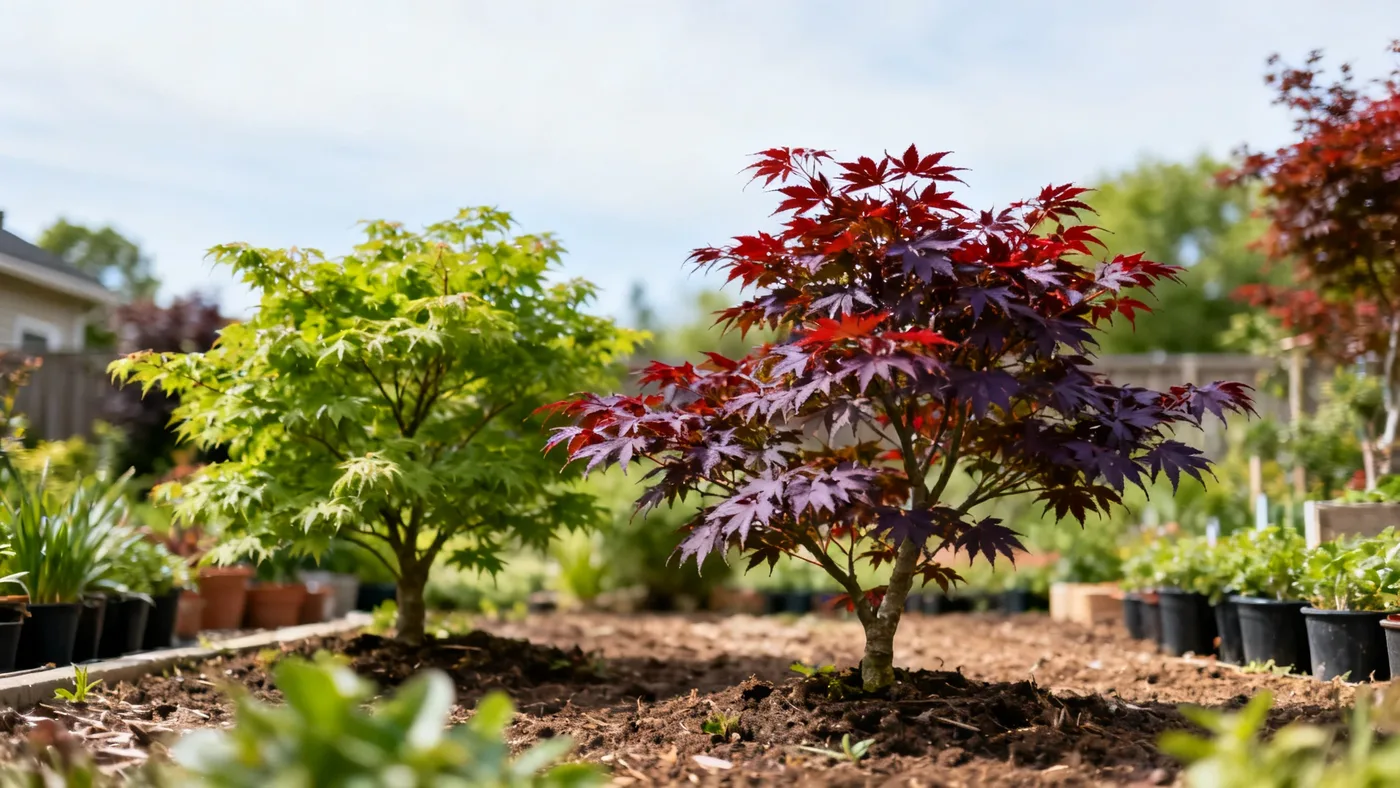
Watering a Dwarf Japanese Maple: A Complete Guide
Getting watering right is one of the most important steps in keeping your Dwarf Japanese Maple healthy and vibrant. These elegant ornamental trees require moderate, consistent moisture. They are not drought-tolerant plants, and they are equally sensitive to waterlogged soil. The goal is steady access to water without soggy conditions. This guide walks you through the exact watering practices that keep these slow-growing trees thriving, whether you are growing yours in a container or in the ground.
Understanding Your Dwarf Japanese Maple's Watering Needs
Dwarf Japanese Maple trees perform best with consistent moisture throughout the growing season. Unlike drought-hardy ornamentals, these shade-loving trees expect steady access to water. Their roots are fine and fibrous, which means they need soil that drains well but retains moisture without becoming soggy.
The challenge is finding the middle ground. Your tree should never dry out completely, but standing water invites root rot and disease. A soil that is rich, well-draining loam with a slightly acidic to neutral pH of roughly 5.5 to 6.5 supports both moisture retention and drainage. This balance is especially critical for container-grown plants and for cultivars like 'Bloodgood' and 'Tamukeyama', which are sensitive to both extremes.
One reason container-grown Dwarf Japanese Maples need attentive watering is that pots warm up faster and dry out faster than garden soil. In zones 5 through 8 (and some cultivars into zone 9 with afternoon shade protection), summer heat and wind can stress these trees quickly if moisture lapses. Container plants have no access to deep water reserves like in-ground trees, making consistent checking essential.
For a deeper understanding of overall care, read our complete Dwarf Japanese Maple care guide, which covers pruning, fertilizing, and seasonal management alongside watering.
Materials and Tools You'll Need
- A soaker hose or drip line (preferred over overhead sprinklers)
- A watering can with a gentle rose or spray head for hand watering
- A soil moisture meter or the finger-test method
- Organic mulch: wood chips, bark, or compost (to apply in 2 to 3-inch layers)
- Well-draining potting mix for containers (not garden soil)
- A rain gauge to track rainfall accurately
- Optional: a timer for automated drip irrigation systems
How to Water Your Dwarf Japanese Maple: Step-by-Step
- Check soil moisture before watering. Push your finger into the soil 2 inches deep. If the soil feels moist, hold off on watering. If it feels dry to the touch, it is time to water. A soil moisture meter removes guesswork if you prefer one. This simple check prevents the most common watering mistakes.
- Water deeply and slowly. When you do water, soak the soil to a depth of 6 to 8 inches. Apply water slowly over 15 to 20 minutes rather than in a quick gush. Slow watering allows soil to absorb moisture fully, reduces runoff (especially important on slopes or in containers), and encourages roots to grow deeper.
- Water at the base, not overhead. Use a soaker hose, drip line, or watering can with a gentle rose aimed at the soil around the tree's base. Overhead watering wets foliage, which can encourage fungal disease, wastes water, and is less efficient for reaching the roots where moisture is needed most.
- Water early in the morning if possible. Morning watering allows foliage to dry quickly and reduces disease risk. Avoid evening watering when possible, as wet foliage overnight creates conditions for fungal problems.
- Apply and maintain mulch around the base. Spread 2 to 3 inches of organic mulch (wood chips, bark, compost) around the tree, keeping it 2 inches away from the trunk to prevent rot. Mulch moderates soil temperature swings, reduces moisture loss in summer heat, and keeps roots cooler.
- Adjust frequency based on rainfall and season. In weeks with 1 inch or more of rainfall, skip supplemental watering. During hot spells, you may need to water twice a week. In cooler months, reduce frequency significantly. Always factor in recent rain when deciding whether to water.
Seasonal Watering Schedule for Dwarf Japanese Maple
Spring (April to May). As growth begins and temperatures warm, check soil moisture weekly. Container plants may need watering 2 to 3 times a week if daytime temperatures climb above 70 degrees Fahrenheit. This is when new leaves emerge, so consistent moisture supports vigorous spring growth.
Summer (June to August). This is the most demanding season. Heat and dry air pull moisture from soil and foliage rapidly. In-ground trees typically need deep watering once or twice a week unless rainfall occurs. Container plants often need daily checking and may require watering every 1 to 2 days during heat waves. Afternoon shade becomes critical in zones 8 and 9 to prevent leaf scorch from combined heat and drought stress.
Fall (September to October). As temperatures cool and day length shortens, growth slows. Reduce watering frequency to match natural rainfall patterns. Your tree is preparing for dormancy and needs less water than in summer.
Winter (November to March). Dormant trees need far less water. In-ground trees in zones 5 to 7 rely on winter snow and occasional rain. Container plants in these zones need winter root protection and reduced watering. Only water if soil becomes bone-dry during a dry stretch. Protect container roots by wrapping pots with burlap or moving them to a sheltered location.
Watering Container vs. In-Ground Plants
Container plants require more frequent watering because soil in pots dries out faster than garden soil. Check moisture daily during the growing season. Container plants are also at risk for girdling roots, which develop when soil stays waterlogged or roots circle the pot. Ensure your container has drainage holes and use well-draining potting mix, not garden soil.
Repot container-grown Dwarf Japanese Maples every 2 to 3 years into fresh soil to prevent compaction and root circling. This is one of the few proactive steps that directly prevents watering problems.
In-ground plants benefit from deeper, more stable moisture. Established root systems and cooler, more stable soil temperatures make in-ground trees more forgiving of occasional dry spells. These trees tolerate slightly longer intervals between watering but still need consistent moisture year-round. A deep layer of mulch helps stabilize moisture and reduces the frequency of watering checks needed.
In poorly drained areas, amend soil with compost and organic matter before planting to improve drainage without sacrificing moisture retention. See our guide on how to plant a Dwarf Japanese Maple the right way for soil preparation details that prevent drainage problems from the start.
Common Watering Mistakes to Avoid
- Overhead watering or wetting foliage. This wastes water and promotes leaf diseases. Always aim water at the soil base of the tree.
- Watering on a fixed schedule regardless of weather. Watering every Thursday, no matter what, is a recipe for problems. Adjust your schedule based on rainfall, temperature, and soil moisture checks. A rainy week means no supplemental watering is needed.
- Shallow, frequent watering. Light daily sprinkles encourage shallow roots and weak trees. Deep, less frequent watering builds stronger root systems that can better tolerate stress.
- Neglecting mulch. Without mulch, soil temperatures spike and moisture evaporates quickly. Mulch is free insurance for consistent soil moisture and moderate root temperature.
- Letting containers dry out completely. Container plants have no access to deep water reserves. Allowing a pot to dry out completely stresses the tree and can kill fine roots. This stress often shows up later as leaf scorch or reduced vigor in the following season.
- Planting in compacted or poorly draining soil. Even perfect watering cannot overcome bad drainage. If you inherit a site with heavy clay, amend it with compost before planting, or reconsider the location.
- Ignoring seasonal changes. Watering needs drop sharply in fall and winter. Many trees die from overwatering in dormancy more often than from drought in summer.
Signs You're Watering Correctly
Healthy Dwarf Japanese Maples show vigorous spring and summer growth, deep green foliage (or the cultivar's characteristic red, burgundy, or variegated color), and no signs of stress. Leaves remain firm and colorful even during warm spells. New growth emerges consistently at a slow rate of roughly 6 to 12 inches per year. In fall, foliage colors beautifully without premature browning or scorching.
Container plants remain firm in their soil without feeling soggy when you press your finger into the top 1 inch. Drainage holes stay clear and water flows freely.
Recognizing Overwatering and Drought Stress
| Symptom | Likely Cause | What to Do |
|---|---|---|
| Leaves turn brown or dull at leaf edges; margins look scorched or papery | Drought stress or insufficient water reaching roots | Check soil moisture 6 to 8 inches down (should be moist). Increase watering frequency and depth. Ensure mulch layer is 2 to 3 inches deep. Add afternoon shade if in zones 8 or 9. |
| Leaves wilt even when soil is wet to the touch | Root rot from poor drainage or chronic overwatering | Stop watering immediately. Improve soil drainage. For container plants, repot into fresh, well-draining potting soil if salvageable. Check for girdling roots in pots. |
| Foliage yellows, becomes translucent, or drops prematurely | Waterlogged soil starving roots of oxygen | Reduce watering frequency drastically. Amend soil with compost to improve drainage. In containers, ensure drainage holes are open and not blocked. |
| Leaves drop in late summer or show delayed leaf-out in spring | Drought stress from heat, wind, or inconsistent moisture | Increase mulch depth to 3 inches. Water more frequently during heat waves. Provide afternoon shade to reduce leaf stress. Check soil 6 inches deep before each watering. |
Quick Reference Watering Checklist
| Task | Timing | Key Details |
|---|---|---|
| Check soil moisture | Weekly during growing season (spring through fall) | Push finger 2 inches into soil. Water if dry to touch. |
| Deep watering | 1 to 2 times weekly in spring and summer | Soak to 6-8 inches depth over 15-20 minutes at soil level, not overhead |
| Apply mulch | Early spring and late-fall top-up | Maintain 2-3 inch layer, keep 2 inches away from trunk base |
| Reduce watering | Late fall through early spring (dormancy) | Water only if soil is bone-dry during extended dry spells |
| Container plant checks | Daily in peak summer; 2-3 times weekly spring and fall | Soil should feel moist (not soggy). Verify drainage holes are open. |
| Monitor for overwatering signs | Ongoing, especially after rainy periods | Watch for yellowing, wilting despite wet soil, or fungal spotting |
| Adjust for rainfall | After each rain event | Skip supplemental watering if 1 inch or more of rain fell |
| Winter root protection | Before first frost in zones 5-7 | Wrap container pots in burlap or move to sheltered location |