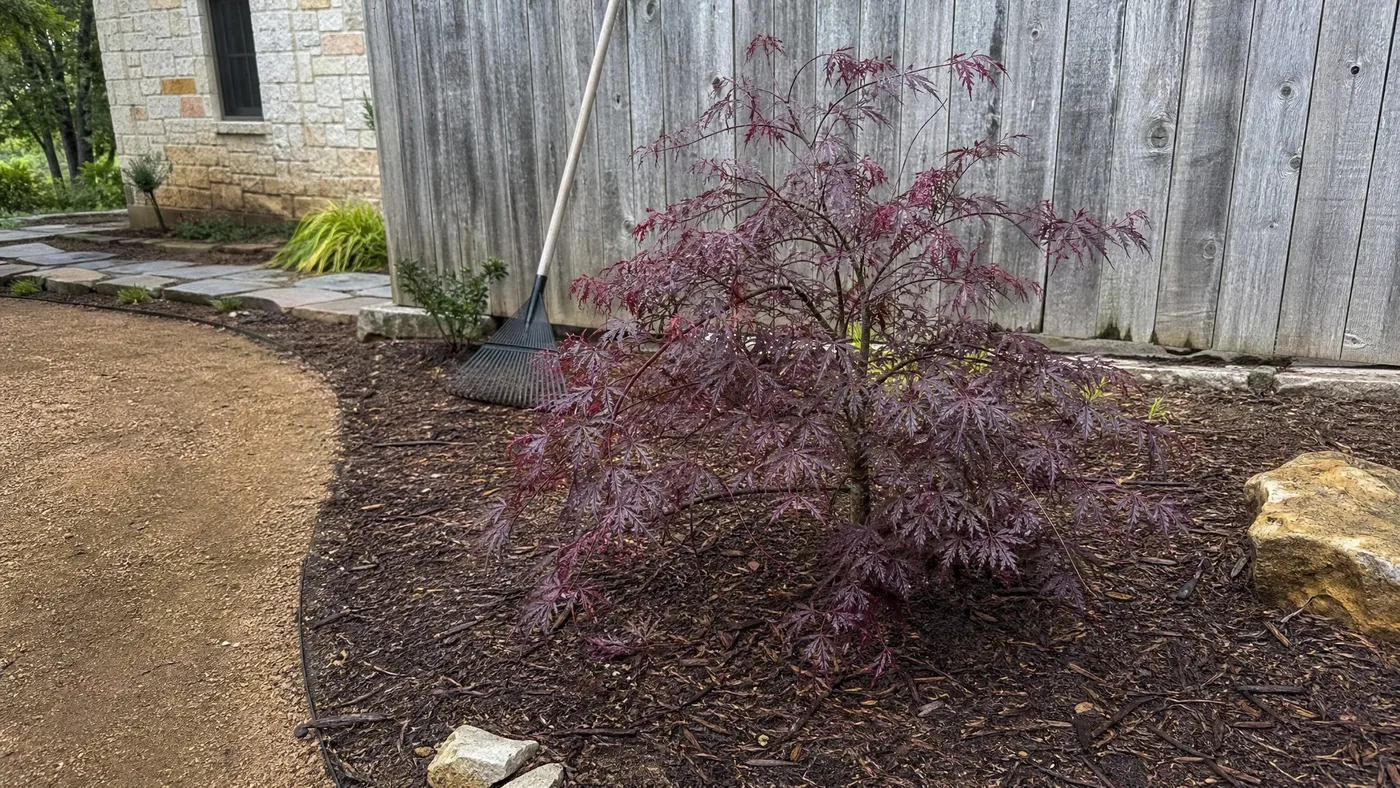
How to Transplant a Dwarf Japanese Maple
The call usually starts the same way. Someone moved their maple on Saturday, and by Thursday the leaves hang like wet laundry, so they are sure the tree is finished. Most people believe a sulking maple is a dying maple.
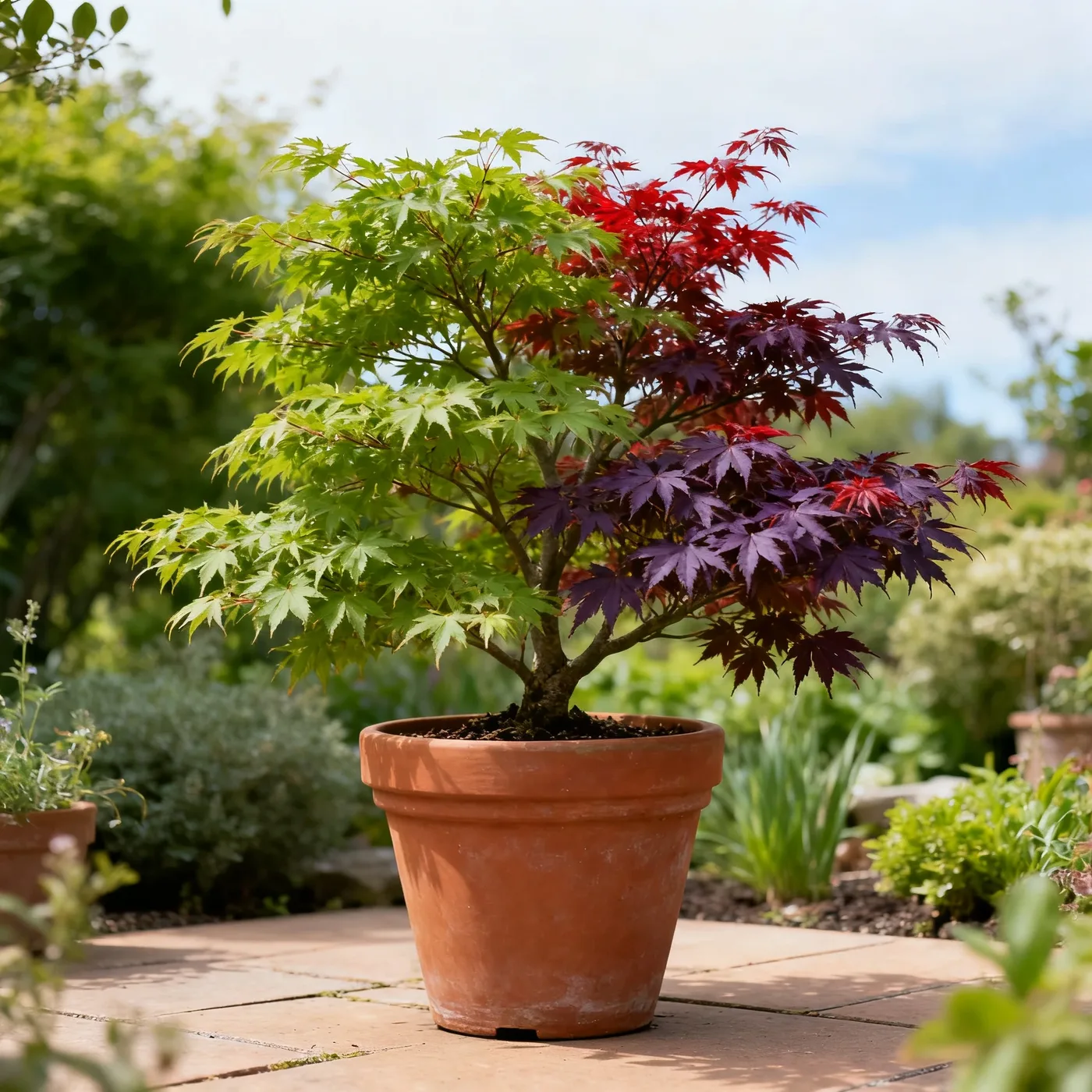
What we hear on the phone, and see in our own rows, is far more forgiving. A small tree has lost part of its root system and is working out how to drink again. Most of what you will notice in the first weeks can be fixed or simply waited out.
In this article, we'll go through the signs people notice most: limp leaves, scorched edges, a crumbling root ball, a sagging grafted mound and bare branches in midsummer. Each one traces back to a cause, and we finish with the timing that prevents most of them. A dwarf moves well because at 2 to 5 feet tall it needs only a compact ball of about 12–18 inches, but it does not forgive neglect.
Leaves Drooping After the Move? Start Here
Limp leaves a few days after the move are the most common alarm, and also the least dangerous one. The tree is not sick. It is short of water because the roots that fed it were left behind in the old hole.
Why the Leaves Go Limp
Every leaf keeps losing water to the air, whether or not the roots can keep up. Digging severs the fine roots at the edge of the ball, so the supply drops while the demand stays the same. NC State Extension notes that young leaves of this species are not drought tolerant, which is why a spring-moved tree droops faster than one moved in winter.
Drooping alone, with leaves still soft and fully colored, means the tree is coping. Crisp, brown or papery leaves are a different problem, and we cover those next.
What to Do in the First Days
Resist the urge to do a lot. Give the tree shade through the afternoon, even if that means a propped-up sheet or a patio umbrella for a couple of weeks. Then check the root ball itself, not the leaves: push a finger into the soil right beside the trunk, where the roots actually are.
If the soil there is dry, water slowly at the base until it is evenly moist. If it is already wet, leave it alone. Overwatering a limp maple is the second most common mistake we hear about, because the tree looks thirsty when the real trouble is too few roots. Our watering guide goes deeper on reading the soil.
Scorched Edges on a Moved Dwarf Japanese Maple
Brown, crisp leaf edges are the next thing people phone about, usually two or three weeks after the move. The edges go first because they are the farthest point from the water supply, so they are the first to give up when it runs short. The useful question is why the supply ran short, and there are two usual answers.
Exposure or a Dry Root Ball
Look at where the browning sits. If it is heaviest on the side facing the afternoon sun or the prevailing wind, and the inside of the canopy is fine, exposure is the cause. A tree that grew up in shade from a neighbor or a fence has just been handed full sun in its new spot. UNH Extension recommends dappled shade as the ideal placement, and a moved tree needs it more than an established one.
If the scorch runs evenly around the whole tree, or the lower leaves are worst, suspect the root ball. Slide a trowel in beside it. A ball that is dry in the middle while the surrounding soil is damp is common, because water runs around a tight ball instead of through it.
What to Adjust
For exposure, add shade or a windbreak now and decide later whether the site is wrong. Our sun and shade guide helps with that decision. For a dry ball, water slowly enough that it soaks in, and recheck in a few days.
Scorched leaves do not turn green again, and we tell customers to leave them on. They still shade the buds behind them, and the tree will push fresh leaves from those buds when it is ready.
A Root Ball Too Small for the Canopy
Sometimes the trouble began at the shovel. A root ball that crumbled, fell apart on the tarp or looked small next to the canopy explains a lot of the drooping and scorching above. The tree is feeding a full crown from a partial root system.
Judging What You Took
The rule we use is that the ball should be sized to the spread of the canopy, not to the trunk. A dwarf moved at 2 to 5 feet tall is typically lifted with a ball of about 12–18 inches. Weeping cutleaf forms such as 'Crimson Queen' can spread as wide as they stand, with a height and spread of 1.5–2.5 meters, about 5–8 feet. A wide mound on a small ball is the classic mismatch.
If your ball felt thin, with soil sliding off and roots showing, you took less than the tree needs. That is not a failure, just a fact that tells you how carefully to nurse it.
How to Compensate
Keep the ball whole and out of the air, since roots must not be exposed to air or direct sunlight for any length of time. Wrap a crumbling ball in damp burlap before it leaves the old hole, and have the new hole ready.
Dig the new hole only slightly larger than the ball, and set the root collar level with the ground, never deeper. Our planting guide covers the hole in detail. After that, shade the tree rather than cutting it back hard. Common advice says to prune the crown to match the roots, but we would rather keep every leaf working and let the tree sort itself out.
Why a Grafted Weeping Mound Needs Gentler Handling
Weeping laceleaf forms behave differently from upright dwarfs, and the difference shows up as sagging, cracked limbs or a mound that leans after the move. Missouri State University notes that cutleaf types are usually grafted onto a regular Japanese maple to form the weeping canopy, so you are moving two plants joined at one point.
Lift by the Ball, Never the Trunk
The graft union sits near the base, and it is the weakest point on the tree. Lifting by the trunk or a handful of branches puts all the weight on that joint and tears the ball away from the roots at the same time. Slide a tarp or burlap under the whole ball and lift with two people, keeping the tree upright.
In our rows, the cracked unions we see are almost always from a tree dragged or carried by its trunk, never from the digging itself.
Protecting the Union and Branches
Loosely gather the branches with soft cloth strips before the move so they do not snap on a fence or in a doorway. Remove the ties as soon as the tree is in place. Setting the tree level with the root collar keeps the union above the soil, where it belongs.
If a mound leans afterward, the ball has probably settled on one side. Lift it gently and firm soil beneath the low edge rather than staking the trunk hard, because a rigid stake concentrates stress at the union. Upright dwarfs like 'Shaina' with its dense, compact habit rarely need any support at all.
Bare Branches in Summer on a Dwarf Japanese Maple
A branch with no leaves in July worries people more than any other symptom, and it is the one we most want you not to act on in a hurry. Maples often hold some buds back after a stressful move, and a bare twig is not automatically a dead one. A thumbnail will tell you which you have.
The Scratch Test
Try this on several branches, not just one, so you know whether the problem is a single limb or the whole tree.
- Pick a bare twig and find a spot near its tip.
- Scratch a small patch of bark away with your thumbnail.
- Green and moist underneath means the wood is alive.
- Brown, dry and brittle means that part is dead.
- Repeat further down the branch toward the trunk until you reach green.
Wait or Cut
If the wood is green, wait. Keep the root ball evenly moist and give it until the next spring flush before deciding anything. Live wood without leaves often breaks bud the following year.
If the wood is dead, cut back to the first live wood and no further. UNH Extension advises pruning after the spring flush to avoid heavy sap flow, which fits a summer cleanup. Our guide to pruning a dwarf Japanese maple shows where to make the cut. If every branch fails the scratch test, call us.
Choosing the Window for Moving a Dwarf Japanese Maple
Most of the symptoms above are cheaper to prevent than to treat, and timing is where prevention starts. A tree moved while dormant has no leaves to feed, so the lost roots hurt far less.
Why Dormancy Works
Japanese maples are best moved when dormant, usually late fall through early spring if the ground does not freeze. Where winters freeze the soil, which is most of the species' range in zones 5a to 8b, the working window shrinks to the weeks before buds swell. Our winter care guide explains how to protect a fresh move in a hard freeze.
The table below shows what each season tends to mean for the tree and the symptoms you may see.
| Season | Effect on the move | What you may notice |
|---|---|---|
| Late fall | Roots can still grow a little before the ground cools | Few or none |
| Winter, soil unfrozen | Tree fully dormant, easiest on the roots | Few or none |
| Early spring, buds tight | Last good chance before leaves open | Slightly slow leaf-out |
| Summer | Full canopy, roots cannot keep up | Drooping, scorch, early leaf drop |
If the Move Cannot Wait
Sometimes a building project or a failing site forces a summer move. Take the biggest ball you can lift, move on a cool overcast day, shade the tree for weeks afterward and expect to see every symptom in this guide. It can work, but it is the hard way.
When a Moved Dwarf Japanese Maple Just Needs Time
Dwarf maples grow slowly, and recovery runs on the same slow clock. A tree that looks flat for a whole season has not necessarily failed. It is rebuilding roots first and putting out foliage second.
In the first year, expect smaller or fewer leaves and little extension on the branch tips. That is normal. Hold steady with even moisture and shade, and do not feed it to hurry things up.
A healthy second year looks different. Leaves open at their usual size and color, the canopy fills out evenly, and the branch tips lengthen again. The mound holds its shape without help. If you see those signs, the tree has re-rooted and you can ease off the extra care.
Call us if the trunk feels soft, if the bark peels back to brown wood at the base, if every branch fails the scratch test, or if the graft union has split. Those are the cases where a second pair of eyes helps.
Moving a Dwarf Japanese Maple Without the Panic
Most trouble after a move comes down to lost roots, too much sun or wind, and the wrong season. Dig the right-sized ball, keep it whole and moist, lift a grafted mound by its ball and shade it while it recovers. Check the wood before you cut anything, and give the tree a full year before you judge it.
If you are worried about your tree, send a photo to our customer-service team. Include the whole tree plus a close shot of the worst leaves, and tell us when you moved it.
Dwarf Japanese Maple
Nursery-grown Dwarf Japanese Maple in sizes from 2 Gallon, shipped to your door.
From $95.85
Shop Now →Our Dwarf Japanese Maples spend their early years on our farms in dappled shade, rooted in soil that stays evenly moist but never soggy. We run a small business and put real care into growing top-quality trees ourselves, so we know how much a good move depends on a healthy start. When you are ready to plant, have a look around our shop.