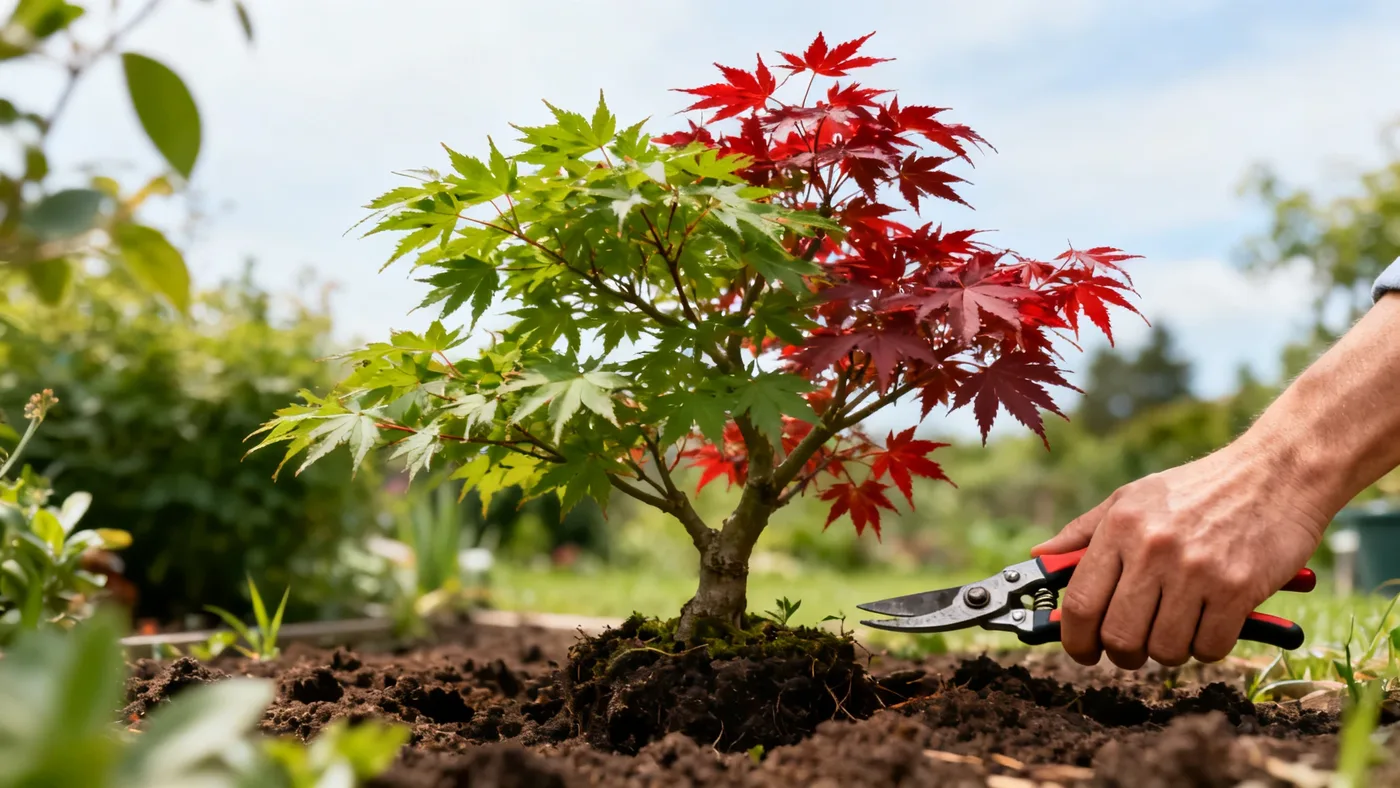
When and How to Prune a Dwarf Japanese Maple
Dwarf Japanese maples are prized for their delicate foliage, compact growth, and striking fall colors. One of the best aspects of these plants is that they require minimal pruning compared to many other ornamental shrubs and trees. That said, understanding when and how to prune a dwarf Japanese maple will help you maintain its natural shape, remove damaged wood, and encourage healthy growth year after year.
Best Time to Prune Dwarf Japanese Maple
Timing is everything when it comes to pruning dwarf Japanese maples. These trees are best pruned in late fall through mid-winter when they are completely dormant. Pruning during dormancy reduces sap bleed, which occurs when the plant is actively moving water and nutrients through its limbs. Excessive sap bleeding can stress the tree and create entry points for diseases.
Avoid pruning in spring and summer. Spring pruning wounds will bleed heavily as the plant leafs out, and summer pruning can stress the tree during its most active growth period. Many gardeners make the mistake of pruning as soon as they notice a dead branch in spring or summer, but it is worth waiting for the dormant season to remove it.
In zones 5 through 8 (the standard range for most dwarf Japanese maple cultivars like 'Bloodgood' and 'Crimson Queen'), the dormant season typically runs from November through February, depending on your local frost dates. If you live in zone 9 and are growing a cold-tolerant cultivar with afternoon shade, wait until late fall when growth has clearly slowed.
Materials You'll Need
Pruning dwarf Japanese maples does not require expensive or specialized equipment. A few simple tools will handle nearly all pruning tasks.
- Sharp pruning shears: Hand-held bypass pruners work well for branches up to about 0.5 inches in diameter. Keep them sharp; dull blades crush tissue and invite disease.
- Pruning saw: A small folding saw or curved pruning saw is helpful for branches thicker than 0.5 inches. Japanese pull saws work especially well.
- Lopping shears: These long-handled cutters give you leverage on branches 0.5 to 1.5 inches thick and let you reach higher branches without a ladder.
- Pruning sealer (optional): Modern arboriculture generally discourages wound dressing, as trees compartmentalize and heal better without it. However, if you prefer to seal large cuts on ornamental trees, a thin, water-based pruning sealer is acceptable.
- Disinfectant: Rubbing alcohol or a 10% bleach solution. Wipe your blades between cuts if you encounter dead or diseased wood to avoid spreading pathogens.
- Gloves and safety glasses: Pruning is cleaner and safer with basic protective gear.
Step-by-Step Pruning Instructions
Most dwarf Japanese maples need only light pruning. The goal is to remove dead wood, tidy up the shape, and perhaps open up the canopy slightly so light can reach the interior. Follow these steps for a healthy, well-maintained tree.
- Start with a complete walk-around. Look at your tree from all angles while it is still leafless (or mostly bare in late fall). This is the best time to see the branching structure and identify which limbs need attention. Mark any obviously dead, crossing, or diseased branches with a bit of ribbon or a mental note.
- Remove dead wood first. Dead branches are brittle, brown or gray, and show no signs of green or red under the bark when you scrape with your thumbnail. Remove these back to healthy wood. Make your cut just beyond the branch collar, which is the slight swelling where a branch meets the trunk or larger limb. Cutting flush to the collar, not leaving a stub, helps the tree heal cleanly.
- Thin crossing branches. If two branches cross or rub against each other, remove one of them. Choose the weaker, less attractive, or more awkwardly angled of the two. This opens up the canopy slightly and prevents the abrasion of bark.
- Remove branches growing inward. Dwarf Japanese maples naturally have a somewhat spreading or slightly weeping form, depending on the cultivar. Remove any branches that grow back toward the center of the tree in an awkward way. Your goal is to maintain the tree's natural branching pattern, not drastically reshape it.
- Prune for light penetration. If the canopy is very dense, selectively remove a few interior branches to allow light to reach the center of the tree. Dense shade inside the canopy can reduce vigor and encourage pest problems. Remove no more than 10 to 15% of the overall branch structure in a single year; dwarf Japanese maples grow slowly, and heavy pruning can shock them.
- Step back and assess. As you work, step back every few cuts to look at the overall shape. Dwarf Japanese maples should look balanced and natural, not overly formal or heavily thinned. If the tree is starting to look thin enough, stop. You can always prune more next year, but you cannot put branches back.
- Remove growth that breaks the natural silhouette. A few shoots may grow upright when the rest of the tree has a spreading form, or vice versa. These can be removed if they obviously conflict with the tree's natural shape. For upright cultivars like 'Bloodgood,' keep the more vertical growth. For weeping forms like 'Tamukeyama,' encourage the cascading habit and remove upright shoots that break the weeping line.
- Make clean cuts. Always cut just above a bud or back to the branch collar. Avoid leaving stubs, which are unsightly and can become entry points for disease. Cut at a slight angle if possible, so water runs off rather than sitting on the cut surface.
Pruning Tips and Common Mistakes to Avoid
A few key principles will help you prune confidently and avoid common pitfalls.
Do not top or cut the main trunk. Topping (cutting off the top of the main stem to force it shorter) removes the natural apex of the tree and creates multiple weak shoots that will never have the structural strength of the original leader. If your tree is getting too tall for its space, it was probably the wrong cultivar choice for that location. Dwarf cultivars typically mature at 4 to 8 feet tall, with some upright forms reaching 8 to 10 feet, so choose one sized appropriately for your garden.
Prune lightly and over time. Do not remove more than 10 to 15% of the tree's total foliage in a single year. Dwarf Japanese maples grow slowly, roughly 6 to 12 inches per year. Aggressive pruning can weaken the plant and delay recovery. If your tree has gotten very overgrown, spread the pruning over two or three dormant seasons.
Do not prune while the tree is leafed out. Foliage provides the energy the tree needs to compartmentalize wounds and redirect growth. Pruning in late spring or summer removes this energy source and exposes fresh wounds during the growing season, when insects and diseases are most active.
Avoid wound dressing on small cuts. Modern research shows that trees seal their own wounds more effectively without the plastic barrier that wound dressing creates. Reserve any pruning sealer for very large cuts on the main trunk, and even then, use it sparingly.
Keep your tools clean. If you are removing dead or diseased wood, disinfect your pruning shears between cuts. This simple step prevents you from spreading problems from one branch to another.
Do not prune away too much foliage at once. It is tempting to open up the canopy dramatically, but removing too much green tissue at once can stress the tree and set back growth. A natural-looking tree with some interior shade is healthier than an over-pruned one.
Expected Results
After you prune your dwarf Japanese maple in late fall or winter, you should see the following in the growing season that follows.
The tree will leaf out normally in spring. You may notice that pruned branches are slightly slower to leaf than the rest of the tree, since that cut wood needs time to establish new growth, but this difference is usually minor and temporary.
The canopy will look slightly more open and airy than before, especially where you removed crossing branches or interior growth. Light will penetrate more effectively, which can help the interior of the tree stay healthy and may bring out richer fall color in the leaves that remain.
The overall shape of the tree should look cleaner and more intentional, with dead wood and awkward branches removed. The natural branching structure, which is one of the ornamental highlights of dwarf Japanese maples (especially important in winter and early spring), will be more visible.
New growth from pruned branches should emerge in spring and early summer. This growth will help fill in any slightly thin spots and restore a full, healthy appearance by midsummer. Do not expect to see dramatic new growth within a few weeks; dwarf Japanese maples grow steadily but slowly.
Quick Reference: Dwarf Japanese Maple Pruning Checklist
| Task | When | Details |
|---|---|---|
| Inspect tree for pruning needs | Late fall (November), while leafless | Look for dead wood, crossing branches, growth defects |
| Remove all dead or diseased branches | Late fall to mid-winter | Cut back to healthy wood, just beyond the branch collar |
| Remove crossing or rubbing branches | Late fall to mid-winter | Choose the less attractive branch to remove |
| Thin for light penetration | Late fall to mid-winter | Remove interior branches selectively; do not exceed 10-15% of canopy |
| Clean up the overall shape | Late fall to mid-winter | Remove branches that break the natural silhouette |
| Disinfect tools | Between cuts if removing diseased wood | Use rubbing alcohol or 10% bleach solution |
| Step back and assess | Every few cuts | Ensure the tree looks balanced and natural |
| Do not prune again | Spring through fall | Wait until the next dormant season (late fall to mid-winter) |
When to Seek Professional Help
If your dwarf Japanese maple has been neglected for several years and is severely overgrown, or if a large branch or the main trunk has been damaged by storm or other trauma, consider consulting a certified arborist. Professional pruning will cost more than doing it yourself, but severe overgrowth or storm damage often requires expertise to restore the tree's shape and health safely.
For routine maintenance pruning of a healthy, well-established tree, the steps outlined above will serve you well. Most home gardeners find that a few minutes of attention each dormant season keeps their dwarf Japanese maple looking its best for years to come.
Want to expand your knowledge of dwarf Japanese maple care? Read our comprehensive dwarf Japanese maple care guide for details on watering, fertilizing, and troubleshooting common issues. If you are considering adding a dwarf Japanese maple to your garden, our guide to buying a dwarf Japanese maple will help you choose the right size and cultivar for your space.