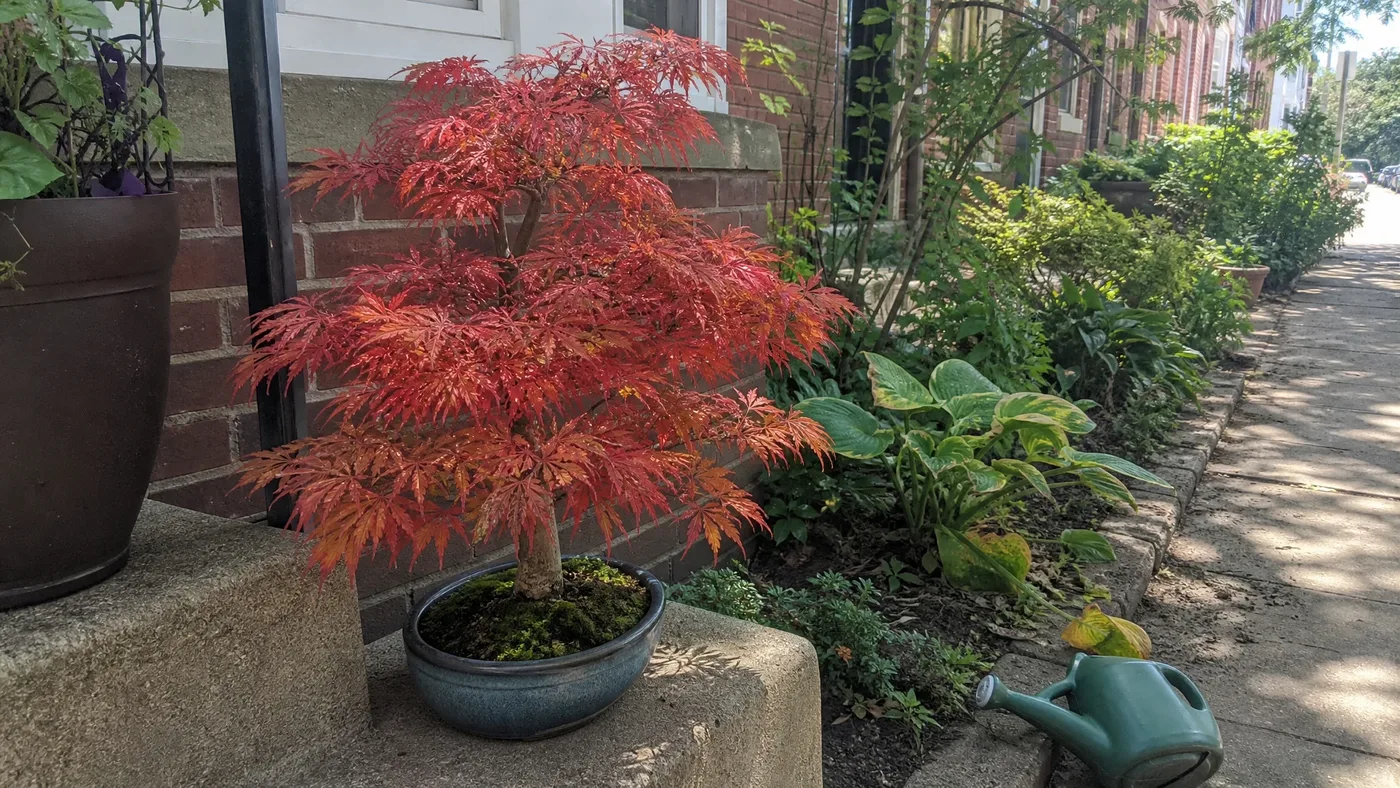
Dwarf Japanese Maple Bonsai: Which Cultivars Train Best
Pull a maple seedling from a woodland gap and you get what the forest rewards: long, gangly shoots with wide spaces between each pair of leaves, all reaching for light. Set it beside a twig from a dwarf selection and the contrast is plain. The dwarf packs its leaf pairs tight along short growth, as if the same plant had been compressed.
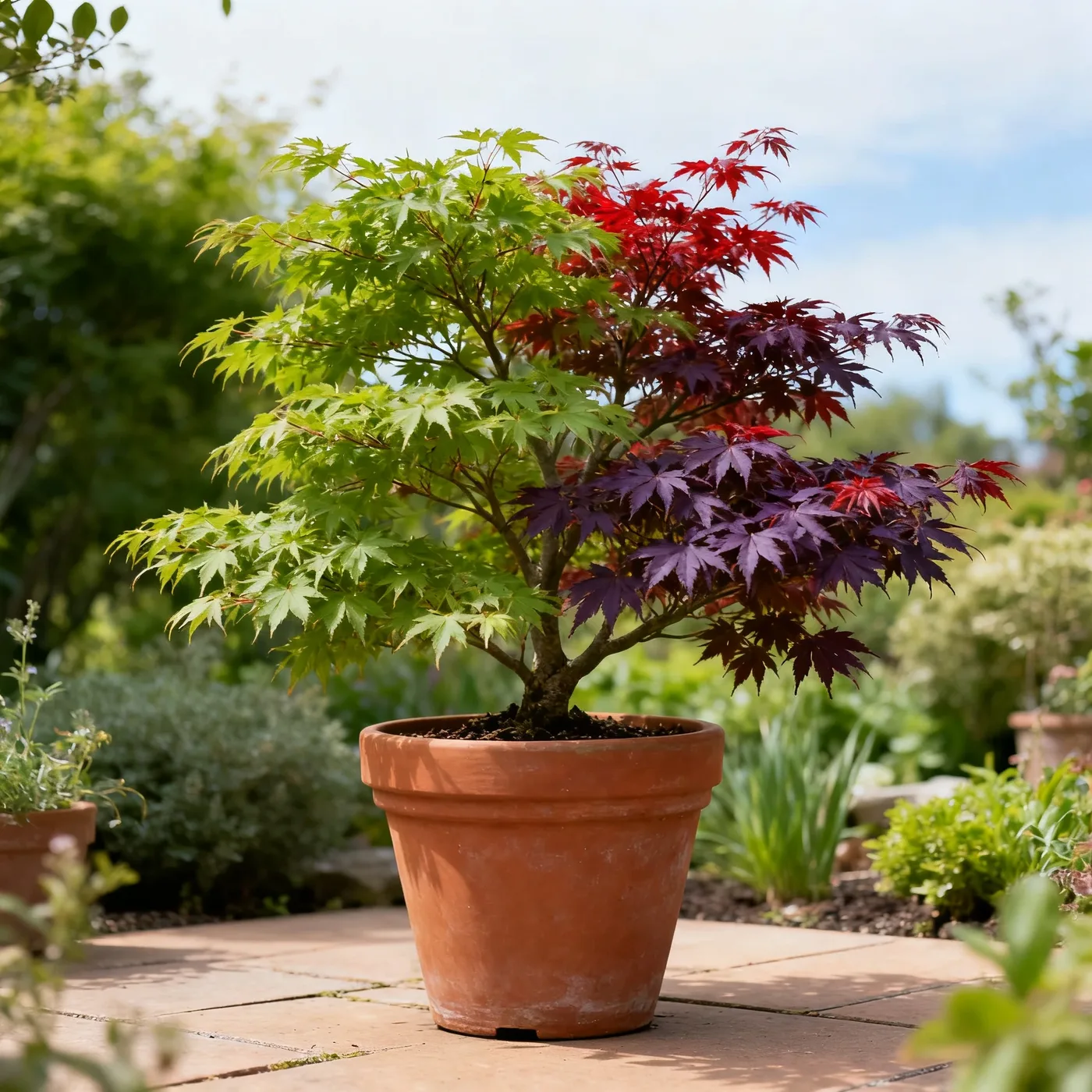
Most people expect bonsai to be a constant fight against a tree's nature. With a dwarf cultivar, half that work is already done. Choose a standard-habit maple instead and you spend years wrestling large leaves and stretched shoots, and many of those trees never settle into a miniature shape.
In this article, we'll go through what makes a dwarf cultivar suit miniature training, which cultivars are worth buying, and the pot, root, pruning and wiring timing from your first weeks to an established tree.
Why Short Internodes Suit a Dwarf Japanese Maple Bonsai
An internode is the stretch of stem between one pair of leaves. On a seedling in the understory, internodes run long because the plant is racing toward a gap in the canopy. On a dwarf selection the same stretch is much shorter, so leaf pairs crowd together and the twig looks fine and dense. That spacing is inherited, not trained in, and it is the main reason these trees make convincing bonsai.
Leaf size follows the same logic. The species has opposite leaves that measure 2 to 5 inches with five to nine lobes, which is large for a tree that will sit on a shelf. Standard maples are often defoliated in early summer to force a second flush of smaller leaves, and it stresses the tree. Dwarf cultivars such as Kiyohime and Shishigashira already carry small leaves on short internodes, so they need little leaf reduction at all.
Growth rate helps too. The species grows at a slow to moderate rate, with a layered look and a low, dense, rounded top. A dwarf cultivar sits at the slow end of that range, so a branch you place stays where you put it for years rather than lengthening past its pad of foliage in one season.
One practical point before you buy: most cultivars are grafted, so you are buying the top that was grafted on. Buy by cultivar name, and do not assume a seedling from a dwarf tree will inherit its habit.
Cultivars Worth Choosing Before You Buy
Not every dwarf is equally good for bonsai. Some are dwarf in the garden sense, meaning they stay a manageable shrub, while others are small in every part of the plant, and the second kind responds best to miniature training. The table below sorts the cultivars we point beginners toward by what the sources and our own rows tell us.
| Cultivar | What stands out | Bonsai note |
|---|---|---|
| 'Sharp's Pygmy' | Slow-growing, dense, truly dwarf, tiny leaves | Closest to ready-made miniature scale |
| 'Yuri Hime' | Dwarf cultivar with small leaves | Good leaf scale from the start |
| 'Kiyohime' | Short internodes, small leaves | Needs little leaf reduction |
| 'Shishigashira' | Short internodes, small leaves | Compact twig structure |
| 'Shaina' | Dense and compact with red foliage | Tidy, color without much shaping |
| 'Crimson Queen' | Lacy purple foliage turning scarlet in fall | Larger dwarf, needs firmer size control |
'Crimson Queen' deserves a caution. It reaches a maximum height and spread of 1.5–2.5 meters, about 5–8 feet, so it is a dwarf in the landscape but far from the smallest option. It can still be kept small in a pot, but expect more pruning than 'Sharp's Pygmy' asks for. Our comparison of dwarf cultivars covers the mature sizes in more detail.
What to Check on the Bench
Look at the twigs before the foliage. You want closely spaced leaf nodes along the whole branch, not tight growth at the base and a long shoot at the tip. Check that the branches fan out in several directions rather than all crowding one side. Then inspect the graft union near the base, and choose a plant with a firm, healthy trunk over one with a pretty crown.
The First Weeks With a Bonsai Dwarf Japanese Maple
Settle the plant in before you do anything to it. A tree that has just moved from our rows to your bench is adjusting to new light, new wind and new watering, and every cut or turn of wire adds to that load. What we tell customers is to give it a few weeks of plain, steady conditions first.
Light and Shelter
Japanese maples belong to the understory, and the University of New Hampshire Extension advises a spot with dappled shade. Young leaves are also frost-sensitive and may scorch with excess sun, wind or drought. So pick a bench that gets filtered light, and keep it out of hot afternoon sun and out of drying winds. A small pot dries far faster than ground soil, so check moisture daily and read our guide to watering a dwarf Japanese maple for the details.
Leave It Unwired
One of the most common questions we get is when to start wiring, and our answer is not yet. Use these first weeks to watch the tree. Note where new shoots emerge, which branches carry the best leaf spacing and where the trunk line wants to go.
Resist the urge to tidy it, too. The tree is rebuilding its water balance, and leaves are its only way to make food while the roots settle. Wait until the new growth is open, firm and healthy before you plan any work.
Root Work and Pot Choice in Year One
The roots decide how small the tree can stay. A maple left in a nursery container pushes strong roots and strong shoots, so reducing them is what slows the top down. Do it at the right moment, though, because root work on a tree in full leaf asks too much of it.
We prefer late winter, when the tree is still dormant but the buds are about to swell. Done then, the roots recover as growth begins. Reduce the root mass in stages over several repottings, never all at once, and keep the fine feeder roots because they do the real work.
- Water the tree well a day before, then lift it out and tease the old soil from the outside of the root ball.
- Cut off thick, circling or downward-running roots, and leave the fine, fibrous ones near the trunk.
- Choose a pot with drainage holes, and cover them with mesh so the mix cannot wash out.
- Fill with a free-draining, slightly acidic mix. Our guide to soil for a dwarf Japanese maple explains what it should contain.
- Water thoroughly, then return the tree to shade and shelter until new leaves grow.
Choosing the Pot
A bonsai pot is shallow on purpose, because a shallow pot restricts roots and keeps the tree small. Pick one in proportion to the trunk, wide enough to anchor the roots and deep enough to hold moisture between waterings. Many growers choose a muted glaze or unglazed finish, because a plain pot lets the foliage take attention. A good pot for a maple is never so shallow that it dries out in an afternoon.
Pruning and Wiring Windows Through the First Year
Pruning a maple is a matter of timing as much as technique, because maples bleed sap from fresh cuts. Acers are among the plants prone to bleeding and are often pruned while dormant, yet University of New Hampshire guidance advises summer pruning, after the spring flush, to avoid heavy sap flow. The advice differs, so here is how we split the difference.
Light Cuts After the Spring Flush
Once the first flush of leaves has opened and hardened, trim shoots back to keep the outline tight and to let light into the interior. On a dwarf cultivar these cuts are small, since short internodes mean there is little extra length to remove. Our guide to pruning a dwarf Japanese maple covers the general rules for a garden specimen.
Heavier Cuts in Deep Dormancy
Save larger structural cuts for deep dormancy, well before the buds swell. A thick branch that is cut late can weep sap for days, so cut early and seal large wounds if you like. In the first year, though, we would take off very little. Let the tree recover from root work before you ask for more.
Gentle Wiring
Bark on young maple branches is thin and marks easily. Wire only when new shoots have firmed up after the flush, and use wire thin enough to hold without cutting in. Bend slowly, and check the wire often, because maples thicken quickly under it. We often see wire left on a season too long, and the spiral scar it leaves can last for years. Remove it before it bites.
In the first year, hold off on wiring any branch that is still soft or any tree that is wilting after a repot. A tree under stress should rest.
An Established Dwarf Japanese Maple in Its Shallow Pot
After a couple of seasons the work settles into a rhythm. The tree has a pot that suits it, branches that carry the shape you want, and roots that have filled the container. Your job now is to keep that balance rather than to change it, and a dwarf cultivar makes this easier than a standard maple would.
Check the roots each late winter. When they circle the pot or the soil drains slowly, repot and trim the outer roots, returning the tree to the same pot or a slightly larger one if the trunk has thickened. A slow cultivar such as 'Sharp's Pygmy' may need this less often than a stronger one like 'Crimson Queen'.
The Seasonal Rhythm
The tree follows the same calendar each year, so plan around it.
- In late winter, repot if the roots call for it, and make any large structural cuts while the tree is dormant.
- After the spring flush hardens, pinch and trim new shoots back to the leaf pair you want to keep.
- Through summer, keep the pot evenly moist and the foliage in filtered shade, because leaf scorch is the most common way a bonsai maple shows stress.
- In autumn, let the leaves color and fall naturally, then clean up fallen foliage before winter.
Winter in a Small Pot
The species is hardy in USDA zones 5B through 8B when planted in the ground, but roots in a shallow pot have little soil to insulate them. Where winters are cold, move the pot to a sheltered, unheated spot, and read our advice on winter care for dwarf Japanese maples before the first hard freeze.
Dwarf Japanese Maple Bonsai From Forest Floor to Shelf
Every habit of this tree traces back to its home. Acer palmatum is native to southeast Korea and central and south Japan, where it grows beneath taller trees in dappled light, in cool, moist, leaf-rich soil. Nearly everything we ask of a bonsai maple follows from that picture: filtered shade, even moisture, a mix that is rich in organic matter but drains freely, and shelter from drying wind.
The wild origin also explains the roots. In the forest they spread through loose humus, so in a shallow pot the mix has to stay open and the watering has to be steady. Let it dry hard and the young leaves will scorch, because they are not drought tolerant.
Look closely at the tree through the year and you will see the wild still in it. Small red or purple flowers open in spring, easy to miss from a distance, and the leaves turn through yellow, bronze, purple and red in fall, depending on the cultivar. Aphids and scale are the pests to watch for on new growth, and a quick check each week is enough to catch them early.
The same self-seeding that makes the species spread in the wild produces seedlings under your tree if it ever sets seed. They will not be copies of a grafted cultivar, so enjoy them as a curiosity, not as replacements for it.
When the Dwarf Japanese Maple Drops Its Leaves
Choose a cultivar that is small in leaf and short between nodes, and most of the hard work is done before the tree reaches you. Settle it for a few weeks, reduce the roots in stages in late winter, keep the pruning light and the wire loose, and let the seasons set the pace.
Autumn leaf drop is a good moment to take stock. With the foliage gone, you can see every branch, judge the shape, check the wire and decide what next year's work will be. That quiet look is one of the things we enjoy most about these trees.
Dwarf Japanese Maple
Nursery-grown Dwarf Japanese Maple in sizes from 2 Gallon, shipped to your door.
From $95.85
Shop Now →Bonsai starts with the right tree, and on our farms we raise each Dwarf Japanese Maple under dappled shade in well-drained, acidic soil. As a small grower-run business, we only ship plants we would plant ourselves, top-quality trees we would be glad to train in our own gardens. If you are ready to try one of the cultivars from this guide, see the plants we have ready.