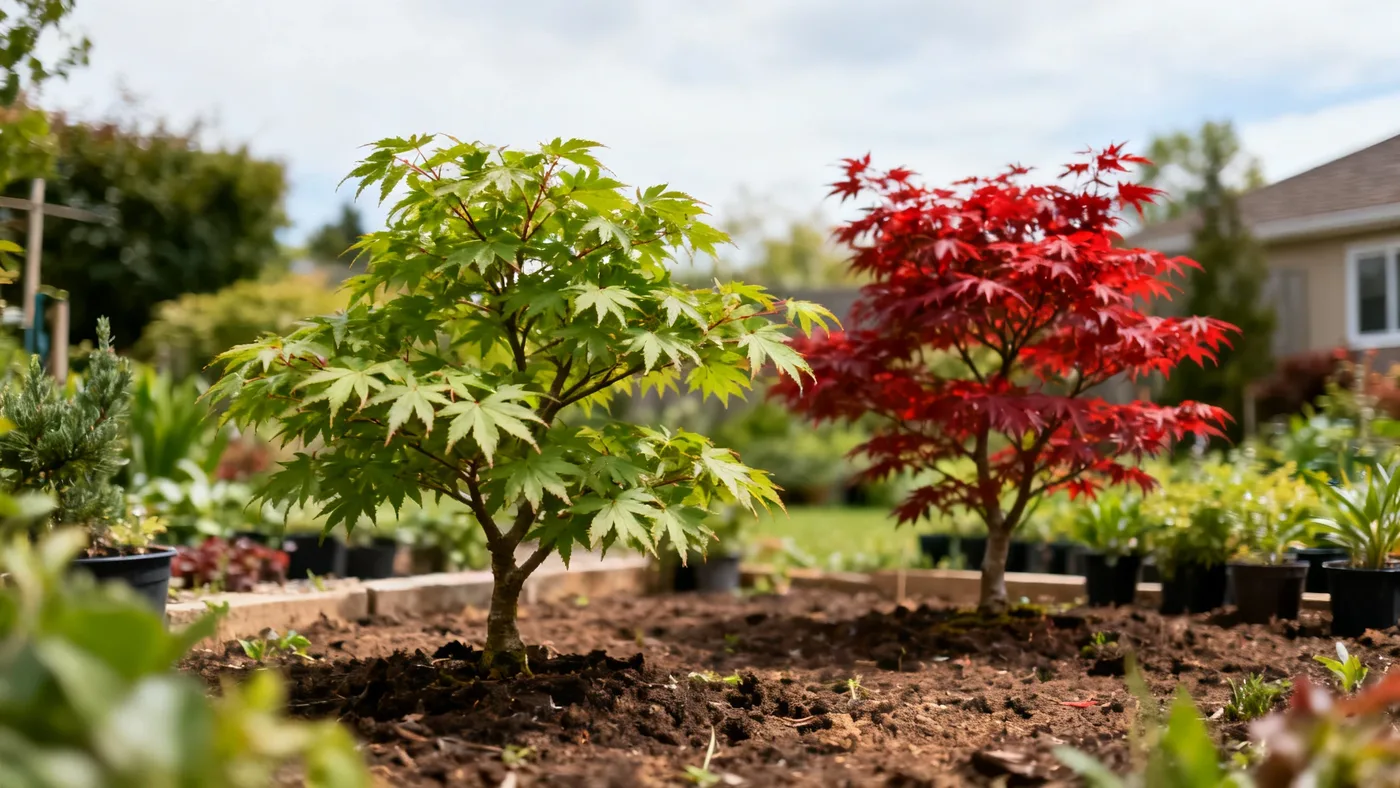
Best Dwarf Japanese Maple Varieties and Cultivars Compared
Selecting a dwarf Japanese maple means choosing not just one shrub, but a specific character. Will you plant the deep burgundy of Bloodgood, the lacy weeping form of Crimson Queen, or the coral winter stems of Sango-kaku? With dozens of types of dwarf Japanese maple available, each cultivar brings its own foliage color, growth habit, branching pattern, and seasonal presence to a garden. Understanding these differences helps you pick the variety that fits your space, climate zone, and aesthetic goals.
This guide walks through six proven best dwarf Japanese maple cultivars, comparing their mature size, hardiness, foliage character, growth rate, and care needs so you can make an informed choice before purchasing. Whether you are planting a specimen focal point, building a Japanese garden, anchoring a mixed bed, or filling a large container, one of these varieties will deliver reliable, year-round interest.
1. Bloodgood Japanese Maple
Bloodgood is the workhorse of dwarf Japanese maple varieties. When sold as a dwarf cultivar, it reaches 4 to 8 feet tall depending on growing conditions and age, with a mature width of 4 to 6 feet. The star feature is the foliage: deep crimson-red in spring and early summer, holding that rich burgundy tone through the growing season, then shifting to brilliant scarlet in fall. The color is so consistent and striking that Bloodgood anchors garden designs across USDA zones 5 to 8.
Bloodgood has an upright, slightly spreading habit. Growth is slow, adding roughly 6 to 12 inches per year, so it stays manageable for many years before reaching full size. The deeply lobed palmate leaves typical of Japanese maples (5 to 9 lobes) are complemented by the cultivar's signature red veining, making Bloodgood stand out even when viewed from a distance. The tree thrives in part sun to part shade, though in hot climates afternoon shade becomes essential to prevent leaf scorch. In cooler zones or coastal areas, it tolerates more direct sun. Plant in rich, well-draining loam with a slightly acidic to neutral pH, roughly 5.5 to 6.5. The tree prefers consistent moisture but does not tolerate waterlogged soil or poor drainage.
Bloodgood is relatively pest-resistant and disease-tolerant when planted in appropriate conditions, making it a low-maintenance choice for most home gardeners. Prune only to remove deadwood in late fall to mid-winter while dormant, as this timing reduces sap bleed and disease entry.
Practical takeaway: Choose Bloodgood if you want reliable, all-season color without fussiness. It is hardy, consistent, and makes a strong specimen when spaced at least 3 to 6 feet from other plants in group plantings.
2. Crimson Queen Japanese Maple
When comparing bloodgood vs crimson queen japanese maple, the main differences are texture, form, and foliage refinement. Crimson Queen is more delicate, with finer, more deeply dissected foliage that creates an airy, almost lacey canopy. Unlike the upright Bloodgood, Crimson Queen has a weeping or mounding habit, growing 4 to 6 feet tall and often wider than tall at full maturity, reaching 4 to 8 feet wide. The color is equally striking: crimson red in new spring growth, deepening to burgundy through summer, then transitioning to orange-red in fall. The broad, low canopy makes Crimson Queen perfect for specimen plantings, Japanese gardens, and as an accent in containers.
Crimson Queen grows slowly at roughly 6 to 12 inches per year, which means you will enjoy several years of graceful, developing branching before the canopy fills out completely. The thin, deeply lobed leaves are more sensitive to wind scorch and extreme heat than solid-colored upright varieties, so part shade with afternoon protection is ideal in USDA zones 5 to 8. Some cultivars extend to zone 9 with afternoon shade, though you should verify the specific cultivar's hardiness range before planting in warmer climates. Crimson Queen's weeping form creates a visually softer, more naturalistic appearance than upright varieties. The cascading branches allow light to filter through to shade plants below, making it excellent for layered plantings.
Plant Crimson Queen in rich, well-draining loam and maintain consistent moisture, especially during the first 1 to 2 growing seasons. Avoid compacted soil and standing water, which can lead to root rot in poorly drained sites.
Practical takeaway: Pick Crimson Queen for its texture and cascading form. The airy foliage and elegant weeping branches make it a focal point in small spaces, and its delicate appearance suits Japanese-inspired gardens and shaded patios.
3. Tamukeyama Japanese Maple
Tamukeyama is another weeping dwarf Japanese maple cultivar, with a similar graceful cascading habit to Crimson Queen but with subtly different foliage character and slightly finer leaf texture. It grows 4 to 6 feet tall and spreads to 4 to 8 feet wide, creating a fountain-like silhouette of finely dissected leaves. The foliage emerges bright crimson in spring, matures to deep burgundy-red through summer, and shifts to shades of orange and gold in fall. What sets Tamukeyama apart is its consistently fine leaf cut and its vigorous cascading habit even when young, making it a favorite for specimen plantings, Asian-inspired gardens, and premium container displays.
Like other types of dwarf Japanese maple, Tamukeyama grows slowly at roughly 6 to 12 inches per year, so a young plant remains manageable and develops character over time. The tree thrives in part sun to part shade and prefers rich, well-draining loam with a slightly acidic to neutral pH, roughly 5.5 to 6.5. Tamukeyama is hardy to USDA zones 5 to 8; some cultivars extend to zone 9 with afternoon shade. The dense, trailing foliage can hold moisture after rain or watering, so good air circulation and well-draining soil are essential to prevent fungal issues like anthracnose in humid climates. Minimal pruning is needed; remove only deadwood in late fall to mid-winter while dormant. Winter dormancy reveals the tree's attractive branching structure and architectural form, adding interest even after leaf drop.
Young plants benefit from consistent moisture during the first growing season. Established plants tolerate moderate drought once roots develop, though consistent moisture produces the best foliage color and texture.
Practical takeaway: Choose Tamukeyama if you want a classic weeping form with fine texture that serves as a garden focal point. Space it at least 4 to 6 feet away from other plants to allow room for its graceful, cascading spread.
4. Shaina Japanese Maple
Shaina is a compact upright cultivar that maxes out at 4 to 6 feet tall and wide, making it one of the smallest and most space-efficient best dwarf Japanese maple cultivars for tight spaces, small gardens, and containers. The foliage emerges deep red in spring, matures to rich burgundy-red throughout the growing season, and turns brilliant scarlet-red in fall. Shaina has smaller, more finely detailed leaves than many Japanese maple varieties, creating a tidy, refined, almost miniature appearance that works exceptionally well in small residential gardens, foundation plantings, container displays, and Japanese-themed landscapes.
Shaina's compact, upright habit and smaller mature size make it ideal for containers, corner plantings, and restricted spaces where a weeping form or larger cultivar would overwhelm the design. Growth is slow, around 6 to 12 inches per year, so a young Shaina will stay manageable and contribute fine details to the garden for years before reaching full maturity. It is hardy to USDA zones 5 to 8 and prefers part sun to part shade. Like all Japanese maples, Shaina is sensitive to poor drainage and salt exposure, so plant it in a moisture-retentive but well-draining location away from road salt spray. The tree's neat form requires minimal pruning; you can remove deadwood in late fall to mid-winter while dormant if needed. For more detailed guidance on year-round care, see our dwarf Japanese maple care guide.
Shaina is an excellent choice for small containers, where its compact roots and slow growth prevent excessive pot-binding for several years.
Practical takeaway: Select Shaina if you need a compact, upright cultivar for a small space, container, or foundation bed. Its tidy form and consistent deep color deliver strong visual impact without requiring much square footage.
5. Sango-kaku (Coral Bark Maple)
Sango-kaku, often called coral bark maple, stands out among dwarf Japanese maple varieties because its winter interest rivals and often surpasses its summer and fall display. Young stems and branches emerge brilliant red-orange when conditions are cool, aging to coral-pink over the winter months and creating a striking silhouette in the dormant season. In spring, the foliage emerges bright green, sometimes with subtle reddish tints, then matures to fresh green through summer before turning gold and orange in fall. The combination of coral winter stems, vibrant spring emergence, and warm fall tones makes Sango-kaku a true year-round ornamental that keeps working visually when other trees fade.
Sango-kaku grows upright and reaches 4 to 8 feet tall and 4 to 6 feet wide at maturity, with a moderate spread and a slightly ascending branching habit. Growth is slow, roughly 6 to 12 inches per year, and the tree remains hardy to USDA zones 5 to 8. To maximize the coral bark display and intensity, position the tree where winter light and low sun angles catch the stems from the north or east, revealing the color beautifully against dark backdrops. The tree tolerates part sun to part shade but colors most vividly with some direct morning sun and winter sun exposure. Prune lightly and only to remove deadwood; excessive pruning removes young, colorful new stems that create the signature winter effect. Rich, well-draining loam and consistent moisture throughout the growing season support the best stem color intensity and foliage health.
Sango-kaku can extend to zone 9 in some climates with afternoon shade, though zones 5 to 8 are standard. Check your local extension service for regional suitability at the boundaries.
Practical takeaway: Choose Sango-kaku if winter interest matters in your garden design. The coral bark is nature's ornament for the dormant season, and the tree's summer-to-fall color keeps working harder than most deciduous trees. Space it at least 4 to 6 feet apart if grouping multiple plants.
6. Beni Maiko Japanese Maple
Beni Maiko is a more recently introduced cultivar that combines upright growth with striking variegated foliage, setting it apart from solid-colored dwarf Japanese maple varieties. New leaves emerge bright red or crimson, often with pink, gold, or cream-colored variegation and marking patterns that create a speckled or bi-color effect. As leaves mature, the coloration shifts to a dynamic mix of red, pink, and green tones that persist through much of the growing season. In fall, the foliage transitions through layers of orange, scarlet, and gold, layering color upon color. Beni Maiko is less common than Bloodgood or Crimson Queen in mainstream nurseries, but it is becoming a favorite among gardeners and landscape designers seeking unusual or distinctive cultivars.
Beni Maiko reaches 4 to 8 feet tall and 4 to 8 feet wide, with an upright, slightly spreading growth form. It grows slowly at roughly 6 to 12 inches per year and is hardy to USDA zones 5 to 8. The variegated foliage is more sensitive to excessive heat and wind than solid-red cultivars, so afternoon shade and shelter from strong winds are important in hot climates. Plant it in rich, well-draining loam, and avoid overfertilizing, which can reduce foliage color intensity and variegation clarity. The tree's unique variegation makes it a specimen plant, one that commands attention. Use it as a focal accent; one or two plants go a long way in a garden composition. For more information on hardiness ranges and regional suitability for your climate, check our guide on hardiness zones for dwarf Japanese maples.
Beni Maiko performs best with consistent moisture and afternoon shade in zones 7 and warmer. In zone 5 and 6 gardens, it can tolerate more morning sun in cooler climates.
Practical takeaway: Pick Beni Maiko if you want a conversation starter and a bold accent plant. The variegated foliage and dynamic color shifts throughout the season make it visually distinctive, but it requires protection from extreme heat and strong winds.
Quick Reference: Cultivar Comparison at a Glance
| Cultivar | Mature Height | Mature Width | Spring/Summer Color | Fall Color | Growth Habit | USDA Zones |
|---|---|---|---|---|---|---|
| Bloodgood | 4-8 ft | 4-6 ft | Deep crimson-red to burgundy | Scarlet-red | Upright, slightly spreading | 5-8 |
| Crimson Queen | 4-6 ft | 4-8 ft | Crimson to burgundy (fine texture) | Orange-red to gold | Weeping, mounding | 5-8 |
| Tamukeyama | 4-6 ft | 4-8 ft | Bright crimson to deep burgundy | Orange, red to gold | Weeping, cascading | 5-8 |
| Shaina | 4-6 ft | 4-6 ft | Deep red (compact leaves) | Scarlet-red | Upright, compact | 5-8 |
| Sango-kaku | 4-8 ft | 4-6 ft | Green foliage, coral-red stems | Gold to orange | Upright, ascending | 5-8 |
| Beni Maiko | 4-8 ft | 4-8 ft | Red-pink variegated (dynamic) | Orange, scarlet to gold | Upright, spreading | 5-8 |