How to Propagate a Dwarf Japanese Maple: Seeds, Cuttings and Grafts
Sow one hundred seeds from a 'Crimson Queen' and count how many come back as a small, lacy-leaved plant like the parent. We tell customers not to plan on a single one. Named cultivars do not breed true, and a dwarf maple is a named cultivar. The parent tops out around 1.5–2.5 meters, roughly 5–8 feet, and its seedlings have no obligation to stay that small.
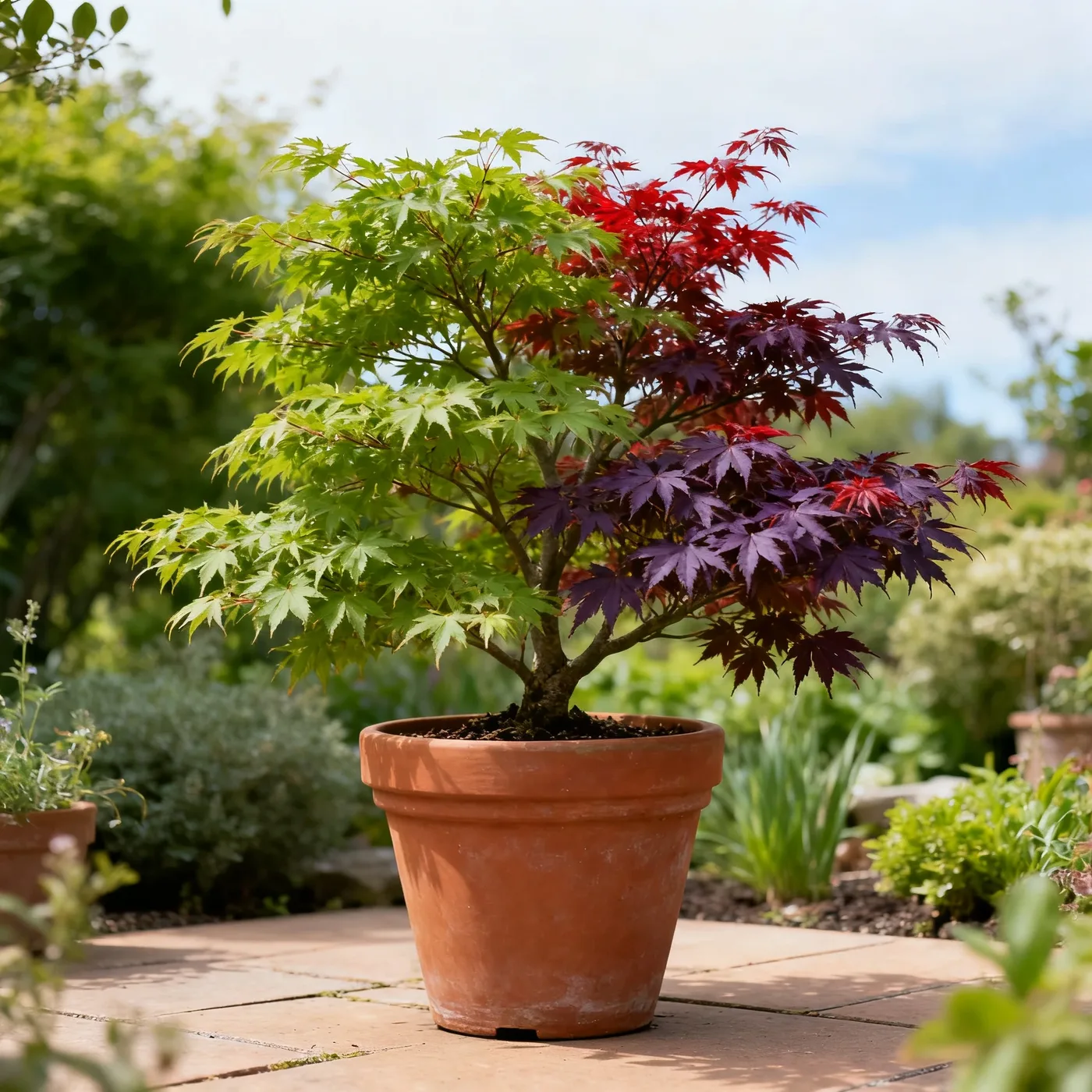
That one fact decides how you propagate a dwarf. Seedlings tend to revert to full-size green or red trees, so a true dwarf has to be rooted from a cutting, layered, or grafted.
This guide covers everything you need to know about propagating a dwarf Japanese maple, from seed and softwood cuttings to air layering and grafting. We also set honest odds and equipment needs for a home grower, and compare how long each method takes to give you a plant worth keeping.
Seed Rows Gave Us Variety, Not Copies
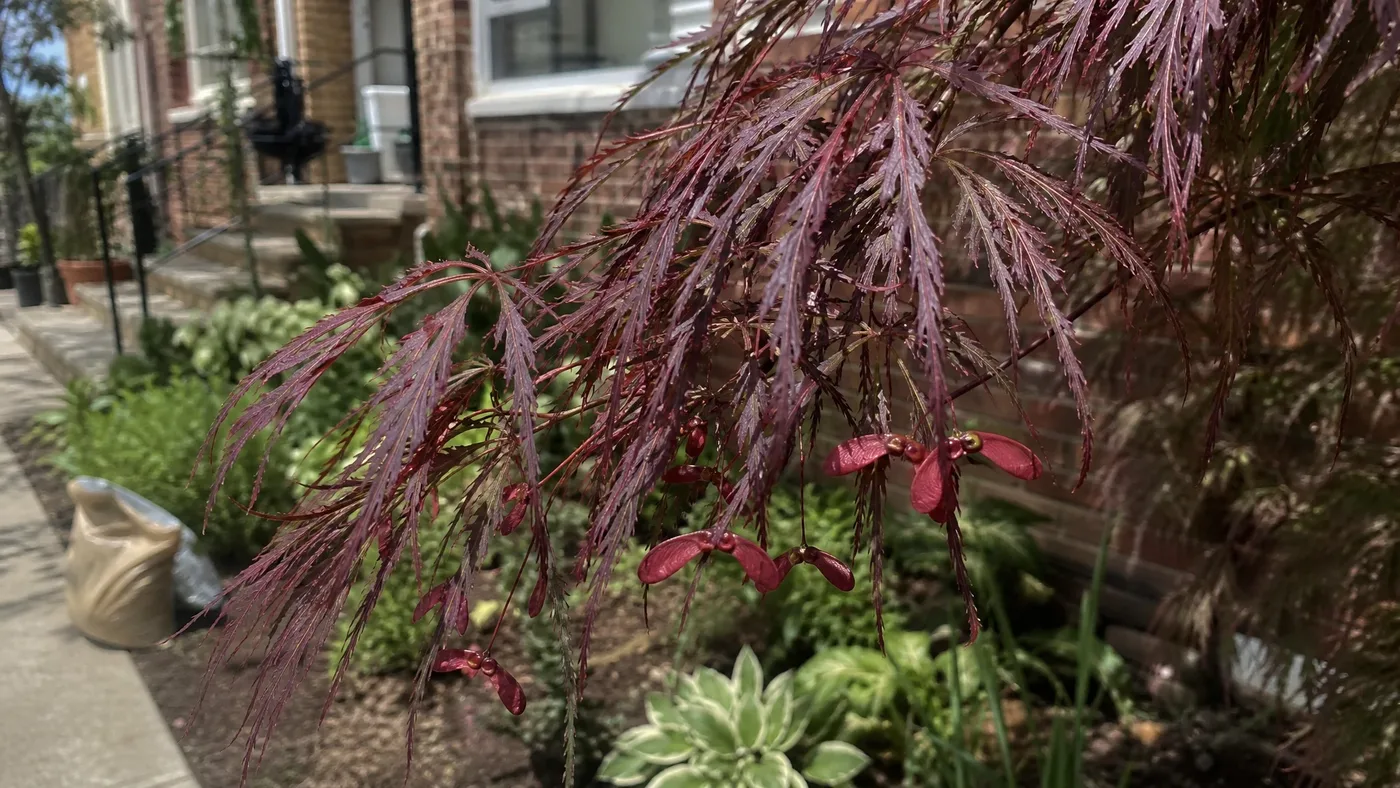
Seed is the method everyone tries first, and it is the one that fails the stated goal. Japanese maples can be grown from seed, but named cultivars will not breed true. In our rows, a tray of seedlings from a dwarf parent looks like a mixed crowd: some green, some red, some cut-leaf, many vigorous. The dwarf habit does not travel through the seed.
What Comes Up From a Dwarf Parent
Expect a spread. A few seedlings may resemble the parent in leaf color. Most grow faster and taller, and the compact, dense form that made you buy the parent is the first thing to disappear. A seedling that looks right at one year can still stretch out later, so a promising tray proves nothing until the plants have grown for several seasons.
If you want a plant that stays near the size described in how big dwarf Japanese maples really get, a seedling is a gamble you will wait years to lose. The differences between the two kinds of tree are laid out in dwarf versus full-size Japanese maple.
How to Sow Seed Anyway
Seed still has a job. It grows the rootstock that nurseries graft onto, and it is a cheap way to see what a tree throws. Follow these steps.
- Collect the winged seeds (samaras) when they fall in autumn.
- Sow them promptly in a pot of free-draining mix rather than storing them dry.
- Leave the pot outdoors through the cold winter, sheltered from drying wind.
- Expect germination in spring, then keep the young leaves out of hot afternoon sun, because they are not drought tolerant.
The species self-seeds easily and can turn weedy, which is why you may find free seedlings under an older tree. Treat them as rootstock or as green maples, never as dwarfs.
Softwood Cuttings of a Dwarf Japanese Maple Root Slowly
Most maples are difficult to propagate from cuttings, and a dwarf Japanese maple is no exception. Cuttings are the way to get a dwarf on its own roots without a graft, but the results are slow, uneven and strongly tied to the cultivar. We do not quote a single success percentage, because any number would hide how much one cultivar differs from the next. Treat every batch as an experiment.
Timing the Cut
Take softwood cuttings from the current season's growth, after the spring flush has expanded but before the stem turns woody. The test is simple: the tip should bend, and the base should snap when you flex it hard. Cut early in the day while the shoots are full of water. Choose healthy tips from a plant that is not stressed, since a scorched or dry stock plant gives limp cuttings.
Setting Up the Cutting
Strip the lower leaves, leave a small top set, and halve any large leaf so it loses less water. Insert the base into a gritty, sterile rooting mix. The young leaves of this species are sensitive and not drought tolerant, so humidity is the whole game. Use a clear cover, bright shade and no direct sun.
Then wait. Rooting is slow, and many cuttings stay green for weeks before they either callus and root or quietly fail. Do not pull them up to check. Customers usually ask us why a cutting that looks fine for a month suddenly collapses, and the answer is nearly always that it never rooted.
Over the first winter, keep rooted cuttings from freezing in their small pots. The plant is hardy across zones 5a to 8b in the ground, but a thin pot has far less protection than soil does.
Plan on a low yield and root more cuttings than you want plants.
Air Layering a Dwarf Japanese Maple on Its Own Roots
Air layering roots a branch while it is still attached to the parent, so the water supply never stops. That is why it suits a plant that cuttings treat badly. The result is a dwarf on its own roots, with no graft union and no rootstock to throw up off-type shoots.
The Method
Choose a healthy branch about the thickness of a pencil or a little more. Wound it with a shallow ring cut or a long slanting cut, wrap the wound in damp sphagnum moss, and seal the moss in clear plastic film with tape at both ends. Keep the moss moist through the season. When you can see roots through the plastic, cut the branch off below the ball and pot it in a free-draining mix.
When It Is Worth Trying
Layering is slow, and dwarf maples are slow-growing to begin with. Expect a season or longer before roots show, then more time before the new plant is strong enough to leave its pot. In our rows, layers that rooted gave us a tidy, well-shaped plant, but the number that took stayed modest and the parent branch paid for it.
Try layering when you have one plant you cannot replace and you want a copy without risking the tree. It is also the method we point a patient home grower toward first. Choose a branch you will not miss, because the cut leaves a scar and a gap in the canopy. Do not try it on a young, thin plant.
Layering is the most forgiving of the true-to-type methods, but it rewards patience, not speed.
Grafting Notes on Rootstock and Union Height
This is how nearly every dwarf you can buy was made. Most cultivars are grafted. A short piece of the cultivar (the scion) is joined to a seedling of the species (the rootstock), and the two knit into one plant. Commercial nurseries graft maples, but it is not an easy technique for most home gardeners as it takes a fair bit of practice to get good success.
Rootstock Choice
The rootstock is a seedling, which is where the seed from the first section earns its keep. Vigorous green seedlings make a strong root system, but they also push the scion to grow faster than its genes intend. A truly small cultivar such as 'Sharp's Pygmy', described as a slow growing dense form with tiny leaves, can look oddly small on a strong root until the two settle. Match the vigor of the root to the cultivar when you can.
Placing the Union
The union is the visible bulge where scion meets rootstock. Place it where it suits the form. A low union gives a plant that starts as the cultivar from the soil up. A higher union lifts the head, which can show off a weeping habit, but it also puts the weak point of the tree on display.
Whatever the height, watch for shoots coming from below the union. Those are rootstock and will look like the species, usually greener and larger leafed. Cut them off at the base as soon as you see them, or they will take over and starve the grafted top.
Pick a tight, clean union and a rootstock of similar thickness to the scion.
What a Dwarf Japanese Maple Grafted Low Taught Us
We often see two kinds of plants side by side: a dwarf grafted low and a dwarf grafted high. They behave differently, and the difference is in how the form develops, not just how it looks on the bench.
A low graft puts the cultivar's own growth right at the base. On a mounding or weeping dwarf such as 'Crimson Queen', that gives a plant that spreads outward from the ground, and the whole canopy belongs to the cultivar. A high graft lifts the head on a straight rootstock trunk, and the branches fall from the top instead of building a mound.
Advice We Draw From Low Grafts
- Plant a low-grafted dwarf with the union just above the soil line. Burying the union can let the scion root and hides rootstock shoots until they have grown large. The full process is covered in how to plant a dwarf Japanese maple the right way.
- Check the base every spring and summer. A shoot with a different leaf shape or color from the rest of the plant is almost always rootstock.
- Do not stake a weeping form into an upright shape to make up for a poor union. If the form fights you, you have the wrong cultivar for the space.
- Avoid cutting a low-grafted plant down to the union. If you cut below it, you keep only the rootstock.
The bigger lesson is about expectations. A grafted dwarf is only as dwarf as its union and its pruning allow. A plant that has been allowed to run, or that has a vigorous rootstock shoot, can outgrow its label. Pick the graft height for the form you want to see in ten years, not the one that looks neat at purchase.
Home Grower Expectations for a Dwarf Japanese Maple
Be honest about the odds. Seed is easy to germinate but cannot give you a true dwarf. Cuttings are difficult and slow. Air layering works if you are patient. Grafting calls for practice and the right tools, and it is not easy for most home gardeners. The table sets out what each method asks of you.
| Method | Equipment | Odds for a home grower |
|---|---|---|
| Seed | Pots, free-draining mix, outdoor shelter | Germinates readily, does not give a true dwarf |
| Softwood cuttings | Clear cover, sterile gritty mix, shade, sharp knife | Low and uneven, varies by cultivar |
| Air layering | Sphagnum moss, plastic film, tape, sharp knife | Fair with patience, needs a sacrificial branch |
| Grafting | Grafting knife, tape, matching rootstock | Poor without practice |
What We Tell Customers
If you need a particular dwarf in the yard this year, buy a grafted plant. Our guide to buying a dwarf Japanese maple covers what to look for. If you enjoy the process, start with air layering, then try cuttings on the side. Leave grafting for later, and practice on seedlings of no value first.
If your real goal is a very small tree, read about the smallest dwarf Japanese maples before you pick a cultivar to copy. Start with the right parent, because no method will shrink a tree that is not already small.
Three Methods, Three Timelines
The methods differ most in time. We do not put exact years or percentages on them, because they change with the cultivar, the season and the skill of the person doing the work. Check with your local extension service for results in your zone. What holds across all of them is the pace of the plant: a dwarf Japanese maple is slow, and every method adds to that slowness.
- Seed: high germination, but almost no chance of a true dwarf. A seedling is useful as rootstock or as a green maple, and it needs several seasons to size up.
- Softwood cuttings: low and uneven success, with slow rooting and a long wait afterward before the plant is strong enough to sell or give away.
- Air layering: a fair rate of success with patience, a season or longer to root, then more time in a pot.
- Grafting: the dependable route for a nursery with practice, and the fastest way to a saleable true-to-type plant, but hard for a beginner.
Dwarf Japanese Maple
Nursery-grown Dwarf Japanese Maple in sizes from 2 Gallon, shipped to your door.
From $95.85
Shop Now →Cuttings and grafts do best when the young wood is never stressed, so on our farms each Dwarf Japanese Maple grows under dappled shade, in soil that drains freely yet stays evenly moist, with shelter from drying wind. Every tree, shrub and grass we sell is a top-quality plant raised on our own farms from start to finish. If you would rather begin with a finished maple than wait out the propagation, browse what is in stock now.