Can a Dwarf Japanese Maple Live Indoors?
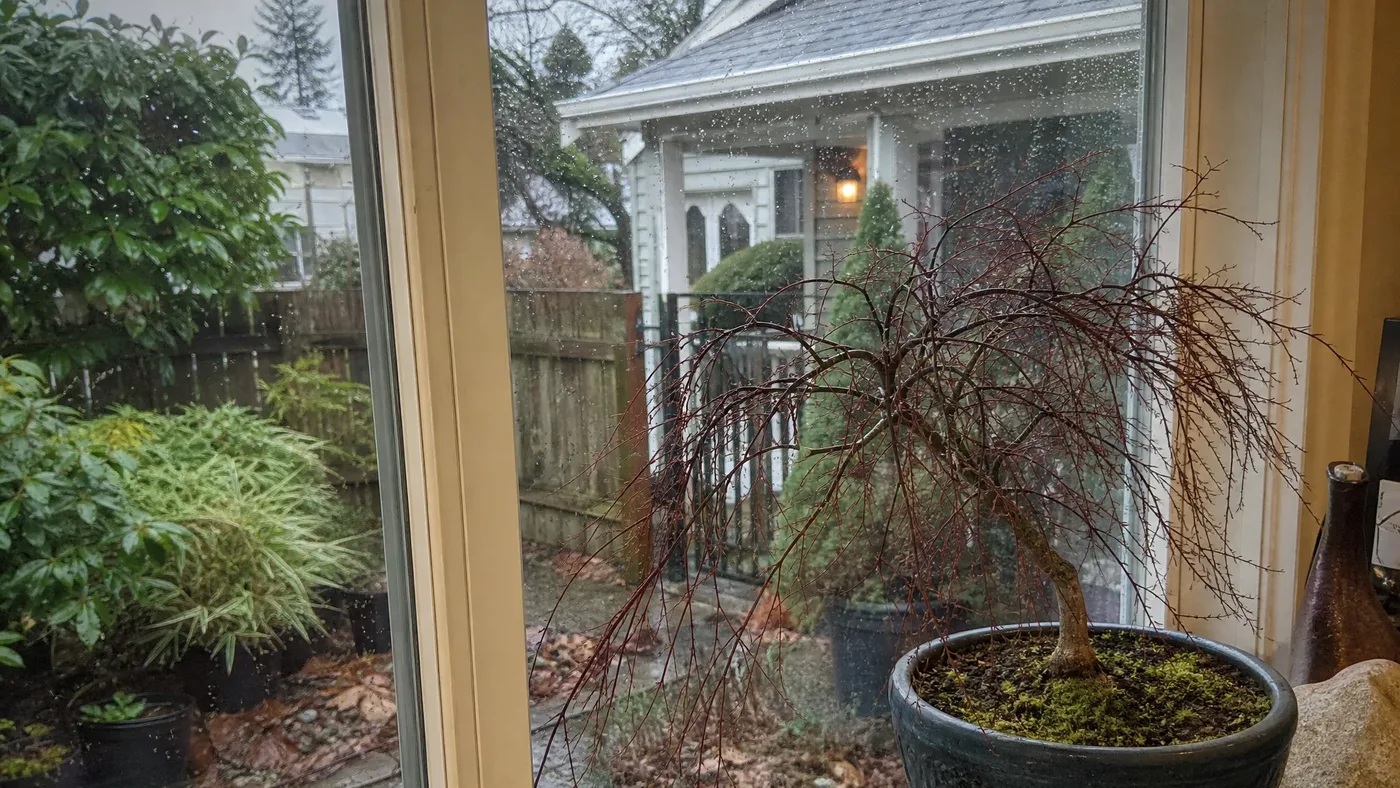
It is the end of February, and the maple in the corner of your living room has dropped half its leaves and crisped the rest. You swear you watered it faithfully, and you probably did. Watering was never the problem.
We hear this story every winter, because a dwarf Japanese maple looks like the sort of tree that should fit indoors. It stays small, the foliage is handsome, and the pot matches the sofa. Indoors it fails slowly, over a year or two, which is why the cause is so easy to miss.
Read on for the beliefs behind the habit (size, window light, dormancy, warm rooms, time limits and gadget fixes) and a plan for a short visit that does the tree no harm.
Small Size Does Not Make a Houseplant
A houseplant is a plant whose natural conditions resemble the inside of a house: steady warmth, soft light, no real winter. A Japanese maple is the opposite. The species is hardy in USDA zones 5a to 8b, which means it is built to sit through freezing weather and come back for more. Shrinking the tree does not change where it comes from.
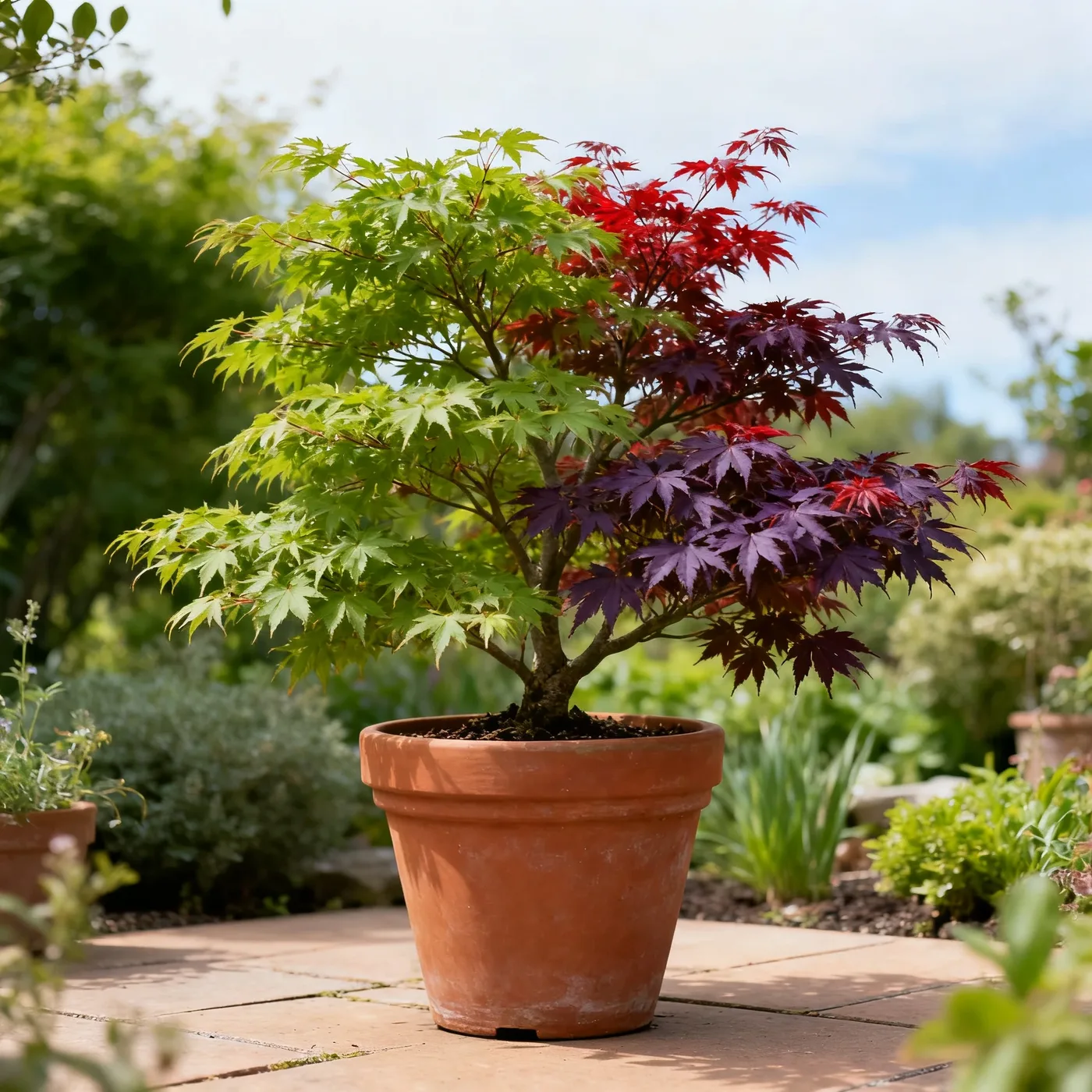
Dwarf describes growth rate and final size, nothing else. 'Sharp's Pygmy' is a truly dwarf, slow-growing form with tiny leaves, and 'Shaina' is dense and compact. 'Crimson Queen' reaches about 5 to 8 feet tall and wide at maturity, against 25 feet for the species. All of them keep the species' need for cold, sky and a root zone that is not baked by a radiator.
The 2 to 3 foot tree in a nursery pot is a young tree, and a slow one, so you notice its size less than its habits. Customers usually ask us whether the compact ones are meant for indoors. They are not. A patio, a porch or a bed is the right home, and our guide to growing a Dwarf Japanese Maple in a pot covers how to do that well.
Bright Windows Do Not Replace Sun for a Dwarf Japanese Maple
The reasoning goes like this: Japanese maples like shade, so a bright window must be plenty. The shade the tree wants is dappled shade, which is sunlight filtering through a canopy under an open sky. That is a very different thing from a room. Even a south window gives a fraction of that light, and only while the sun is on the glass.
Too Little Light Away From the Glass
Light drops off fast as you move back from a window. A tree a few feet inside gets dim light for most of the day, and it responds by stretching. The tight, dense habit that makes 'Shaina' or 'Sharp's Pygmy' worth owning loosens into long, thin growth with larger, floppier leaves. You end up with a leggy tree that no longer looks like the one you bought.
Too Much Heat Behind the Glass
Move the pot into the window to fix that and you meet the opposite problem. Leaf scorch is one of the troubles listed for the species, and a pot sitting against sun-heated glass over a heating vent is a quick way to get it. Young leaves are also not drought tolerant, so one dry afternoon browns the edges. Our guide to sun and shade needs shows what the right outdoor spot looks like, and no windowsill matches it.
Dwarf Japanese Maple Dormancy Cannot Be Skipped
This is the belief that does the real damage, because it is the one you cannot see. A deciduous tree from a region with real winters runs on a yearly cycle: leaves in spring, color and leaf drop in fall, then a cold rest before buds open again. The rest is not optional downtime. It is part of how the tree resets, and a heated house cancels it. The tree gets no cold signal, so it never settles into a proper rest.
Without that rest, buds may stay shut, open late, or open in a weak, uneven way. Meanwhile the tree keeps spending stored energy in warm air with too little light to replace it. Compare what the same tree gets in the two places:
| Stage | Outdoors | In a heated house |
|---|---|---|
| Fall | Shortening days and cool nights trigger color and leaf drop | Steady warmth sends mixed signals, leaves hang on or brown |
| Winter | Cold keeps the buds resting | No true rest, reserves slowly drain |
| Spring | Buds open as the weather warms | Growth starts at the wrong time or fails |
One piece of common advice says to bring potted trees inside for winter to protect them. We would not follow it for this tree. The real risk is a pot exposed to wind, since roots above ground are less insulated than roots in a bed. The answer is a sheltered, unheated spot, not a living room, and our guide to winter care in cold climates goes through how to set that up.
Do Warm Rooms Keep a Dwarf Japanese Maple Green?
No, and the hope behind the question is a little backwards. A Japanese maple is deciduous, so dropping its leaves is normal behavior and not a sign of trouble. Warm air can persuade some leaves to hang on past their time, but they are tired leaves. Dry indoor air browns their edges, and the pot dries fast beside a heat source. You trade a clean fall for a long, ragged one.
You also lose the best part of owning one. Fall color is what these trees are for. NCSU describes the foliage color as running from green in summer to yellow, bronze, purple and red in fall, depending on the cultivar. 'Bloodgood' turns from deep burgundy to bright crimson, and 'Crimson Queen' turns scarlet. A tree held in a warm room misses that cue and often gives you a muddy brown instead.
In our rows, the trees that drop their leaves cleanly in fall are the ones that leaf out best in spring. Evergreen-looking behavior in a warm room is not health. It is a tree that has not been told what season it is.
How Long a Dwarf Japanese Maple Lasts Indoors
Longer than you would expect, which is the trap. A maple that comes inside in fall often looks fine for the first season. It may even leaf out on schedule, using the energy stored before it came in. Because nothing dramatic happens, owners decide the arrangement works. Within a year or two, the cost shows up.
The First Winter
The first winter is mostly a matter of reserves. The tree spends them without a rest, in light that cannot replace them. Spring growth can look normal, but the leaves tend to be smaller and a little duller, and fewer new shoots appear than before.
The Second Winter and After
By the second winter the debt comes due. Twigs die back, leaves brown from the tips, and buds fail to open on some branches. Pests also move in on a stressed tree. NCSU lists aphids and scale among the occasional pests of the species, and indoors they have no predators to keep them in check.
Owners often respond with more water, but a tree that is not growing cannot use it. Roots sit wet, which is how a faithfully watered maple ends up dead. Our watering guide explains why a dormant or struggling tree needs less, not more.
Grow Lights and Misting Will Not Rescue It
Every gadget fixes one thing the tree is missing and leaves the rest alone. Dormancy needs cold, and nothing you plug in supplies cold in a heated house. This is how the common fixes compare:
| Fix | What it helps | What it cannot do |
|---|---|---|
| Grow light | Replaces some missing light and stops the stretching | Provides no cold rest, and adds heat near the leaves |
| Misting | Wets the leaf surface for a short time | Does not reach the roots, and the benefit is gone quickly |
| Humidifier | Softens dry air and reduces leaf edge browning | Does not trigger dormancy or restore a normal cycle |
| Cooler room | Gets closer to what the tree needs | Rarely cold enough for a true winter rest |
A grow light is the most tempting purchase, and we understand why. Light is the problem you can see. But a well-lit tree in a warm room is still a tree with no winter. You will have a better-looking tree that is slowly failing for a different reason.
The only real fix is the one that costs nothing. Put the tree back outdoors where cold, rain and open sky do the work. A sheltered spot on a porch, away from drying wind, serves better than any amount of equipment.
A Dwarf Japanese Maple Indoors Is Only a Visitor
None of this means a tree can never come inside. A short visit, for a holiday or an event, is fine if you treat it as a visit. Pick a spot away from heating vents and out of hot afternoon glass. If you buy from us, you get a tree grown outdoors, and we would rather you keep treating it as one. Here is the plan we give customers:
- Move the pot to a sheltered porch or entry a few days before, so the change is not abrupt.
- Bring it into the coolest bright room you have, well away from radiators and vents.
- Keep the soil evenly moist but never soggy, and make sure the pot drains freely.
- Skip the fertilizer, since the tree is not growing and has nothing to use it on.
- Send it back out gradually, through the sheltered spot first, before returning it to its usual place.
Timing the return matters. Young leaves are sensitive to frost, and late frosts can injure them, so a tree that woke up indoors is the most exposed one on the street. Check your last frost date with your local extension service, and if cold is forecast after the buds have started to open, put the tree somewhere sheltered. If you must move it, our guide to transplanting a Dwarf Japanese Maple covers the root care.
Treat a Dwarf Japanese Maple as an Outdoor Tree
The belief that small means indoor is the root of all the others. A dwarf Japanese maple needs bright, filtered light outdoors, a real winter, and a pot or bed that stays evenly moist. A windowsill, a grow light and a mister can each fake one of those things, and none can fake all of them.
The rule of thumb is blunt: the stay indoors should be a visit, and if you have started thinking of the tree as furniture, it has been in too long. Put it back outside, in a sheltered spot out of the wind, and let it have its winter.
Dwarf Japanese Maple
Nursery-grown Dwarf Japanese Maple in sizes from 2 Gallon, shipped to your door.
From $95.85
Shop Now →Indoor air is the one thing we never offer our Dwarf Japanese Maples. They spend their whole lives on our farms in dappled shade, with acidic, well-drained soil that stays evenly moist. We only ship plants we would plant ourselves, and if you are ready to give one a proper home outside, see the plants we have ready.