Dwarf Japanese Maple Alternatives: Small Trees Compared
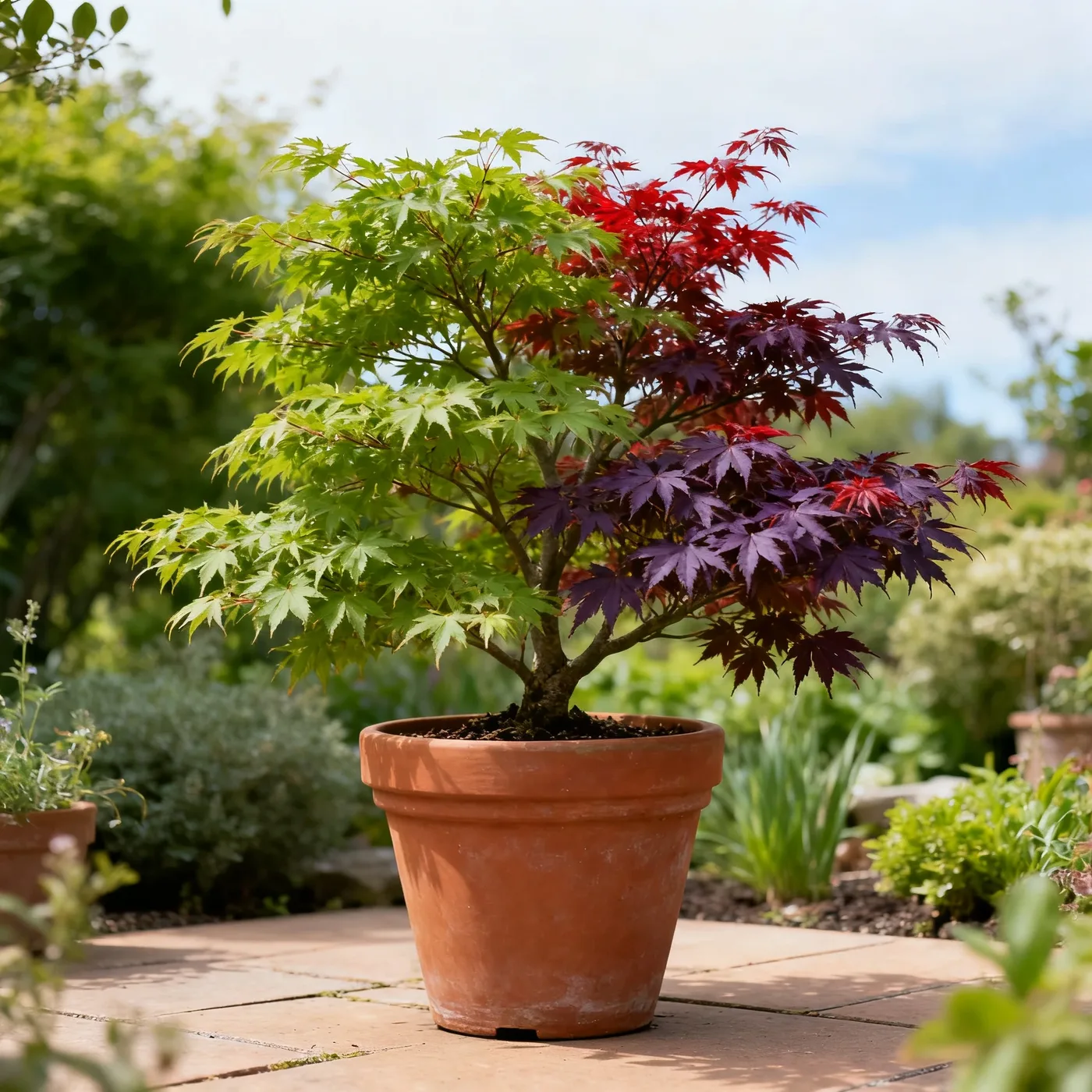
Picture two tags in your hands at the garden center, one on a dwarf Japanese maple and one on a burning bush, and a single question to settle first: how big will each get? The surprise is that a maple tag can hide a wide range. The species, Acer palmatum, is a small tree to 25 feet, yet a dwarf like 'Crimson Queen' stops at 5–8 feet in both height and spread.
That gap is why substitutes are hard to judge. A tree that looks like a fair swap in the pot can outgrow its bed or sulk in your soil, while a well-placed dwarf maple can stay in one spot for decades.
This article talks about choosing between a dwarf Japanese maple and other compact trees and answers the questions customers ask us most. Read on to learn how soil, fall color, cold, pests, mature size and upkeep each narrow the field.
Start With Your Soil and Drainage
Soil is the first cut because it is the one thing you cannot change quickly. A dwarf Japanese maple grows best in well-drained, acidic soil that is high in organic matter, and the soil should also stay evenly moist. Those two demands pull against each other. Roots need air between soil particles, yet the fine feeder roots dry out fast, so the target is soil that holds moisture without pooling.
Drainage simply means how quickly water leaves the root zone after rain. To test it, dig a hole, fill it with water and watch how long it takes to empty. If water is still standing hours later, roots will sit without oxygen, and that is when maples decline. Our soil guide for dwarf Japanese maples covers how to amend a marginal site.
Heavy or Slow-Draining Ground
None of the alternatives we compare forgives a wet site either. Crape myrtle wants moderately fertile, acid to neutral, well-drained soil in full sun, and the University of Minnesota describes Korean maple as a moist, well-drained tree. Our sources do not say that any of these tolerates standing water. Switching trees therefore does not solve a drainage problem.
What we tell customers is to fix the site instead of shopping around it. A mounded planting area, set a little above the surrounding grade, gives any of these trees a chance.
Dry, Hot or Alkaline Ground
'Crimson Queen' is listed for acid or neutral soil, so a strongly alkaline bed is a poor match for it. Dry heat is the other limit. The University of Minnesota says Korean maple should avoid hot and dry sites and be protected from strong winds, which is almost the same advice a dwarf Japanese maple gets.
The choice here: if your soil drains well and runs acidic to neutral, the dwarf maple stays in the running. If the site is hot, dry and in full sun all day, crape myrtle is the better fit, because it wants full sun and hot summers.
Do You Want Fall Color Like a Dwarf Japanese Maple?
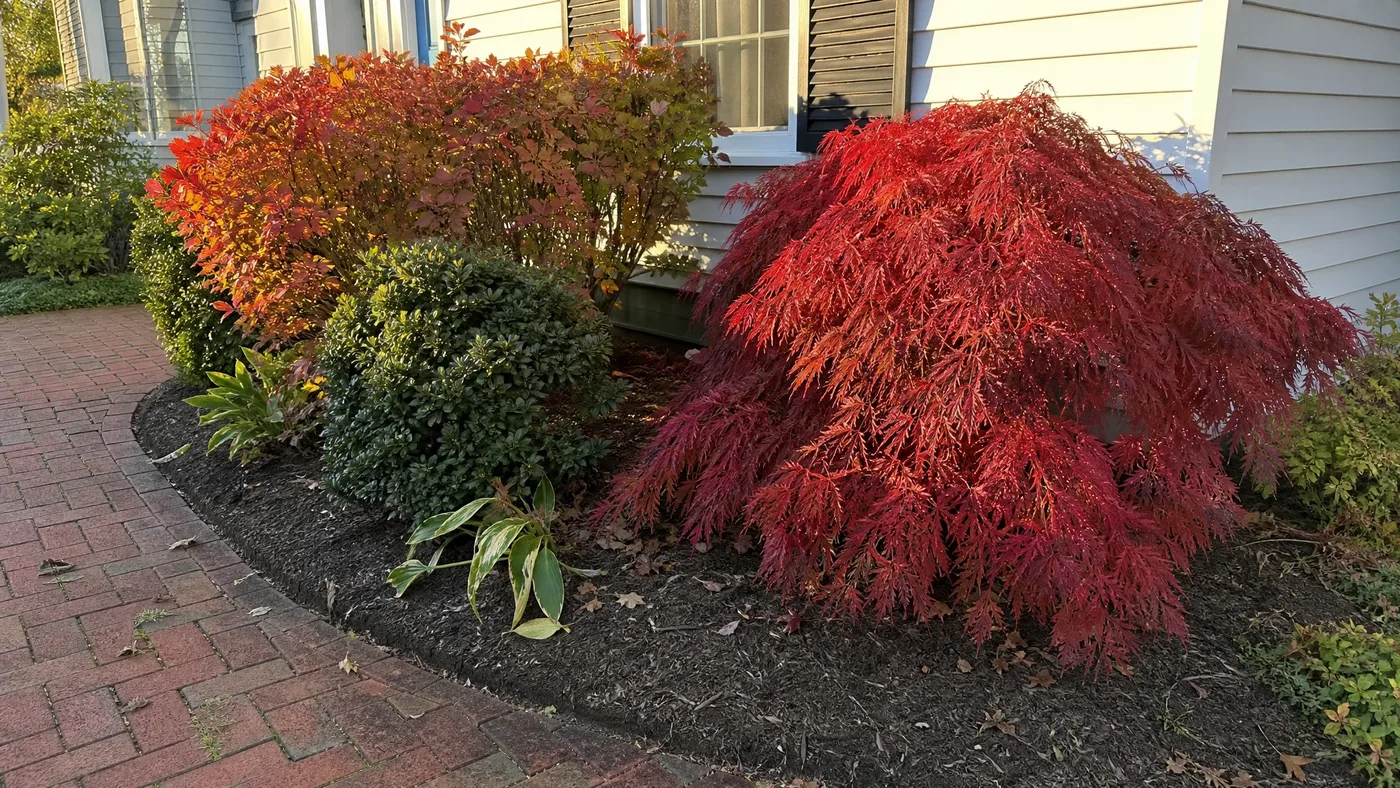
Fall color is where the maple is hardest to replace, though the reason is form as much as color. 'Crimson Queen' is a dwarf tree with dissected, lacy purple foliage that turns bright scarlet in fall, and 'Bloodgood' is deep burgundy through spring and summer before turning crimson. 'Shaina' is dense and compact with red foliage. Fall color varies by cultivar, so the tag matters.
The substitutes each give you a different thing, and it helps to name what you would be giving up.
- Korean maple turns yellow, orange and red in fall, the closest match in season-long character, though our sources give no size for it.
- Crape myrtle 'Centennial' has dark green leaves that turn orange-red, and it adds summer flowers and peeling bark that a maple cannot offer.
- Japanese holly is evergreen, with tiny glossy dark green leaves, small white summer flowers and black fruits. It gives no fall show but holds its shape all winter.
- Dwarf burning bush is the one to pick if bold fall red is the whole point. Check the cultivar's size on the tag, because our sources do not cover it.
Pushing back on one piece of common advice: people often say any red-leaf shrub will "look like a Japanese maple." It will not. The lacy, dissected leaf of a cultivar like 'Crimson Queen' is a texture you notice from across the yard, and a burning bush's broad leaf reads very differently in July.
The choice here: if you want fine texture and a layered look, stay with the maple. If you want one loud week in October, a burning bush does it with less fuss. If you want flowers and bark, take the crape myrtle. If you want green in January, take the holly.
How Cold Must the Tree Tolerate in Your Zone?
Hardiness is the third decision because it can remove your favorite tree outright. University of Florida extension lists Japanese maple for USDA hardiness zones 5B through 8B, and NC State gives 5a through 8b. None of our sources supports zone 9. Zone numbers describe winter lows, but what actually damages a maple is often a late frost after the buds open.
Young maple leaves are sensitive to frost, and frost damage, especially from late frosts, can occur. A tree that survives a zone 5 winter can still lose its first flush of leaves in a freak April cold snap. Our hardiness zone guide goes into this in more detail.
Colder Zones
The University of New Hampshire says Japanese maples can perform well in zones 5 and 6 if they are planted in the right location. In practice that means shelter from wind, no low pocket where cold air settles, and dappled shade that slows early thaw. If your site cannot offer that, ask your local extension service about Korean maple. Our sources give no zone range for it, so we will not guess one.
Warmer Zones
Crape myrtle needs hot summers for its best flowering, which makes it a natural choice for the warm end. The maple sits near its heat limit there, and it will want afternoon shade.
The choice here: zones 5 through 8 with a sheltered spot, keep the maple. Zone 5 with an exposed, windy yard, ask about the Korean maple. A hot, humid summer climate points to the crape myrtle.
Pest and Disease Load Compared With a Dwarf Japanese Maple
The maple's problems are less about insects than people expect. NC State lists aphids, scale, maple worms, leafrollers and leafhoppers as occasional pests, and anthracnose, leaf scorch and frost damage as the diseases that can occur. Occasional is the key word. None of these is a constant threat on a healthy tree.
The causes differ, and that matters for the choice. Aphids and scale are insects that move in. Anthracnose is a fungal leaf disease. Leaf scorch, by contrast, is a site problem: dry roots, wind and hot sun pull water out of the leaf margins faster than the roots deliver it. One of the most common questions we get is whether brown leaf edges mean bugs, and nine times in ten it is water or wind.
Cultivar Notes
'Crimson Queen' may be susceptible to Acer gall mite, aphids, caterpillars and horse chestnut scale, and also to Verticillium wilt, acer leaf scorch and honey fungus. Tar spot and leaf spots can also affect it. That is a long list, but "may be susceptible" is not the same as "will get."
The Alternatives
We do not have sourced pest lists for burning bush, Japanese holly or crape myrtle, so we will not claim any of them is cleaner. Ask your local extension service which pests and diseases are active in your county for each of these. The ones that thrive locally matter more than a general ranking.
The choice here: if you can give the maple even moisture and shelter from wind, its biggest disease risk drops, and it stays on the list. If your site is windy, hot and unirrigated, choose a tree that wants full sun.
Mature Size and Root Space Beside a Dwarf Japanese Maple
'Crimson Queen' reaches 1.5–2.5 meters in both height and spread, about 5–8 feet. 'Sharp's Pygmy' is a slow-growing dense form and a truly dwarf maple with tiny leaves. Slow growth means that figure takes years to reach, so the tree stays in scale with a bed far longer than a fast grower would.
Here is how the candidates compare on the numbers our sources give.
| Tree | Size from our sources | Habit |
|---|---|---|
| Dwarf Japanese maple 'Crimson Queen' | About 5–8 ft tall and wide | Slow, dense, lacy foliage |
| Japanese holly | Up to about 16 ft | Slow-growing evergreen shrub or small tree |
| Crape myrtle 'Centennial' | About 15 ft | Bushy, upright, deciduous |
| Korean maple, dwarf burning bush | Not given, check the tag and your extension service | Varies by cultivar |
Pushing back on a common assumption: Japanese holly is often sold as a tidy low shrub, but it is a shrub or small tree to about 16 feet. Crape myrtle 'Centennial' is described as a large shrub or tree. Neither is a drop-in replacement for a 5–8 foot maple under a window.
Root Footprint
A small crown usually means a small root zone, which is why a dwarf maple suits beds near a patio or walk. Our root system guide explains how shallow and fibrous these roots are, and how big they really get covers the cultivar differences.
The choice here: a spot under about 8 feet wide belongs to the dwarf maple. A corner that can take a 15-foot plant is where holly or crape myrtle earns its place.
Upkeep Over Years Beside a Dwarf Japanese Maple
The last decision is how much you want to do each year. A dwarf Japanese maple is slow-growing, so it asks for little pruning, but it asks for attention to water. Its young leaves are not drought tolerant, and even a mature tree has only moderate drought tolerance. A newly planted tree needs steady moisture, and in dry summers even an established one needs a deep soak.
Pruning
The University of New Hampshire advises pruning in summer, after the spring growth flush, to avoid heavy sap flow. Because the tree grows slowly, light shaping is usually enough, and our pruning guide lays out the cuts. A fast-growing shrub generally needs more frequent trimming just to stay in bounds, which is a point in the maple's favor.
Water and Feeding
In our rows, the trees that struggle are almost never the ones that went hungry. They are the ones that dried out in the first two summers. Mulch over a well-prepared bed does more than extra fertilizer. Sources for the alternatives do not give feeding schedules, so follow the tag and your local extension service.
The choice here: if you will water reliably and want a plant that rarely needs cutting, the dwarf maple is the lower-effort tree over time. If you travel often and cannot water, choose a full-sun tree that does not depend on evenly moist soil.
The Dwarf Japanese Maple Choice That Fits Your Ground
Put the six decisions together and the dwarf Japanese maple wins for sheltered beds with well-drained, acidic to neutral soil, dappled shade, and a limit of about 8 feet. It loses on hot, dry, windy or alkaline sites, where scorch is the first problem you will see. Crape myrtle takes the sun and heat, holly keeps winter green, and burning bush delivers fall color.
A one-line recipe: well-drained acidic soil and shade with a small footprint means a dwarf Japanese maple, while hot full sun and room to spread means crape myrtle or holly.
Dwarf Japanese Maple
Nursery-grown Dwarf Japanese Maple in sizes from 2 Gallon, shipped to your door.
From $95.85
Shop Now →Dwarf Japanese maples can look very different from the other small trees in this guide once they are grown well, and on our farms we raise ours in dappled shade, in acidic, well-drained, organic-rich soil. Growing top-quality trees is what we do, as a small business with farms of our own. If a compact maple has won you over, you can see which ones we have whenever you are ready to plant.