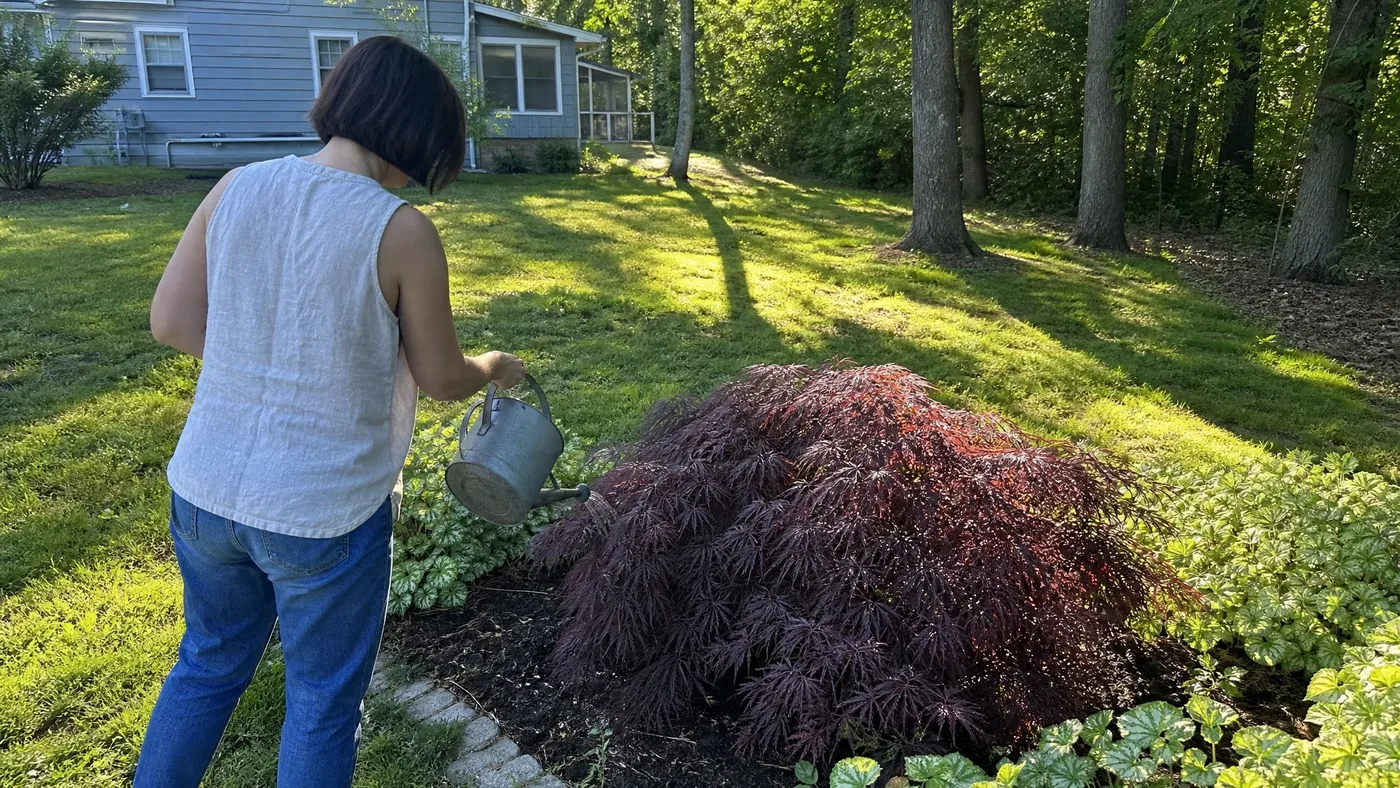
Growing a Dwarf Japanese Maple in Zone 9: Heat and Cultivars
A scorched leaf edge in August sends most people straight to the hose, and that is often the wrong first move. Before you change anything, work out whether heat, wind or water caused it, because each one has a different fix. The number behind all of this is zones 5B through 8B, the hardiness range UF/IFAS gives for Japanese maple. Zone 9 sits past that published range.
That does not mean a dwarf cannot live there. It means siting and watering do the work that climate does farther north, and a small tree gives you options a full-size one cannot, such as a pot you can roll into shade. Our guide to hardiness zones for dwarf Japanese maples covers the basics, and your county extension office can tell you how local conditions compare.
This article talks about four common yard situations in Florida, Texas and Southern California and answers the questions customers ask us most. Read on to learn which cultivars suit each case, where the shade has to fall, how to water a small root ball, and how to tell heat scorch from wind scorch.
The Narrow Side Bed and Its Afternoon Shade
A side bed between a house and a fence is one of the best spots a dwarf can get in the Deep South, and one of the easiest to spoil. The site works only when the building blocks the afternoon sun. UNH Extension says dappled shade is the ideal for Japanese maples, and a bed on the east side of a house comes closest to it, with morning light and a wall that shades the tree from midday on.
Florida adds a second problem, which is humidity. Tar spot and leaf spots are the main diseases of the species, and a narrow bed with little air movement holds moisture on the leaves. Keep the trunk well away from the wall, water the soil rather than the foliage, and do not crowd the tree with shrubs on the other side.
Choosing a Cultivar for the Width
Width decides the cultivar before color does. 'Crimson Queen' reaches 1.5 to 2.5 meters in both height and spread, which is roughly 5 to 8 feet, so it needs a bed deeper than the narrow strips many side yards offer. Its lacy purple foliage turns scarlet in fall, and it is worth the room if you have it.
For a bed of only a few feet, we steer people to the smaller forms. 'Sharp's Pygmy' is described as a slow-growing, truly dwarf maple with tiny leaves, and 'Shaina' is dense and compact with red foliage. Both stay inside a tight bed without pruning, which is the reason to pick them.
Soil in a Side Bed
Roof overhangs and fences create rain shadows, so the soil in a side bed is often drier than the rest of the yard. The sources call for well-drained, acidic soil high in organic matter, and in practice that means digging in compost before planting and keeping a mulch layer on top. Our guide to planting a dwarf Japanese maple close to your house covers the distance from the foundation.
A Dwarf Japanese Maple on a Hot Texas Deck
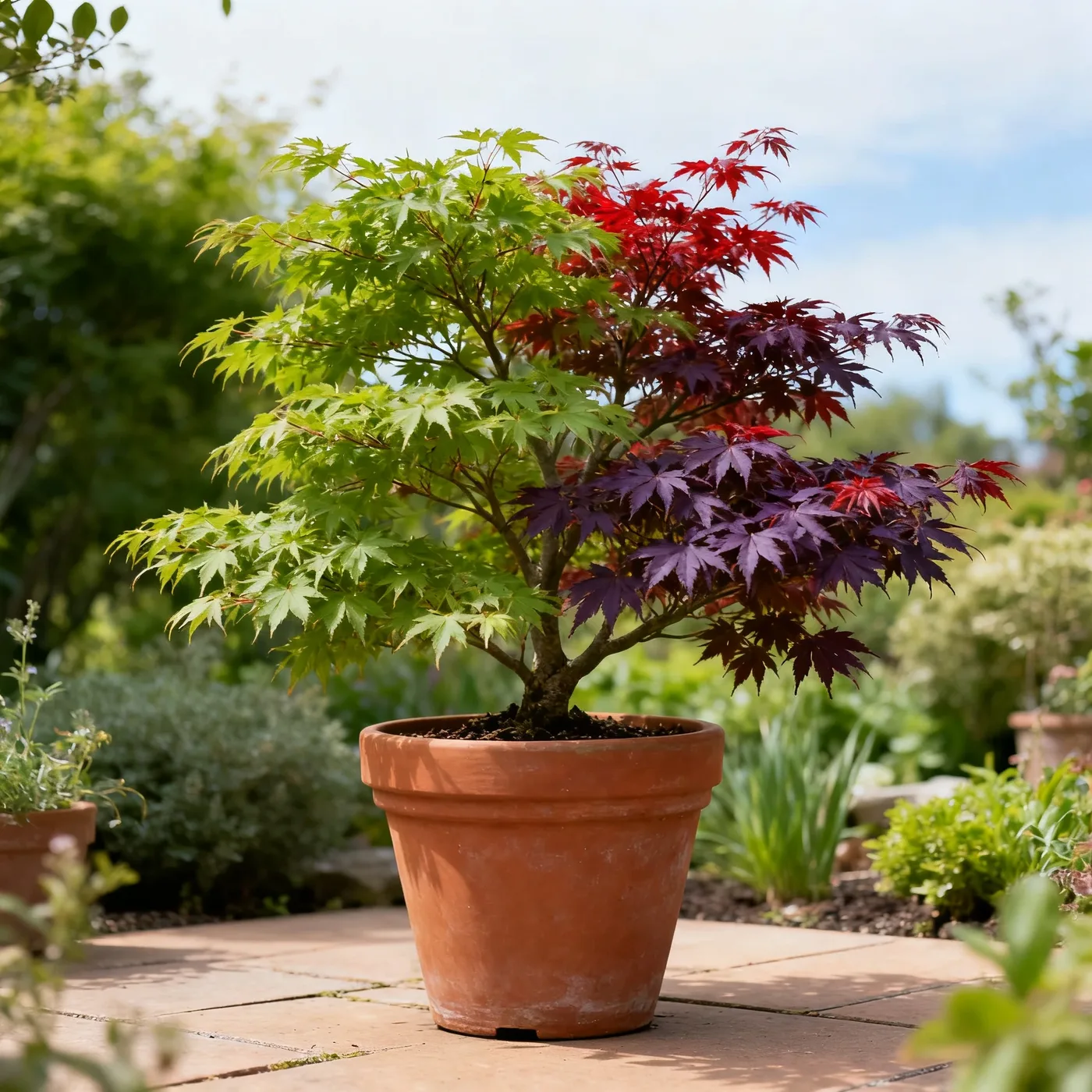
A pot on a deck is the case where a dwarf has a real advantage, and also the case where it gets hurt fastest. Deck boards, rails and nearby walls all hold and throw back heat, and a dark pot warms its roots from every side. A full-size tree could never be handled this way, but a dwarf in a container can follow the shade through the day.
One of the most common questions we get from Texas customers is whether the leaf damage on a potted tree is sunburn or thirst. In a pot it is usually both at once, because hot roots stop taking up water just as the leaves need it most.
Moving the Pot With the Sun
Put the pot where it gets morning light and sits in shade by early afternoon. A wheeled plant caddy makes the daily shift easy, and feet or bricks under the pot keep it off hot boards and let air pass beneath. Turn the pot a quarter turn every week or two so one side does not take all the sun.
North Texas gives you a second reason to keep the pot movable. Young maple leaves are sensitive to frost and late frosts cause damage, so a pot you can roll against the house in a spring cold snap protects the new growth.
Watering a Small Root Ball
A small root ball dries out far sooner than an in-ground root system, so the watering interval is shorter than any chart for planted trees suggests. In summer heat, push a finger into the soil every day and water when the top inch or so is dry. Soak until water runs from the drainage holes, and never leave the pot standing in a full saucer. Our guide to growing a dwarf Japanese maple in a pot covers mixes and repotting.
Cultivars That Cope
We have no published heat rating for any cultivar, so we put placement ahead of cultivar. Within that limit, 'Sharp's Pygmy' and 'Shaina' suit pots best because they stay small. 'Crimson Queen' will grow in a container, but expect to move it into a larger pot as it heads toward its 5 to 8 feet.
A Dwarf Japanese Maple on a Windy Corner Lot
Wind scorch and heat scorch look almost the same, so the pattern of the damage is what tells them apart. Wind pulls moisture out of the leaves faster than the roots can supply it, so the tree needs protection from drying winds. A corner lot adds a funnel effect, because wind accelerates around the building and arrives hot off driveways and walls.
Reading the Scorch Pattern
Look first at which side of the tree is damaged. If the brown edges are on the windward side and the soil is still moist an inch or two down, wind is the cause. If the damage sits on the side facing a west wall, a fence or pavement, reflected heat is the cause. If the scorch is even all around and the soil is dry, water is the cause, and you are in the case covered below for dry summers.
Timing helps too. Scorch that appears after a hot, breezy week and stops spreading when the weather cools points to wind. Scorch that keeps advancing through a calm, hot week points to heat and roots that cannot keep up.
Fixes That Match the Cause
If wind is the problem, move the tree to the lee side of the house or put a solid screen upwind. Leave a gap between a fence and the tree, since a screen set tight against the maple traps hot air. A planting bed along a hedge or lattice works well, as long as the shade falls in the afternoon.
If reflected heat is the problem, change the surface in front of the tree. Replace gravel or bare concrete beside it with mulch or a low ground cover, and add shade cloth on the hot side for the first summer. Our guide to dwarf Japanese maples for full sun and hot afternoons covers tougher placements. Because a dwarf is low, a modest screen is usually enough.
Dry Summers and Your Dwarf Japanese Maple in California
Southern California summers can go for months without rain, and that makes water your biggest lever. UF/IFAS rates the species' drought tolerance as moderate, but NC State is more direct about the leaves: young leaves are not drought tolerant. That is why a dry spell in the weeks after spring leaf-out does more harm than the same spell in October.
Water Deeply and Less Often
An in-ground dwarf has a bigger and deeper root zone than a potted one, so it wants fewer, longer soakings. Run a slow drip or hose at the drip line until the soil is wet well below the surface, then let the top inch or two dry before the next watering. Frequent shallow sprinkling keeps the roots near the surface, where heat reaches them first. Check local watering rules before you set a schedule. The details are in our complete watering guide.
Mulch as Summer Insurance
Mulch is what lets the soil stay evenly moist, which is the condition the sources ask for. Spread a generous layer of bark or compost over the root zone, and keep it a few inches back from the trunk so the bark does not stay wet. Refresh it each spring before the heat arrives.
If your irrigation water or native soil runs alkaline, the leaves can look pale and tired even when watering is right. The sources prefer acidic soil, so test the soil and ask your local extension service for advice before adding anything.
Which Case Looks Like Yours?
Most yards fit one case better than the others, and the first fix follows from that. The table below pairs what you see with the likely cause. Start with the row that matches and change one thing at a time, so you can tell what worked.
| What you see | Likely cause | First fix |
|---|---|---|
| Brown edges on the side facing a west wall or pavement | Reflected heat | Cover hard surfaces with mulch and add shade cloth |
| Crisp edges on the windward side, soil still moist | Wind | Move to the lee side or add a screen with a gap |
| Even scorch, dry potting mix, light pot | Small root ball running dry | Check daily and move the pot into afternoon shade |
| Spotted leaves in a damp, still side bed | Leaf spot from poor air movement | Water the soil only and open up the airflow |
If two rows seem to fit, fix the heat or wind first, because dry soil is the one cause that responds quickly once the other two are controlled. If you are unsure, our guide to common dwarf Japanese maple problems shows more leaf symptoms.
Shade and Water Decide a Zone 9 Dwarf Japanese Maple
In zone 9 you are growing past the published hardiness range, so the tree depends on the conditions you build around it. Afternoon shade, shelter from drying wind and steady water do more than any cultivar name. A smaller cultivar such as 'Sharp's Pygmy' or 'Shaina' gives you the most flexibility, and a pot gives you the most control.
Use this to pick your starting point:
- If you have a narrow bed against a house, go to the side bed case and choose a compact cultivar that fits the width.
- If your tree lives on a deck or patio, go to the Texas deck case and water by touch every day in summer.
- If wind or hot walls hit the tree, go to the corner lot case and read the scorch pattern before you act.
- If your summers are long and dry, go to the California case and put deep watering and mulch first.
Dwarf Japanese Maple
Nursery-grown Dwarf Japanese Maple in sizes from 2 Gallon, shipped to your door.
From $95.85
Shop Now →A Zone 9 summer is hard on a young maple, so we start ours in dappled shade, with soil that holds even moisture yet drains freely, and a spot sheltered from drying wind. We are a small business that grows its own stock, and every top-quality tree we sell comes from our farms. If a compact maple for your hot garden sounds right, browse what is in stock now.