Landscaping Ideas for Dwarf Japanese Maples in Your Yard
Dwarf Japanese Maples offer a refined elegance that works in nearly any yard style. With their deeply lobed leaves, stunning fall color, and slow growth habit, these shrubs thrive in multiple landscape roles. Whether you're designing a Japanese-inspired garden or simply want a dramatic focal point on your patio, the compact size of dwarf cultivars like 'Bloodgood', 'Crimson Queen', and 'Tamukeyama' makes them manageable for home gardeners.
1. Anchor Your Landscape with a Specimen Tree
The most straightforward way to showcase a dwarf Japanese maple is to place it as a standalone specimen where it commands attention. Select a location with morning sun and afternoon shade, especially if you live in a warm climate (zones 8-9). This positioning prevents leaf scorch while allowing the foliage to develop its rich color.
Dwarf Japanese maples mature to 4-8 feet tall and wide, depending on the cultivar, making them ideal for yards where a full-size tree would overwhelm the space. Their slow growth rate of roughly 6-12 inches per year means you'll enjoy years of gradual development without aggressive pruning. Place the specimen on a slight rise, a lawn corner, or along a pathway where it draws the eye seasonally, whether in spring (when flowers appear, though inconspicuous) or autumn when the foliage becomes the standout feature.
Practical takeaway: Give your specimen tree at least 3-6 feet of clear space on all sides so its branching structure remains visible and balanced throughout the year.
2. Build Layers with Compatible Companion Plants
Dwarf Japanese maple landscaping ideas often revolve around pairing these shrubs with shade-tolerant companions. Azaleas, ferns, hostas, hellebores, and dwarf conifers create a lush, multi-textured backdrop that enhances the maple's architectural form. Azaleas bloom in spring before the maple fully leafs out, providing early color without competing for visual space.
Hostas work particularly well at ground level. Their broad leaves contrast beautifully with the maple's delicate, deeply lobed foliage. Ferns add a soft, feathery layer that moves in the breeze. Hellebores provide winter interest and early spring blooms when the garden is sparse. Dwarf conifers such as false cypress or dwarf spruce add year-round structure and a cooler color palette that makes red and burgundy cultivars pop.
When selecting companion plants for Japanese maple garden design, ensure all share similar soil and moisture preferences. Plant companions in drifts of 3-5, spacing them 3-5 feet apart to avoid crowding as they mature. The maple needs consistent moisture and well-draining, slightly acidic loam (pH 5.5-6.5), so choose understory plants that thrive in the same conditions.
Practical takeaway: Create visual rhythm by repeating companion plants at intervals around the maple rather than placing them randomly. This approach makes the entire composition feel intentional.
3. Plant in Containers for Patio and Courtyard Accents
Dwarf Japanese maples are exceptionally well-suited to container culture, making them perfect for patios, courtyards, entryways, and small spaces. A container-grown specimen provides the flexibility to relocate the plant seasonally, move it to a sheltered spot during harsh winters in zones 5-7, or refresh the display on a deck.
Choose a container at least 18-24 inches in diameter with excellent drainage holes. Fill it with a rich, well-draining potting mix amended with perlite or coarse sand to prevent root rot. Position the container where it receives morning sun with afternoon shade, and water consistently because container plants dry out faster than in-ground specimens. In colder zones, provide winter root protection by moving the pot against the house foundation or wrapping it with burlap after the first hard frost.
Container plantings also allow you to pair your dwarf Japanese maple with seasonal accents. Underplant with shade-tolerant groundcovers or small ferns for a finished look. As the maple matures (reaching full size in 5-10 years), monitor for girdling roots and repot every 2-3 years if needed.
Practical takeaway: Keep the container soil evenly moist but not waterlogged. Stick your finger 1 inch into the soil; if it feels dry at that depth, water thoroughly until it drains from the bottom.
4. Create a Japanese or Zen Garden Design
Dwarf Japanese maple front yard installations often follow Japanese garden principles: simplicity, balance, and a focus on nature's asymmetry. Use the maple as the anchor of a small Japanese garden, positioned off-center in a bed of raked gravel or smooth river stones. Add a single stepping stone pathway leading past the tree, a modest bamboo screen for privacy, and perhaps a water feature such as a small basin or birdbath.
The maple's architectural branching becomes the centerpiece in this minimalist style. Underplant with moss, shade-tolerant groundcovers, and a few key companion plants like hostas or ferns. Limit color to create visual calm: stick with the maple's seasonal transformation and the soft greens of foliage plantings. Avoid bright ornaments or multiple focal points.
This design style suits corner locations, narrow side yards, or transitional spaces between house and garden. The compact mature size of dwarf cultivars (4-8 feet) fits comfortably in urban and suburban lots without requiring extensive space.
Practical takeaway: Prune only to remove deadwood or shape the tree lightly in late fall to mid-winter while dormant. Avoid heavy pruning, which interrupts the graceful branching that defines the Japanese aesthetic.
5. Anchor a Foundation Planting
Dwarf Japanese maple front yard foundation plantings provide year-round interest while keeping proportions modest relative to residential architecture. Position the maple 3-6 feet from the foundation (depending on cultivar size at maturity), where it receives morning sun and afternoon protection. This placement prevents heat scorch from sun reflection off brick or stone.
Layer foundation plantings with taller dwarfs, mid-height shrubs, and groundcover. Place the maple as the vertical anchor, add azaleas or dwarf conifers for structure, then use hostas and ferns as a low-level border. This tiered approach creates depth and frames the entry. In winter, the maple's branching structure and bark (especially on coral bark cultivars like 'Sango-kaku') provide architectural interest when most plants are bare.
Ensure the planting bed has rich, well-draining loam and consistent moisture. Mulch around plants to retain moisture and regulate soil temperature, but keep mulch 3-4 inches away from the trunk to prevent rot.
Practical takeaway: Space foundation plantings based on mature size, not current size. A maple planted 2 feet from companions will become crowded as it reaches 4-8 feet wide.
6. Group Multiple Maples for Impact
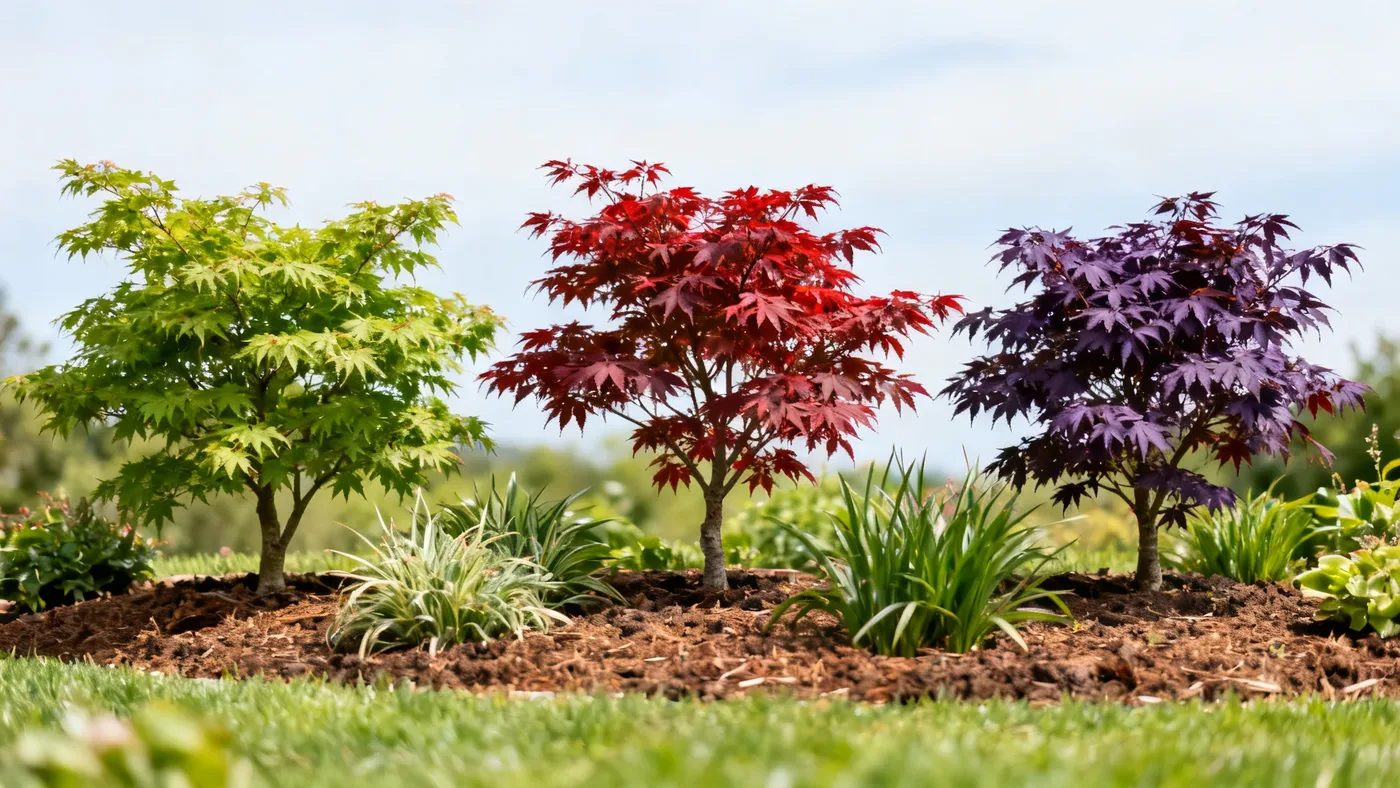
If you have space, grouping three to five dwarf Japanese maples of different cultivars creates a striking landscape feature. Each cultivar offers distinct foliage color and growth form: 'Bloodgood' presents deep burgundy leaves, 'Crimson Queen' displays finely dissected red foliage, 'Tamukeyama' offers a weeping form, and 'Shaina' stays exceptionally compact. Planted together at 3-6 foot spacing, they create a dynamic composition that shifts with the seasons.
Place the group where afternoon light catches the foliage, highlighting translucent reds and oranges. Underplant the entire cluster with shade-tolerant groundcovers and low shrubs. In autumn, when fall color peaks, the grouped maples become a neighborhood showstopper.
This approach suits properties with larger yards or areas that lack existing shade structure. The group provides visual weight and interest without requiring the large footprint of a single tall tree.
Practical takeaway: Stagger planting heights slightly so taller cultivars shade shorter ones, preventing sun scorch on the more delicate foliage.
7. Integrate with Shade Structures and Hardscaping
Dwarf Japanese maple garden design thrives near pergolas, shade cloths, or tree canopies that provide the afternoon protection these plants need. A maple positioned beneath a deciduous tree like a crabapple or redbud benefits from filtered summer shade while accessing spring sunlight before the canopy fully leafs.
Pair the maple with hardscaping elements like stone benches, gravel pathways, or small raised beds that extend the visual composition. A bench positioned 6-8 feet from the maple creates a viewing spot where you can appreciate the plant's transformation through the seasons. Raised beds offer an option if your native soil is poorly drained; fill them with rich, slightly acidic loam to create optimal conditions.
Avoid planting directly against south-facing walls or in full sun, which causes leaf scorch and stress. The ideal location combines morning sun with afternoon shade, mimicking the woodland understory where dwarf Japanese maples naturally occur in Japan, Korea, and China.
Practical takeaway: Test your planting site's sun exposure over a full day. Note where shadows fall at 9 a.m., noon, and 3 p.m. to confirm you're providing morning sun with afternoon protection.
Quick Reference: Dwarf Japanese Maple Landscaping Checklist
| Design Element | Key Specs | Best Use |
|---|---|---|
| Specimen Placement | Morning sun, afternoon shade; 3-6 ft clear space on all sides | Focal points, lawn corners, pathways |
| Companion Plantings | Space 3-5 ft apart; hostas, ferns, azaleas, hellebores, dwarf conifers | Layered shade gardens |
| Container Culture | 18-24" diameter; well-draining potting mix; consistent moisture | Patios, courtyards, entries |
| Japanese Garden | Off-center placement; minimal companions; gravel or stone | Zen aesthetics, side yards |
| Foundation Planting | 3-6 ft from foundation; layered heights; rich loam | Home entries, year-round color |
| Group Planting | 3-5 trees; 3-6 ft spacing; varied cultivars | Large landscapes, seasonal impact |
| Mature Size | 4-8 ft tall and wide; slow growth (6-12 in/year) | All above (size-responsive placement) |
| Soil & Water | Slightly acidic loam (pH 5.5-6.5); consistent moisture; well-draining | All above (foundation requirement) |
| Zones | 5-8; some cultivars to 9 with afternoon shade | Verify cultivar hardiness before planting |
Dwarf Japanese maple landscaping ideas work across multiple design styles because these plants adapt to specimen, foundation, container, and group roles. The key is understanding your site's light, soil, and moisture conditions, then selecting a cultivar and placement that match. Start with our dwarf Japanese maple care guide to confirm growing requirements for your zone. Once established, these slow-growing shrubs reward thoughtful placement with decades of elegant foliage, stunning fall color, and architectural interest that no other compact tree can match. For more detail on shaping and maintaining your tree, learn how big dwarf Japanese maples really get and plan your space accordingly.